How China helped prevent a global oil shock during Hormuz crisis

&imwidth=600&imheight=450&format=webp&quality=medium "How China helped prevent a global oil shock during Hormuz crisis")
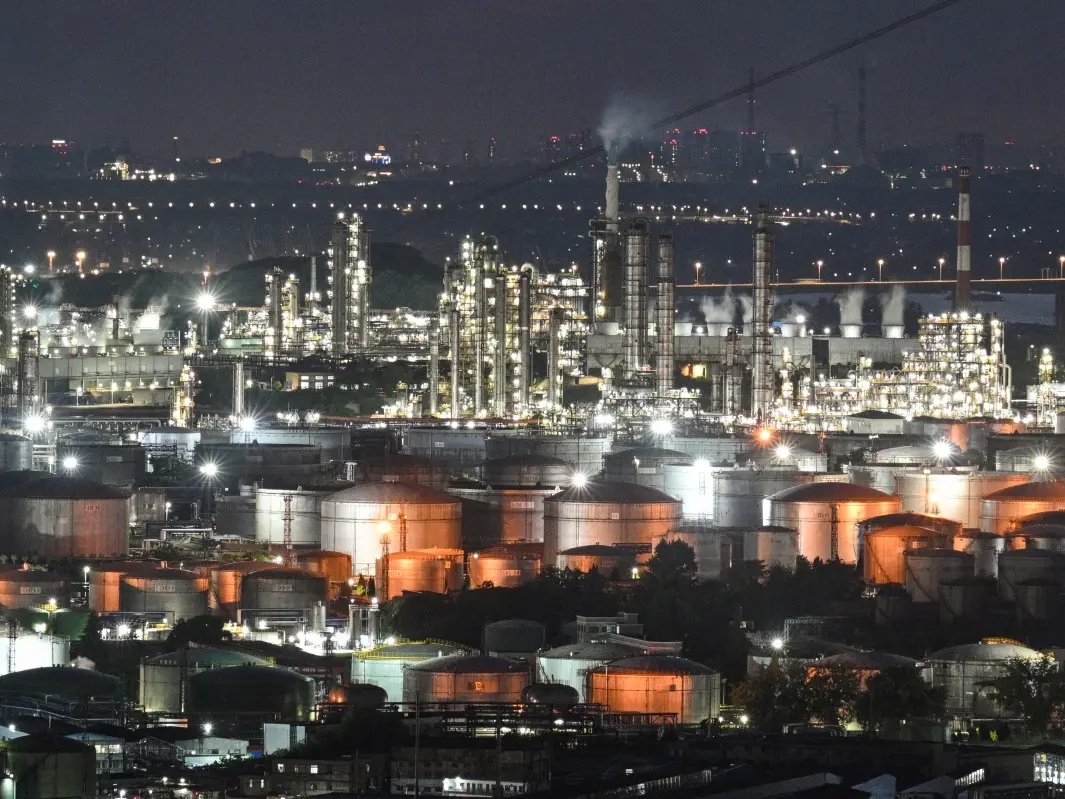
A general view of the crude oil refinery Sinopec Jinling Petrochemical Plant in Nanjing, in China's eastern Jiangsu province on May 8, 2026. Photograph: (AFP)
China's oil stockpile drawdown and cautious buying strategy helped ease pressure on global crude markets after the Strait of Hormuz disruption.
China's crude oil imports climbed 22 per cent in July from June's near decade low, as refiners moved to snap up cheap barrels during a brief reopening of the Strait of Hormuz. Though the total volume remains well below the pre-war levels, according to data from China's General Administration of Customs. China, the largest importer of Crude oil, brought roughly 35.73 million metric tons of crude last month, equivalent to roughly 8.41 million barrels per day, marking a sharp increase from June. China's imports in June saw a decline amid the global crisis and weak domestic demand, as well as an export curb Beijing imposed to safeguard its energy security. Even with the recent surge, it still remains 24.3 per cent lower than a year ago.
The positive growth of imports can be traced to a period of relative ease in June, when the Strait of Hormuz partially reopened, and Brent crude slid into the $70 a barrel. Ye Lin, vice president at Rystad Energy, said Chinese buyers moved opportunistically during that stretch, locking in discounted cargoes that are still arriving on Chinese shores. Ye added that the wave of purchases is expected to keep flowing through August, and should help ease Beijing's restrictions on refined-product exports while nudging refinery run rates modestly higher as margins recover.
Separate tracking from Vortexa put China's seaborne imports at 7.1 million barrels a day in July, with non-Iranian Middle Eastern supply rising by roughly 1 million barrels a day from June, a sign that Chinese refiners are also diversifying away from the discounted Iranian and Russian barrels they leaned on earlier in the conflict.
How Beijing's buying strategy eased pressure on global oil markets
When Iran closed the Hormuz, roughly 20 million barrels per day of oil were taken out of the global market; that is huge. The global oil market produces 100 million barrels per day, with zero slack in the system, so losing 20 million bpd means 20 per cent of the oil-consuming world was going to power out. It was a global calamity, but there were countermeasures in place. The Saudi East- West pipeline, which was pumping 2.8 million bpd prior to the conflict, started adding 7 million bpd at maximum capacity, and a further 1.5-1.8 million bpd was added by the Abu Dhabi oil pipeline. With the Saudi East-West pipeline and the Abu Dhabi oil pipeline in Saudi Arabia and the UAE, respectively, putting back roughly 7 million barrels per day into the system, bypassing the Hormuz, reducing the shortfall significantly. Still, it's a 13 million bpd shortfall. The Strategic Petroleum Reserve released by the IEA's 32 members put back roughly 1.4 million barrels per day over 120 days.
But China, as the world's largest crude importer, did not scramble to meet the demand in the open market. China managed the aftermath of a war that disrupted the global oil markets. According to sources like Kpler and Bloomberg, Beijing spent much of the spring drawing down a stockpile estimated at close to 1.4 billion barrels, thus meeting roughly 5 million bpd from its domestic inventory and alternative energy sources. A manoeuvre analysts credited with helping keep global oil prices from spiralling past $200 a barrel, reducing the demand to balance the shortfall of supply. Bloomberg columnist Javier Blas has argued the episode effectively turned China into the oil market's first "swing importer," giving Beijing outsized influence over global prices by choosing when to buy and when to sit out.
)
)
)
)
)
)
)
)
)
)
)
)
)
)
)
)
)
)
)
)
)
)
&im=FitAndFill=(700,400))
)
)
)
)
)
)
)
)
)
)
)
)
)
)
)