&imwidth=800&imheight=600&format=webp&quality=medium "From Évian 1938 to G7 2026: Israel, Gaza and the limits of international action")
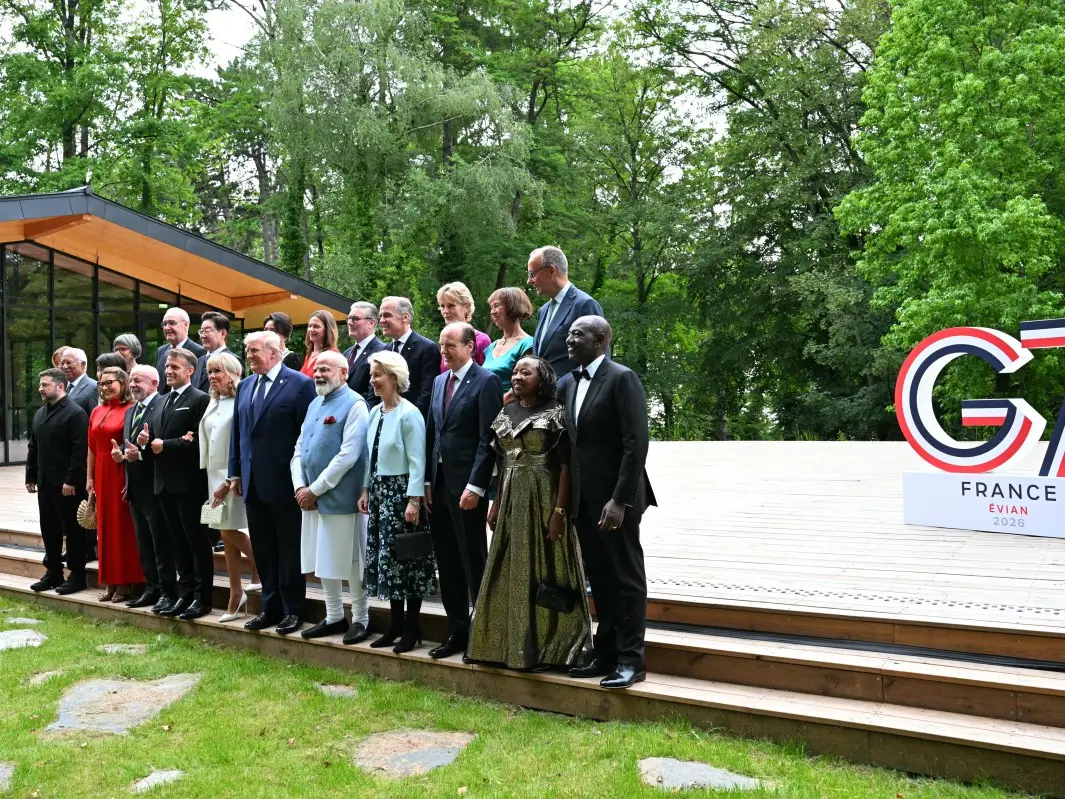
As world leaders met in Eivan, Israel faces sharp criticism from several global bodies and international courts, which has significantly strained its global standing, even though its core military and trade alliance largely remains intact. At the ICJ, Israel is defending itself against charges of violating the Genocide Convention. The court has ordered several binding interim orders demanding that Israel halt specific military offensives, prevent acts of genocide and allow unhindered international aid. But Israel continues with its planned expansion in the West Bank, and it continues to violate the ceasefire in Gaza.
Fractures with its Western allies
While the US and G7 nations maintain trade and military relationships with Israel, they continue to supply it with weapons. Several Western nations, such as Canada, Italy, the Netherlands and the UK, have at least on the surface tried to ban export of military equipment, such as sales of F-35 and its components, Iron Dome and its components. Many of these bans and controls have loopholes in legislation, ultimately resulting in symbolic restrictions rather than structural exemptions. However, in a sharp diplomatic rebuke, in late 2024, European nations, including Spain, Ireland, Norway, and Slovenia, formally recognised Palestine as an independent state, arguing this is necessary to rescue the prospects of a two-state solution. Many major cities across the US, Europe, and Asia have seen sustained, massive public demonstrations demanding an immediate ceasefire and arms embargoes. In academia, specifically Israel has faced backlash, the Boycott, Divestment, Sanctions (BDS) campaign against Israel has been going strong for more than 20 years. The movements are specifically led by the University and College Union, scholars, educators and professors, and it has gained momentum in European nations. Universities in Belgium, the Netherlands, Italy and Spain have increasingly voted to suspend agreements with Israeli institutions. According to one report by The Telegraph, there have been 300 instances of boycotts in the year following the Oct 7 attacks, and a year later, that number had more than doubled to 700 at the end of 2025.

Also Read: Trillion-dollar trap: Hidden risks behind SpaceX's blockbuster IPO that nobody wants to discuss
Shades of 1938 prelude to WW2
In July 1938, Evian was the site of a similar gathering of world leaders, led by then US President Franklin D Roosevelt, following Germany's annexation of Austria. The meeting was called to address the crisis of the German and Austrian Jewish population. While every country expressed profound sympathy for the plight of the Jewish population, none of them agreed to relax their immigration quotas and accept the Jewish population into their country, using economic and social justification for closed borders. What resulted was one of the most horrific crimes of human history. The United States refused to lift its restrictive immigration quotas, Great Britain blocked refugee settlement in Palestine, and Australia famously stated that since they had no racial problems, they were "not desirous of importing one." The Dominican Republic was the only nation to accept roughly 10000 Jewish population in exchange for agricultural investment. Eventually resulting in a settlement of the Jewish community in Sousa. The failure of the conference to produce concrete outcomes was amplified by Nazi propaganda, which argued that these nations engage in false moral superiority by condemning German treatment of the Jewish population, but none of them wanted to open their doors to them.
Trending Stories
)
‘Kill all in the name of...’: FBI arrests 21-year-old over alleged ISIS-inspired mass-casualty attack plot
)
Space mines, lasers & robotic arms: Lt Gen Pannu decodes US disclosure of weapons in space
)
Bitter Zelensky snubs Trump for playing politics with Ukraine war | Gravitas
)
US fires up to 70 interceptors against Iran attack on Jordan, putting supplies under pressure
)
‘US military task force aiding Saudi Arabia forces with intel, planning support’: Official
)
OpenAI boss Sam Altman repeats AI 'slow down' call, says world 'right to be afraid'
)
Top military commanders from US, Israel, and 7 Arab nations held secret meeting on Iran War
)
Sydney Sweeney defends provocative ad choice, the internet is still not impressed
)
India to host IPL 2027 auction; WPL 2027 auction set for late October in Kochi
)
Shahzad Bhatti Network declared terrorist organisation under UAPA: Govt order
)
'Definitely feel bad for yourself': Kuldeep Yadav opens up on India Test snubs
)
US, China dominate global economy: Where does India rank among the world's biggest economies?
)
Ex-India all-rounder Yuvraj Singh wants India to avoid 'massive changes' before ODI World Cup 2027
)
Ed Sheeran’s US tour loses all support acts after Macklemore’s removal | Controversy explained
)
Ex-England footballer Raheem Sterling pleads guilty in reckless driving and crashing his Lamborghini
)
China's property crisis deepens as investment plunges nearly 20%
)
Alex Saab, ally of Venezuela's Maduro, pleads guilty in US corruption case
)
Messi set to play in farewell match on October 6 in Argentina vs Benin friendly
)
Who was Eliana Moreno? NBC LA aerial reporter killed in Chatsworth crash
)
Putin-linked Russian oligarch, Melania links: Why Trump skipped his son’s Bahamas wedding bash?
)
800 million years old - Scientists discover 'fingerprints' of supercontinent Gondwana in ancient rocks
)
Trump's name cannot return to Kennedy Center, US judge rules
)
Pakistan naval vessel returns to harbour with 'severe damage' after collision with Indian warship in Arabian Sea
)
Water equivalent to two Pacific Oceans could be stashed 2,900 km inside Earth
)
Ex-CIA officer caught with gold bars worth $40 million seeks plea deal | Gravitas
)
Pakistan: Imran Khan's sons Kasim & Sulaiman claim their father is 'tortured' in jail
)
Trump's Iran war faces fresh House rebuke; 7 Republicans join Democrats in push to end conflict ahead of midterms
)
US Treasury yields cross 5% as Scott Bessent warns of ‘global issues’ impacting bonds
&im=FitAndFill=(700,400))
New OTT releases this week (September 14-20, 2026): Lust Stories 3, Waiting Hai, Irumudi- 5 new titles coming on Netflix, Prime Video and more
)
Who is Kalyan Bainsla, accused in the Gurugram hit-and-run case involving woman biker?
)
Saudi Arabia discovers 110 million tonnes of Uranium-rich ore in Madinah region
)
Los Angeles helicopter crash: At least three dead, several injured; NTSB to investigate
)
India summons top Pakistan diplomat after Pak Navy ship collides with Indian warship at high seas
)
Saudi Arabia accuses Houthis of drone attack on Mecca, first-ever red alert in Islam's holiest site sparks panic
)
'Like a thug you are using agency to go after..': Kash Patel grilled by Senate Democrats over FBI firings, journalist investigations and hiring policy
)
Abhishek Sharma rises to No. 2 in T20Is; ENG’s Robinson 3rd after record Pakistan Tests
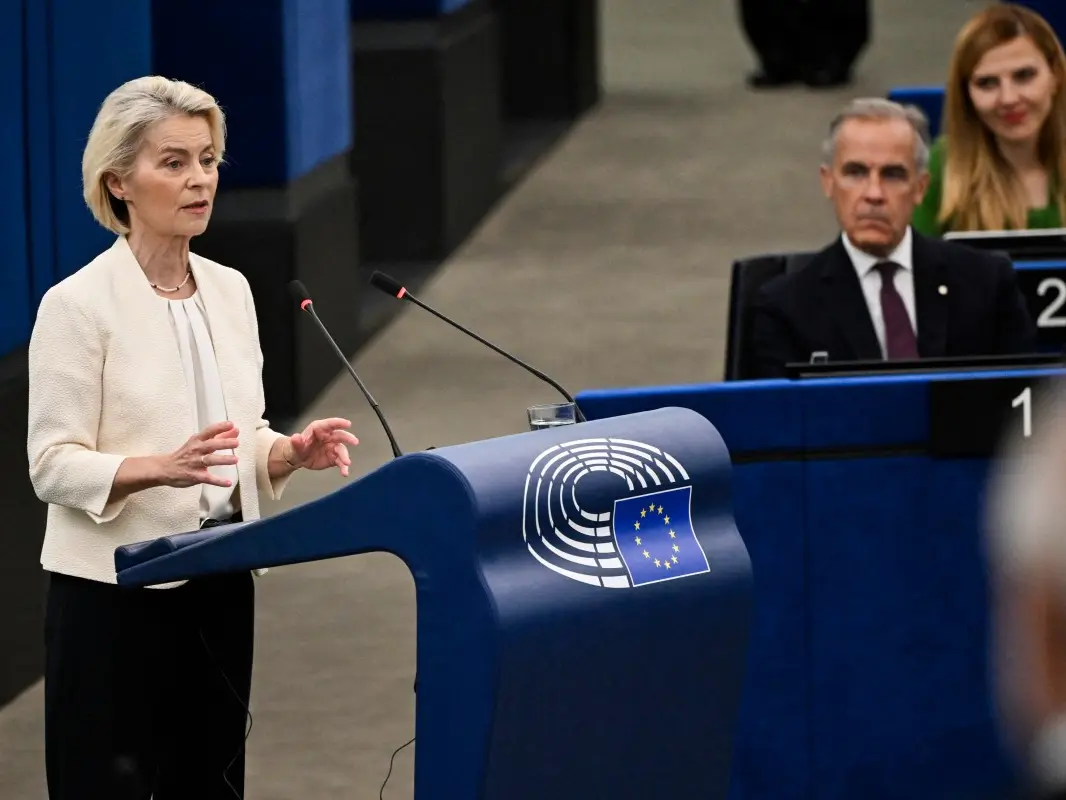)
Canada to become EU’s first ‘associate member’? Von der Leyen proposes move amid US tensions
There are historical parallels between events leading up to the conference in Eivan in 1938, Germany had already annexed Austria, now Israel has effectively annexed parts of the West Bank. It had been bombing Palestinian refugees in tents. The G7 Summit in Eivan expressed support for Israel, "We affirm that Israel has a right to defend itself. We reiterate our support for the security of Israel," G7 leaders said in the statement. They did acknowledge the human rights violations in Gaza, but it could not produce accountability or a concrete, actionable solution to end the humanitarian crisis. But it continued with its narrative that Iran is the source of instability in the region, the G7 leaders urged a broader de-escalation in the region. The United Nations Security Council and other international humanitarian bodies lack authority due to political divisions and persistent vetoes by the US to enforce robust humanitarian protection.