From 1st to the 14th: The full list of Dalai Lamas and their remarkable legacy

&imwidth=600&imheight=450&format=webp&quality=medium "From 1st to the 14th: The full list of Dalai Lamas and their remarkable legacy")
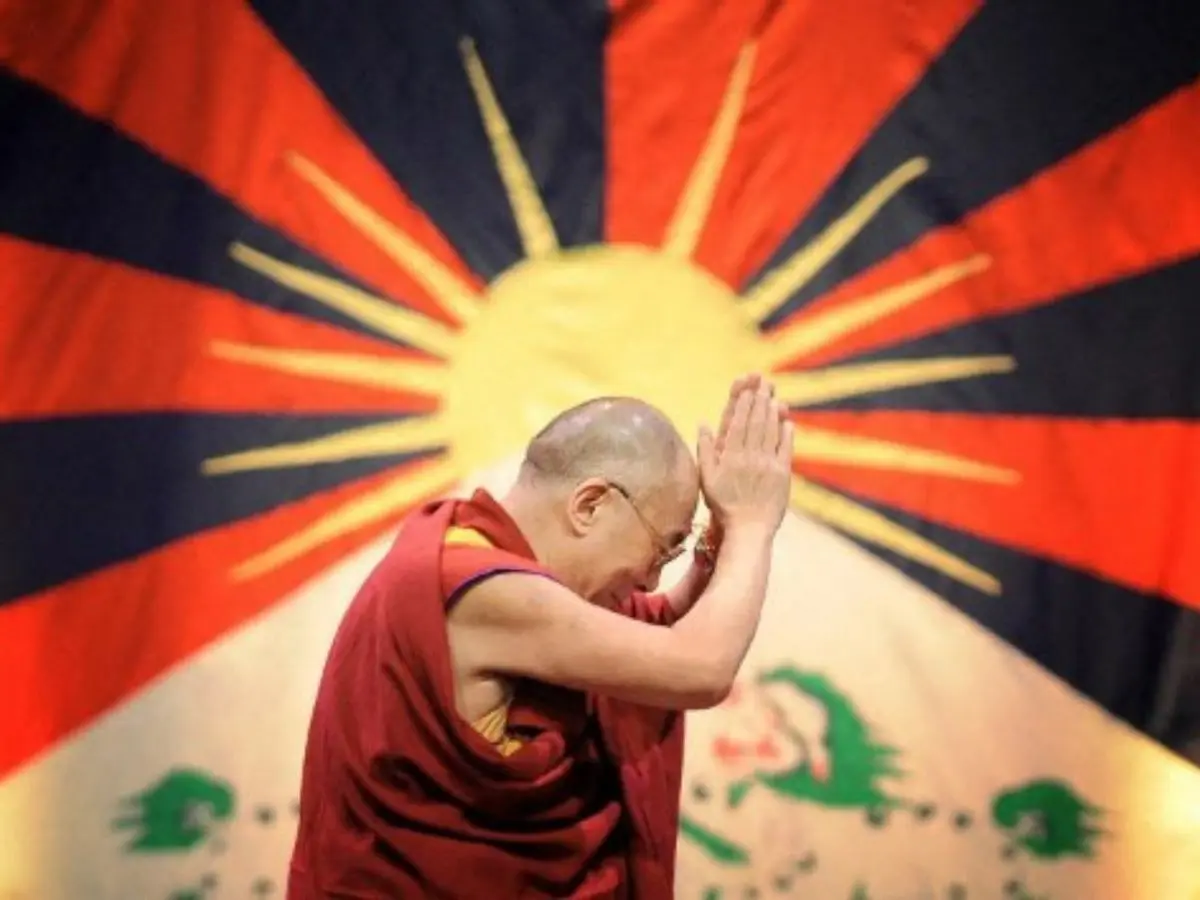
From 1st to the 14th: The full list of Dalai Lamas and their remarkable legacy Photograph: (AFP)
As the debate over the succession of the 14th Dalai Lama has heated up, we look at the full list of Lamas and the legacy they have left behind.
The debate over the succession of the 14th Dalai Lama has heated up, with the 90th birthday of Tenzin Gyatso being celebrated on July 6. China rejected the succession plan of Tenzin Gyatso, saying any future spiritual leader of Tibet has to receive approval from the People's Republic of China. India is weighing in on the debate with Union Minister Kiren Rijiju, a practising Buddhist, saying that the reincarnation of the Dalai Lama should be decided by the Gaden Phodrang Trust, which was established by the office of the 14th Dalai Lama in 2015. This becomes of paramount importance as the 14th Dalai Lama, Tenzin Gyatso, has spent decades in exile leading the Tibetan people as China occupied Tibet (Xizang) in 1950, calling it a ‘peaceful liberation of Tibet.’
The succession of the Dalai Lama is a process of reincarnation, by a search committee of Lamas using a mixture of vision and signs, such as the direction of smoke from the cremation, and visions at the holy lake like Lhamo Latso. The Dalai Lama is the spiritual leader of Tibetan Buddhism, and they have served as a symbol of compassion, resilience, and cultural identity for the Tibetan people, dating back to before the 15th century.
From 1st to 14th: The full list of the Dalai Lamas
1. Gendun Drup (1391–1474)
A student of Je Tsongkhapa, who was an influential Buddhist Monk, a philosopher and a tantrik yogi, founder of the Gelug school of Buddhism. Gendun was not recognised as the Dalai Lama during his lifetime and founded the Tashi Lhunpo Monastery in Shigaste, the second largest city in Tibet.
2. Gedun Gyatso (1475- 1542)
Trending Stories
)
)
&im=FitAndFill=(700,400))
)
)
)
)
)
)
)
)
)
)
)
)
)
)
)
)
&im=FitAndFill=(700,400))
)
)
)
)
)
)
)
)
)
&im=FitAndFill=(700,400))
)
)
)
&im=FitAndFill=(700,400))
)
Gedun Gyatso is the reincarnation of Gendun Drup. He was known for his scholarship and for spreading the Gelug tradition. He reportedly told his parents that his name was Pema Dorjee, the birth name of the 1st Dalai Lama. He served as abbot of Drepung and Sera monasteries. He revived the Monlam Chenmo, the Great Prayer Festival.
3. Sonam Gyatso (1543-1588)
He was the first to be called the Dalai Lama. The title was granted by Mongol ruler Altan Khan, which means Ocean of Wisdom. In return, he called Altan Khan ‘Brahma’, which means the king of religion. He was instrumental in converting Mongols into Tibetan Buddhism. He was responsible for establishing a strong relationship between Mongolia and Tibet.
4. Yonten Gyatso (1589–1617)
Yonten Gyatsowas Mongolian by birth and the great-grandson of Altan Khan. He faced political resistance in Tibet due to his Mongolian origin. He passed away young amid tensions in the region.
5. Lobsang Gyatso (1617-1682)
He was known as the Great Fifth and united all the Tibetan people under the Gelug school. He was identified as the Dalai Lama when Tibet was under political turmoil. He started the construction of Potala Palace, but died before finishing it. He was a great statesman and spiritual leader.
6. Tsangyang Gyatso (1697–1706)
Desi Sangye Gyatso completed the Potala Palace and kept the death of Lobsang Gyatso a secret for 15 years due to the growing political unrest. In 1697, he was succeeded by the Tsangyang Gyatso, who was a young and unconventional, with a taste for Romantic poetry. In 1701, there was a conflict between the Desi and Lhasang Khan, the Mongol King, in which Desi Sangye Gyatso died. The young Lama abandoned his monastic studies and chose outdoor life. He roamed around Lhasa, drank chang and sang songs. He disappeared after being taken by the Qing forces
7. Kelsang Gyatso (1708- 1757)
Tibetans believed that Tsangyang Gyatso predicted his reincarnation when he wrote the song
White crane, lend me your wings,
I go no farther than Lithang,
And thence, return again.
Two years after the disappearance of Tsangyang Gyatso, Kelsang Gyatso was born. He was recognised and enthroned as a Lama with Chinese recognition. He revived Monastic discipline following the 6th Dalai Lama. He wrote many religious texts and prayers.
8. Jamphel Gyatso (1758-1804)
During his time strong Qing influence was noticed in Tibetan affairs. At the age of seven, he took up monkhood. His time laid the groundwork for the foundation of the reorganisation of the Tibetan government. He died at the age of 47.
9. Tsultrim Gyatso (1805–1810)
He was enthroned at the age of 5 and died at the age of 9. His premature death led to a prolonged search for his successor.
10. Tsultrim Gyatso (1816-1837)
He also died young and followed by another period of instability in the Tibetan political landscape.
11. Khedrup Gyatso (1838-1856)
Political instability marked his time he also died at a very young age. He became a monk at the age of eleven and died at the age of 18.
12. Trinley Gyatso (1856-1875)
He took the oath of monkhood at the age of 5. In 1873, at the age of eighteen, he became the spiritual and political leader of Tibet. In 1875, he died at the age of 20 in the Potala Palace.
13. Thupten Gyatso (1876-1933)
He modernised Tibet and tried to reform Tibet. At the age of six, he was ordained as a novice monk. At the age of 19 he took full monkhood. He resisted the strong British and Chinese influence. He went through the British invasion of Tibet in 1904 and the Chinese invasion of his country in 1909/10, but survived the ordeals of both experiences, with his authority enormously enhanced. He strengthened the Tibetan military and established Men-Tse-Khang (Tibetan Military and Astrology Institute). He died in 1933 without finishing his modernisation goal.
14. Tenzin Gyatso (Born 1935)
He was enthroned in 1940 and assumed full political power in 1950. During the Chinese invasion, he fled to India in 1959. In 1989, he won the Nobel Peace Prize. Advocating a democratic Tibetan government-in-exile, he renounced his political role in 2011. Globally, he is revered as a voice for peace, compassion, and Tibetan rights.
The role of the Dalai Lama has evolved from humble monk to spiritual monarch. They have shaped the destiny people of Tibet and still continue to do so. Their message is one of peace and compassion, which makes their legacy important for Tibet and Buddhism.

