&imwidth=800&imheight=600&format=webp&quality=medium "France's \"Super Rafale\" vs. America's F-35: Battle for Europe's skies")
For decades, European nations have lined up to buy American fighter jets, placing their trust—and billions of dollars—in U.S. technology. But the winds are shifting. France is now preparing to challenge America's dominance in the skies with an upgraded version of its Rafale fighter jet, the F5 "Super Rafale," which aims to rival the much-celebrated F-35 Lightning II. This isn't just about selling planes anymore. It's about Europe reclaiming control over its own defence future and reducing its dependence on Washington.
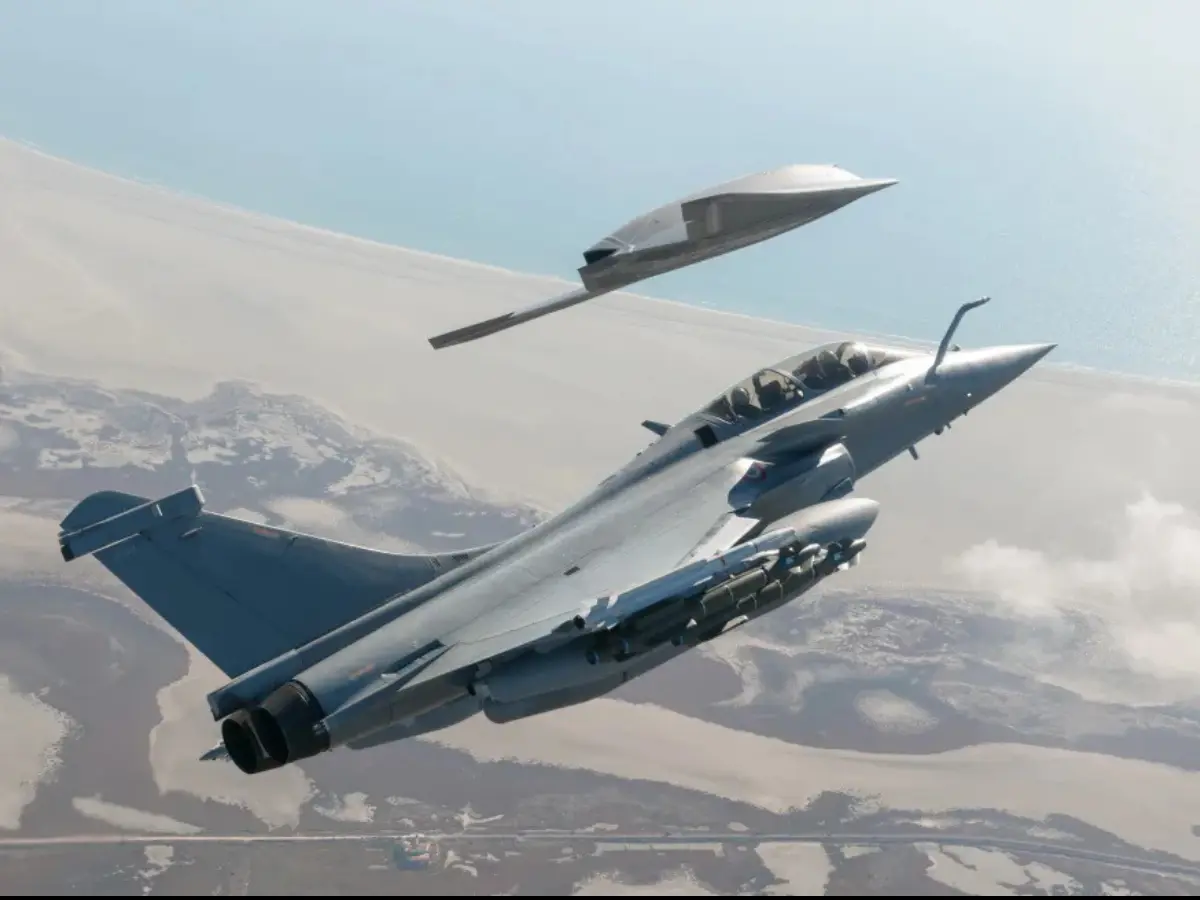
According to the National Security Journal, Dassault Aviation's chief Eric Trappier, recently announced that France will soon receive a government contract to develop the Rafale F5, expected to enter service by 2030. This upgraded jet promises advanced electronic warfare systems, next-generation missiles, and the ability to command unmanned "loyal wingman" drones flying alongside it. The goal is clear: to offer European nations a homegrown alternative that matches the F-35's capabilities without the strings attached to American technology.
The timing couldn't be more significant. Even as the F-35 has dominated European defence contracts in recent years, cracks are beginning to show in this transatlantic arrangement. Spain has already abandoned its plans to purchase F-35s, choosing instead to invest in European options like the Eurofighter and the Future Combat Air System. Portugal, too, has paused its F-35 acquisition plans, citing concerns about political uncertainty in the United States and overdependence on American software and supply chains. There are whispers that Lisbon may now turn to France's Rafale instead.

This shift reflects a deeper anxiety brewing across Europe. For too long, European militaries have relied on American weapons systems, leaving them vulnerable to U.S. political decisions and supply disruptions. The Super Rafale offers an escape route—a chance for Europe to control its own destiny. If France delivers on its promises, the Rafale F5 could become the centerpiece of a more independent European defence architecture, one that doesn't need Washington's approval to function.
But can the Super Rafale truly compete with the F-35? On paper, the upgrades are impressive. The F5 will feature cutting-edge electronic warfare capabilities, forming a protective shield around the aircraft. It will carry France's future ASN4G hypersonic nuclear missile, keeping it relevant in the nuclear deterrence game. Perhaps most importantly, it will integrate seamlessly with unmanned combat drones, creating a networked combat system where pilots and machines work together. French experts call this the "Club Rafale" network—a unified combat ecosystem that mirrors the direction next-generation warfare is heading.
The Rafale has already proven its worth outside Europe, winning major contracts in Asia and the Middle East, including deals with Indonesia and other nations seeking alternatives to American hardware. But within Europe, it has struggled to compete with the F-35's stealth and technological allure. The F5 upgrade is France's attempt to change that narrative. By matching or exceeding the F-35's capabilities, Dassault hopes to persuade European allies that they don't need to look across the Atlantic for their defence needs.
Trending Stories
)
'Lot of things to learn from experienced players': Jayasuriya backs Rohit, Virat for 2027 ODI World Cup
&im=FitAndFill=(700,400))
Kareena Kapoor birthday special: Inside her net worth, best movies, luxurious lifestyle and love story with Saif Ali Khan
)
Trump says he'll build an 'AI Force' and appoint a czar, for 'high IQ' people only
)
Punjab man consumes poison outside DC office; Congress, BJP target AAP government
)
SNL UK takes aim at Ed Sheeran with AI Princess Diana sketch
)
Iran sets 7 conditions to end war with US: What are Tehran’s demands?
)
AI actress Tilly Norwood glitches mid-interview, switches from English to Chinese | Watch
)
Mahabharat actor Saurav Gurjar arrested in Hyderabad, sent to 14-day judicial custody in sexual exploitation case
)
Chancellor Friedrich Merz vows to stay on as exit polls signal major poll setback
)
J&K Assembly Session begins amid chaos: BJP, ruling alliance clash as statehood demand dominates
)
Taylor Swift has a 'proud wife' moment as Travis Kelce scores first touchdown of season: 'That’s my husband!'
)
'Were you here to sell chickpeas?': Wasim Akram criticises Babar Azam's captaincy
&im=FitAndFill=(700,400))
New OTT releases this week (September 21-27, 2026): Shaque: Trust No One, Hunkkaar, Don’t Be Shy- 5 new titles coming to Netflix, Prime Video and more
)
Noel Tata challenges Chandrasekaran’s reappointment as Tata Sons chairman. What happened at the board meeting
)
Italy moves to ban face veils in schools as Meloni pushes new integration measures
)
TIFF 2026: Theja Rio’s Angh wins Platform Prize, puts Nagaland story on global stage
)
Delhi: Flagged voters remain on the draft roll but face hearings
)
Saudi Arabia exits China-led mBridge digital currency platform amid Saudi-Houthi conflict
)
40-foot waves crash into cruise ship in dangerous stretch near Antarctica. Watch
)
Jailer 2: Vidya Balan joins Rajinikanth's upcoming film as Kantha | Watch
)
‘0% chance’: Nvidia CEO Jensen Huang dismisses AI extinction fears by 2030
)
Samsung raises Galaxy S26 prices by Rs 20,000: Here’s what each model now costs
)
Bessent meets China’s He Lifeng to prepare for Trump-Xi summit
)
CDU suffers historic defeat in eastern Germany as AfD surges, Merz vows to stay on
)
China now makes advanced memory chips without the machines it was banned from buying
)
Arvind Kejriwal, family members, Delhi CM Rekha Gupta get SIR notices
)
Trump-Xi summit: US Treasury Secretary holds meeting with Chinese Vice Premier
)
Fleming's aspirations as England Test coach include WTC, top ranking and Ashes
)
Saudi vs Houthis: Houthis claim missiles & drones used in attack on key Saudi sites
)
Delhi Air pollution: Strict crackdown on waste burning
)
Apple reportedly building AI server with M8 Ultra chips, may use Nvidia technology
&im=FitAndFill=(700,400))
What TSMC's 2nm technology means for Apple
)
Glitch in the matrix caught on camera: Woman vanishes after talking to reporter
)
Several petrol pumps, other businesses to refuse UPI payments above Rs 2,000 from Oct 16: Is it legal?
)
AI kill switch explained: Why shutting down a dangerous AI may not be as simple as pressing a button
)
Microsoft executive called AI training the ‘largest theft of labour in human history’
)
Pilot recreates Mona Lisa in sky over Oklahoma and Arkansas in four-hour flight: VIDEO
)
US ships in Indian Ocean ‘will be attacked’ if war resumes, warns Iran
)
Samay Raina-Mukesh Chhabra controversy explained: What happened over girlfriend joke on India's Got Latent?
)
Putin's United Russia party wins 355 seats in Duma election; 4 other parties cross threshold to enter parliament
)
S Jaishankar, former Army chief among high-profile names issued Delhi SIR notices
The development timeline is ambitious but achievable. The current Rafale F4 version entered service in February 2024, and work on the F5 is already underway. Flight testing is expected to begin soon, with the first jets potentially delivered by 2027 and full operational capability reached by 2030. France will operate both the F4 and F5 versions during this transition period, ensuring continuity while pushing toward the future. Beyond the F5, France is also working on the Future Combat Air System, a next-generation fighter program that could eventually replace the Rafale entirely.
If France succeeds, the implications will ripple far beyond the aviation industry. A credible European alternative to the F-35 could fundamentally alter the balance of power in transatlantic defence relationships. European nations would gain leverage in their dealings with Washington, no longer forced to accept American terms simply because there are no other options. The European defence industry would receive a major boost, creating jobs and technological expertise that stay on the continent. And perhaps most importantly, Europe would take a significant step toward strategic autonomy—the ability to defend itself without depending on foreign powers.
Of course, challenges remain. The F-35 program, despite its flaws, benefits from massive economies of scale and decades of development investment. It has a proven track record and is already in service with numerous NATO allies. The Rafale F5, by contrast, is still on the drawing board. Convincing countries that have already committed to the F-35 to change course will not be easy. And there's always the risk that technological delays or cost overruns could undermine confidence in the French program.
Yet the mere fact that serious European nations are reconsidering their F-35 purchases shows how much the landscape has changed. The combination of political uncertainty in America, concerns about supply chain vulnerabilities, and a growing desire for European independence has created an opening for alternatives. France is betting that the Super Rafale can fill that gap.
For India, watching from the sidelines, this competition holds lessons. New Delhi has long wrestled with similar questions about defence dependence and technological sovereignty. The success or failure of the Rafale F5 could offer a roadmap for other nations seeking to balance access to cutting-edge technology with the need to maintain strategic independence.
As Europe stands at this crossroads, one thing is certain: the era of unquestioned American dominance in the fighter jet market is ending. Whether France's Super Rafale can truly rival the F-35 remains to be seen. But the very fact that Europe is trying signals a new chapter in global defence politics—one where allies are no longer content to simply follow Washington's lead. The skies above Europe may soon belong to a different kind of fighter jet, and the world will be watching to see if France can pull off this ambitious gamble.