Why France looks the most fragile in the G7 amid protests and budget deadlock

&imwidth=600&imheight=450&format=webp&quality=medium "Why France looks the most fragile in the G7 amid protests and budget deadlock")
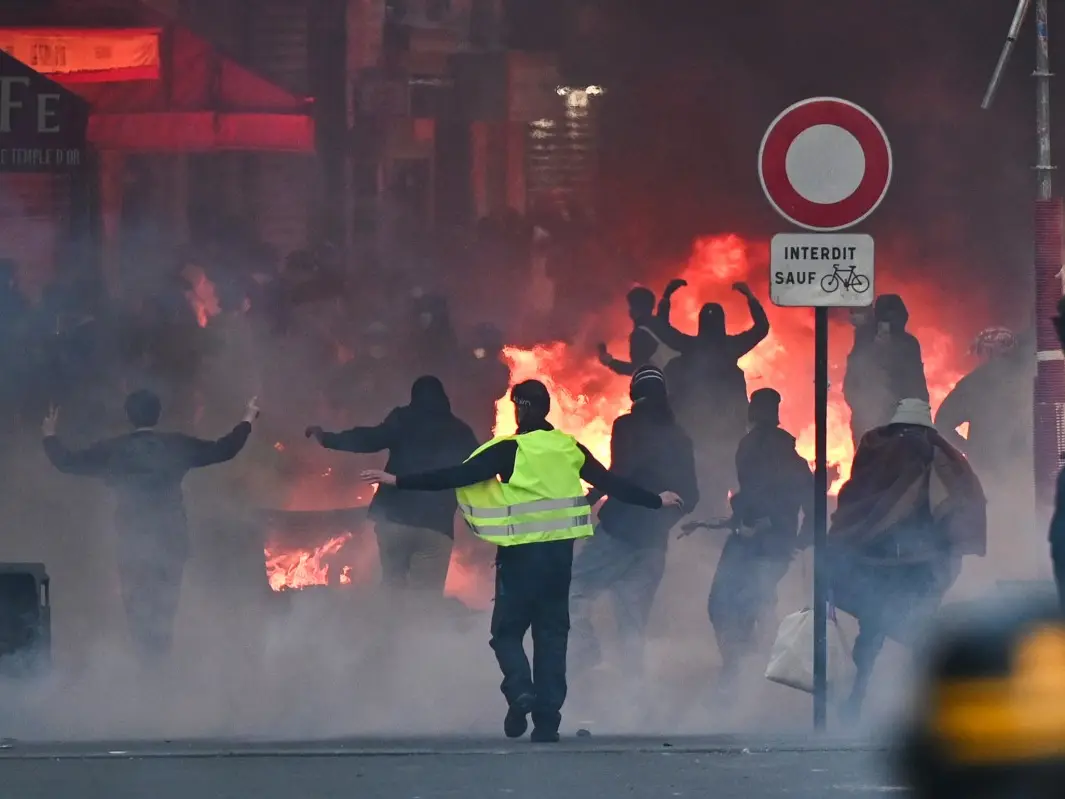
Protestors stand in front of a fire in Faubourg du Temple street as clashes erupted at Place de la Republique following an unauthorised demonstration, central Paris, on October 18, 2026 a day after nationwide protests against the "high cost of living". Photograph: (AFP)
France plans to borrow a record €340 billion in 2027 as political gridlock, mass protests, rising bond yields and a widening deficit raise concerns over its fiscal stability.
France plans to borrow a record €340 billion next year, about €1.3 billion for every working day. It must do so as nationwide riots and sharp criticism from Washington complicate the budget meant to reassure its lenders. It is among the most vulnerable G7 economies: the majority of its debt is foreign-held, it can't print its own money, borrows in euros, and its political landscape is seemingly in a gridlock, with protests raging in the streets.
France's fiscal crisis
Foreign lenders can leave faster than domestic ones. The Banque de France says non-residents held about 56% of the state's negotiable debt at the end of 2025, and 63% of all long-term French debt securities by the end of June 2026.
The French 10-year yield was 4.79% on October 16, after nearing 5% earlier this month, its highest since 2002. The gap over German bonds is about 1.4 points, below the roughly 1.9 reached in the 2011 European Debt crisis. Debt is about 119% of GDP, the deficit 5.4%, and interest costs are projected at about €91 billion in 2027.
In a desperate scenario, only the European Central Bank can step in, and in past crises it attached strict conditions. In 2011, Italy's government rewrote its budget under pressure from a letter sent by the ECB. A country with its own currency avoids default but can face inflation instead.
Prime Minister Sébastien Lecornu presented the 2027 budget on October 1 with a €54 billion savings effort and a 5% deficit target, looser than the 4.1% France had earlier committed to Brussels. The National Assembly opened debate on October 13, with a vote on the revenue section due October 20 and on the full bill November 17. The government has no majority. Laurent Panifous, the minister for relations with Parliament, conceded that passing the budget by a vote would be very difficult. Lecornu has promised not to bypass parliament unless opponents obstruct, and La France Insoumise says it will move to censure him if he does.
Trending Stories
&imwidth=280&imheight=210&format=webp&quality=medium)
&imwidth=280&imheight=210&format=webp&quality=medium)
&imwidth=280&imheight=210&format=webp&quality=medium)
&imwidth=280&imheight=210&format=webp&quality=medium)
&imwidth=280&imheight=210&format=webp&quality=medium)
&imwidth=280&imheight=210&format=webp&quality=medium)
&imwidth=280&imheight=210&format=webp&quality=medium)
&imwidth=280&imheight=210&format=webp&quality=medium)
&imwidth=280&imheight=210&format=webp&quality=medium)
&imwidth=280&imheight=210&format=webp&quality=medium)
&imwidth=280&imheight=210&format=webp&quality=medium)
&imwidth=280&imheight=210&format=webp&quality=medium)
&imwidth=280&imheight=210&format=webp&quality=medium)
&imwidth=280&imheight=210&format=webp&quality=medium)
&imwidth=280&imheight=210&format=webp&quality=medium)
&imwidth=280&imheight=210&format=webp&quality=medium)
&imwidth=280&imheight=210&format=webp&quality=medium)
&imwidth=280&imheight=210&format=webp&quality=medium)
&imwidth=280&imheight=210&format=webp&quality=medium)
&imwidth=280&imheight=210&format=webp&quality=medium)
&imwidth=280&imheight=210&format=webp&quality=medium)
&imwidth=280&imheight=210&format=webp&quality=medium)
&imwidth=280&imheight=210&format=webp&quality=medium)
&imwidth=280&imheight=210&format=webp&quality=medium)
&imwidth=280&imheight=210&format=webp&quality=medium)
&imwidth=280&imheight=210&format=webp&quality=medium)
&im=FitAndFill=(700,400)&imwidth=280&imheight=210&format=webp&quality=medium)
&imwidth=280&imheight=210&format=webp&quality=medium)
&imwidth=280&imheight=210&format=webp&quality=medium)
&imwidth=280&imheight=210&format=webp&quality=medium)
&imwidth=280&imheight=210&format=webp&quality=medium)
&imwidth=280&imheight=210&format=webp&quality=medium)
&imwidth=280&imheight=210&format=webp&quality=medium)
&imwidth=280&imheight=210&format=webp&quality=medium)
&imwidth=280&imheight=210&format=webp&quality=medium)
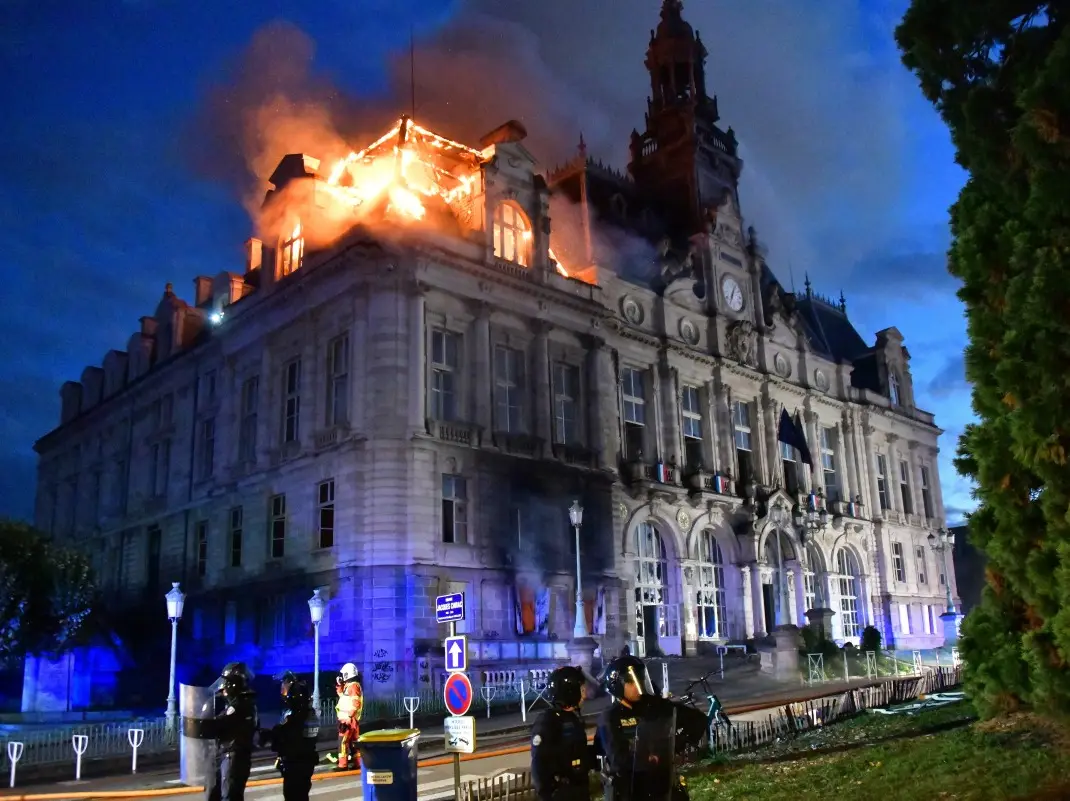
On October 17, about 550,000 people marched, according to the interior minister. Rioting followed after dark, with 1,800 detained and more than 500 police injured. CNN reported one protester died. The marchers' demands centred on fuel prices, the cost of living and school conditions.
Why does France look the most fragile in the G7?
France stands out even though it does not carry the biggest debt. Japan owes more, about 204% of GDP by the IMF's measure, but only around 8% is held abroad, and nearly half sits with its own central bank.
The US borrows in dollars its central bank can create, so its main risk is self-imposed: a $41.1 trillion debt cap that analysts expect it to reach between late winter and mid-summer of 2027, though Republicans are reportedly weighing an increase before then.
Germany also borrows in euros, but its debt is far lower than France's. The IMF estimates its net debt at about 49% of GDP this year, against about 110% for France. Canada's net debt is roughly 10% of GDP, according to IMF estimates.
Britain's 10-year yield hit a 19-year high of 5.29% in September, but the 2022 bond crisis ended within weeks because the government reversed course.
Italy is the closest comparison. Its debt, at about 138% of GDP, is higher than France's 119%, and it also borrows in euros. But its 10-year yield was about 4.5% on October 16, against France's 4.79%, and it has a steadier government and a long record of surpluses before interest payments. However, Italy's deficit is forecast to rise to 3.4% of GDP in 2027,
France is the only one of the seven to fail all three parameters: who holds the debt, which currency it borrows in, and political stability and willingness to reverse course.
Trump's anti-immigration rhetoric
President Donald Trump blamed the student protests on "mass migration" and Islam on October 6, offering no evidence. AFP reported that no link had been established between the student movement and religious or identity-based demands. On Sunday, Trump posted that France was burning and urged it to "close your borders." Though there is no link between immigration and riots, and its fiscal effect is weak, almost negligible.
France's interior minister said the right to protest is fundamental but deliberate violence is not. The American remarks address the unrest, not the budget or bond market, where the drivers are the deficit, an energy shock and political gridlock.
France still sells its bonds, and Fitch and S&P rate it A+, Moody's has Aa3 with a negative outlook. Its yields are well below Greece's in 2015. The more likely stress is political and possibly a call for ECB help.
France is on the edge, with domestic political unrest, a severe fiscal crisis, and mounting international pressure. The October 20 vote is the first test, and the April 2027 presidential election is the larger one.