EU leaders aim for deal in December on new climate change target

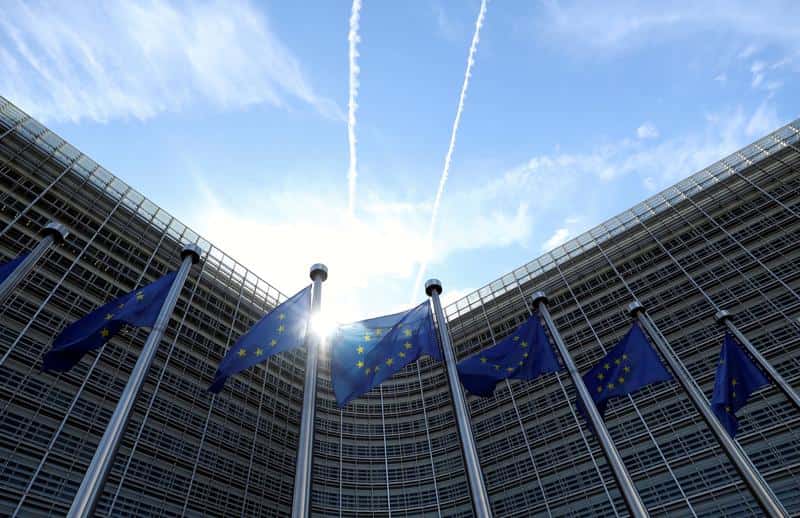
European Union
European Union countries edged closer to agreement on a new climate target at a summit on Thursday, but deferred a deal on the emissions-cutting goal to a meeting in December.
The leaders` discussion in Brussels was their first on upgrading the existing EU target of a 40% cut in greenhouse gas emissions by 2030.
The EU`s executive, the European Commission, has said the bloc needs a cut of at least 55% by 2030, against 1990 levels, to achieve the goal of net zero emissions by 2050 that all 27 countries bar coal-dependent Poland have committed to.

The leaders did not endorse a specific 2030 target on Thursday, but agreed to "return to the issue" in December, with the aim of finalising the goal by year-end.
The EU takes decisions by unanimity. Once countries agree a common position on the 2030 target, they must strike a deal with the European Parliament, which wants a 60% emissions cut.
Leaders agreed to postpone the deal until countries have more information on the national impact of the target. That could placate Poland, which has said it cannot back a new climate goal without this analysis.
)
The Royals enter the Doctor Who universe: King Charles and Queen Camilla beam into Commonwealth Games in TARDIS
)
CJP claims SC's 'uninformed' interim order contradicts government assurances
)
'First dumb AI': Meta AI blocks Indian PM Modi's video in his own country, allows abuse ads and deletes livelihoods without explanation
)
India avoids higher US tariff, secures lower 10% rate. Here's how
)
You are a 'Naked Official' in China if you hold high posts and have children or spouse abroad. What about India?
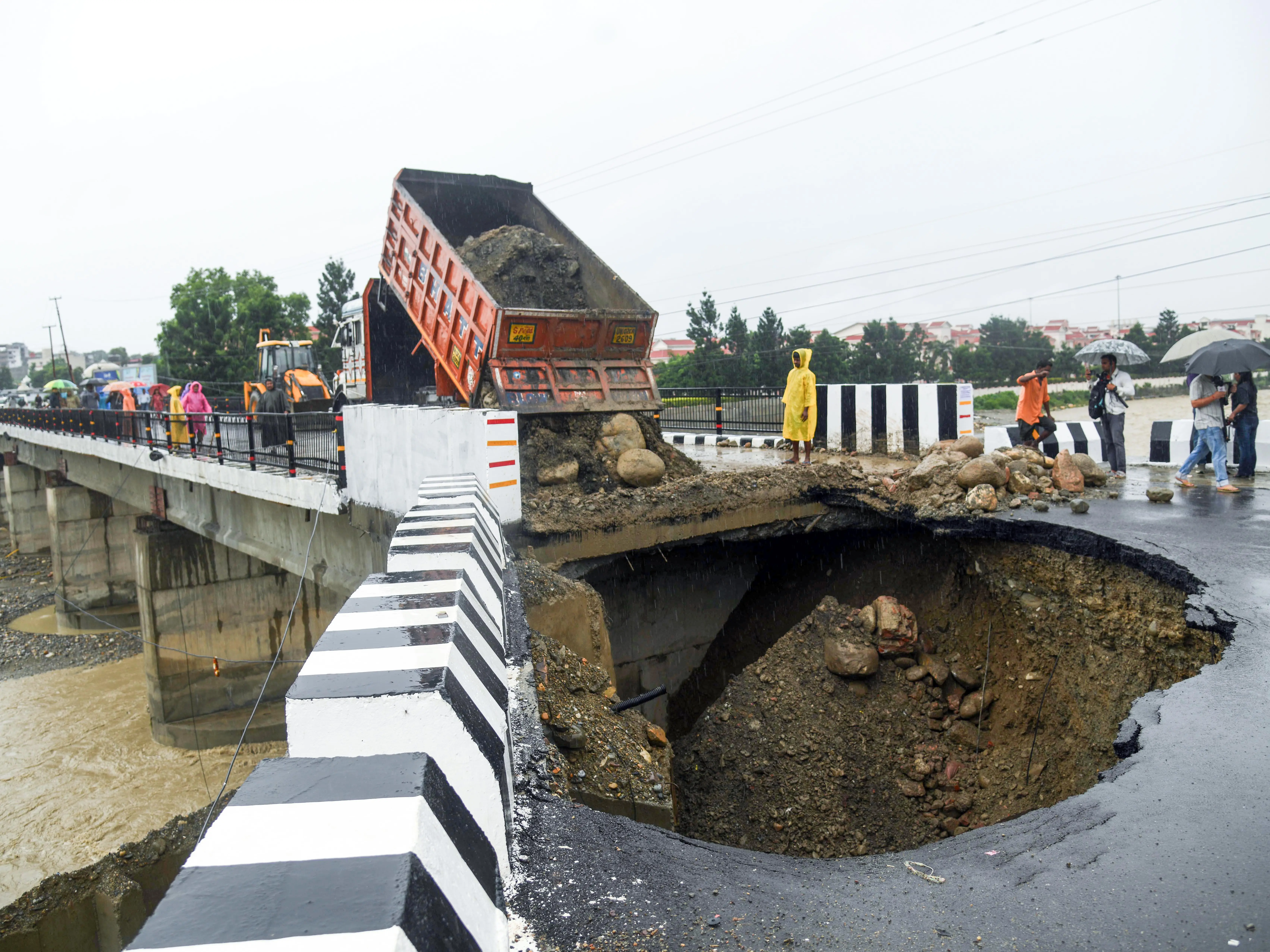)
₹16 crore Dehradun bridge approach road collapses just 17 days after inauguration, repaired within 12 hours
)
ChatGPT invoked God, told pastor not to worry about his symptoms. Then pulmonary embolism hit
)
'Worst quality AI in market': Meta AI's moderation fail hits PM Modi and Indian Democracy
)
Scientist blames dark matter at centre of Milky Way for mass extinctions on Earth - 'There is a pattern'
)
PoK protesters 'enemies like India', says Pakistan defence minister Khawaja Asif amid widespread violence
)
Ramayana trailer release time revealed: Namit Malhotra sets specific early morning date after delay
)
'Broader struggle for democracy...': Greta Thunberg joins Indian students protest in London - What she said
)
NEET Protests riddled with misinformation? Delhi Police blocks 480 Pakistan-based handles spreading 'fake news' since Operation Sindoor
)
Netanyahu tells Trump Israel may have 'no choice' but to strike Iran again: Report
)
'Pickaxe Mountain did not come up': Israel denies nuclear site was discussed in Trump-Netanyahu meeting
)
Heartbreaking video shows Assam father carrying three children through neck-deep floodwaters
)
Netanyahu to present Trump with fresh intel on Iran's SECRET 'Pickaxe Mountain' nuclear site: Report
)
Trump says Iranian school bombing photos could be AI-generated - 'I don’t think...'
)
Giant iceberg flips violently near Greenland exposing its underside - 'I didn't know they could do that'
)
Iran says it is functioning as a non-NPT state, keeps door open on treaty exit
)
Flesh Impact: Dakota Johnson transforms as Marilyn Monroe for Maggie Gyllenhaal's short film | See pics
)
'Asian Bradman' Zaheer Abbas backs Rohit, Virat for 2027 ODI World Cup
)
CJP's Saurav Das says no one takes Kangana Ranaut seriously; actress calls him 'totally useless and unemployed'
)
He predicted COVID-19 and 2008 economic crisis, was labeled fearmonger. Now he has another dire warning
)
Parliamentary panel summons social media giants after PM Modi video removal row
)
See You at Work Tomorrow finale: Seo In Guk-Park Ji Hyun's office romance delivers sweetest farewell
)
PoK violence escalates: 67 dead as India rejects Pakistan's polls as a 'cosmetic exercise' | Gravitas
)
Jennifer Lopez's ex-husband Ojani Noa claims he confronted Sean 'Diddy' Combs over alleged affair
)
67 dead in Munir's deadly PoK crackdown, India slams 'cosmetic' elections
)
China deploying advanced fighter jets closer to India's northern frontier
)
Russia-Ukraine War: Putin's big warning amid Ukraine war escalation
)
Watch a SpaceX rocket crash into the moon at 8,750 km/hr on THIS day
)
5 Overs, 5 Wickets and ZERO Runs: Justin Greaves bowls world record spell against Pakistan| WATCH
The Council of EU leaders "invites the Commission to conduct in-depth consultations with member states to assess the specific situations and to provide more information about the impact at member states` level," a joint statement said.
It also confirmed the 2030 emissions-cutting target would be met "collectively" at the EU level. This could help convince the Czech Republic, which said on Thursday it could support an EU-wide 55% emissions cut by 2030, but that it could not achieve that goal at a national level.
"Every country has a different energy mix and we have to take it into consideration. So if we agree on a 55% average in the EU, the Czech Republic doesn`t have any problem," Prime Minister Andrej Babis said.
Babis also represented Poland at the summit, since Polish Prime Minister Mateusz Morawiecki is self-isolating after contact with a person infected with COVID-19.
"We are not sure, even roughly, what the cost would be for individual countries," said an official from a country that has not yet pledged support for the 55% emissions-cutting goal.
But if the EU allocates sufficient funds from its next budget to help carbon-intensive countries meet the goal, "then we will not get in the way of the consensus" in December, the official said.
Roughly half of the EU`s 27 members - including Germany, France, Spain, Latvia and Denmark - have said they support the "at least 55%" goal. The target would usher in sweeping changes to EU policies, including tighter car emissions standards and higher carbon costs for industry and airlines.