David's Sling and Arrow, the anti-missile systems protecting Israel together with Iron Dome

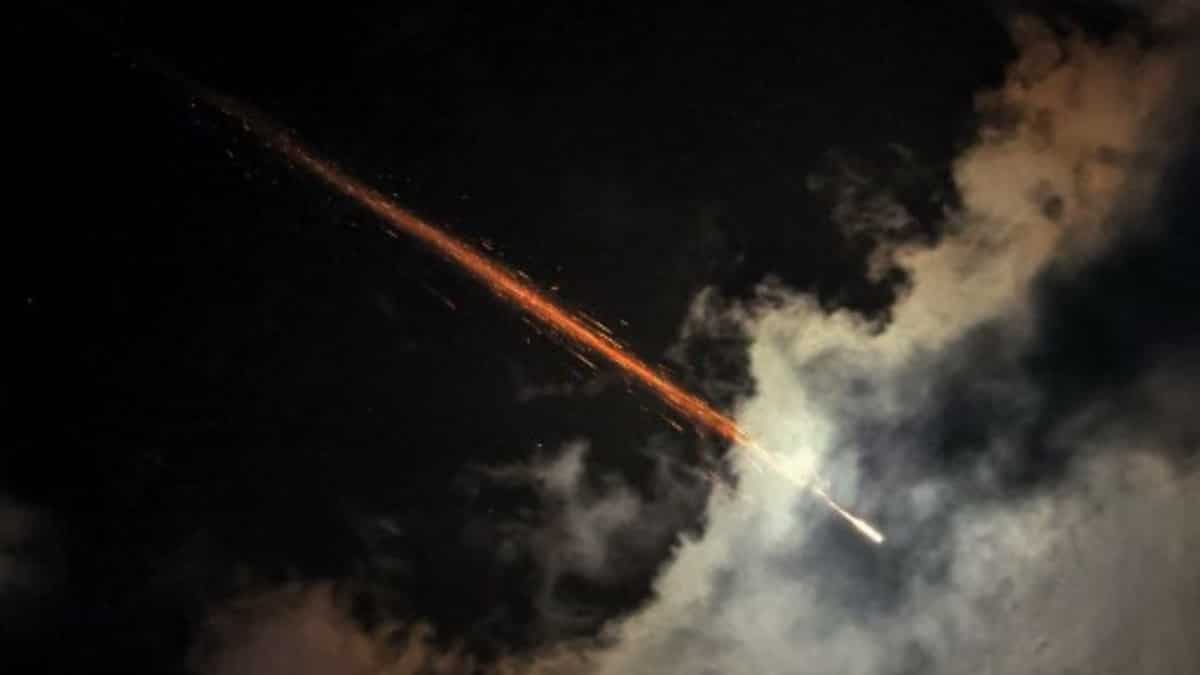
Iran attacks Israel
Iran launched more than 200 ballistic missiles at Israel on Tuesday and the attack once again put the spotlight on Tel Aviv's defence systems that protect it against a range of missiles, ranging from ballistic missiles capable of flying above the atmosphere to low-flying cruise missiles and rockets.
Israel's Iron Dome system is the one most people know about. However, there are other systems as well which the country uses, depending on the type of rocket fired.
The Iron Dome system is used to shoot down unguided short-range rocket systems fired at Israel by both Hezbollah and Hamas. It made headlines following Hamas' attack on Israel on October 7 last year.

The country has at least 10 Iron Dome batteries. A radar on each of them detects rockets and estimates the threat posed by them using a command-and-control system. If the rocket is found to be moving towards a populated area, the Iron Dome fires missiles from the ground to destroy it in the air.
However, according to the country’s Missile Defense Organization (IMDO), the Iron Dome is the bottom layer of Israel’s missile defence.
To target guided ballistic missiles travelling at higher altitudes, longer ranges, and faster speeds, Israel uses different intercept systems. This includes David’s Sling and the Arrow 2 and 3. The home-grown air defence systems can bring down medium-range and long-range ballistic missiles.
)
‘Kill all in the name of...’: FBI arrests 21-year-old over alleged ISIS-inspired mass-casualty attack plot
)
Space mines, lasers & robotic arms: Lt Gen Pannu decodes US disclosure of weapons in space
)
Bitter Zelensky snubs Trump for playing politics with Ukraine war | Gravitas
)
Passengers scream as Iran flight suffers mid-air scare: Boeing 737 shakes violently after take-off | VIDEO
)
US fires up to 70 interceptors against Iran attack on Jordan, putting supplies under pressure
)
India’s imports from Russia jump 57% in five months; China remains top import source
)
‘US military task force aiding Saudi Arabia forces with intel, planning support’: Official
)
OpenAI boss Sam Altman repeats AI 'slow down' call, says world 'right to be afraid'
)
Top military commanders from US, Israel, and 7 Arab nations held secret meeting on Iran War
)
Sydney Sweeney defends provocative ad choice, the internet is still not impressed
)
'Definitely feel bad for yourself': Kuldeep Yadav opens up on India Test snubs
)
Ex-India all-rounder Yuvraj Singh wants India to avoid 'massive changes' before ODI World Cup 2027
)
Ed Sheeran’s US tour loses all support acts after Macklemore’s removal | Controversy explained
)
China's property crisis deepens as investment plunges nearly 20%
)
Messi set to play in farewell match on October 6 in Argentina vs Benin friendly
)
2,200 people donate Rs 1.5 crore for 'docile' Georgia donkey 'HeeHaw' shot dead by police officer
)
Putin-linked Russian oligarch, Melania links: Why Trump skipped his son’s Bahamas wedding bash?
)
800 million years old - Scientists discover 'fingerprints' of supercontinent Gondwana in ancient rocks
)
Trump's name cannot return to Kennedy Center, US judge rules
)
Pakistan naval vessel returns to harbour with 'severe damage' after collision with Indian warship in Arabian Sea
)
Water equivalent to two Pacific Oceans could be stashed 2,900 km inside Earth
)
1,200 Indian and US troops begin high-altitude and desert drills
)
Ex-CIA officer caught with gold bars worth $40 million seeks plea deal | Gravitas
&im=FitAndFill=(700,400))
New OTT releases this week (September 14-20, 2026): Lust Stories 3, Waiting Hai, Irumudi- 5 new titles coming on Netflix, Prime Video and more
)
Trump's Iran war faces fresh House rebuke; 7 Republicans join Democrats in push to end conflict ahead of midterms
)
US Treasury yields cross 5% as Scott Bessent warns of ‘global issues’ impacting bonds
)
Who is Kalyan Bainsla, accused in the Gurugram hit-and-run case involving woman biker?
)
Saudi Arabia discovers 110 million tonnes of Uranium-rich ore in Madinah region
)
'Now Trump is copying us': Shivakumar links US $5,000 plan to Congress guarantees
)
Los Angeles helicopter crash: At least three dead, several injured; NTSB to investigate
)
West Bengal IPS officer Bushra Bano transferred after objections to ‘Assalamualaikum’, ‘Inshallah’
)
India summons top Pakistan diplomat after Pak Navy ship collides with Indian warship at high seas
)
Spanish officer sent home from NATO base over affair with 'Russian spy' | Gravitas
)
Saudi Arabia accuses Houthis of drone attack on Mecca, first-ever red alert in Islam's holiest site sparks panic
)
'Like a thug you are using agency to go after..': Kash Patel grilled by Senate Democrats over FBI firings, journalist investigations and hiring policy
David’s Sling Defence System
David’s Sling makes use of Stunner and SkyCeptor kinetic hit-to-kill interceptors to hit missiles. It has a range of 25 to 186 miles, according to the Missile Threat project at the Center for International and Strategic Studies (CSIS).
Also Read:Trump blames Biden and Harris for making Iran bolder and richer, warns of global catastrophe
It was built as part of a joint project of Israel’s Rafael Advanced Defense System and US defence giant Raytheon. Defence contractor Rafael is also behind making the Iron Dome.
It is a two-stage missile and has no warhead. It uses sheer force to destroy incoming ballistic missiles and is therefore known as a “hit-to-kill” because it is like hitting a bullet with a bullet.
Arrow 2 and Arrow 3 Defence Systems
Arrow 2 and Arrow 3 systems, jointly developed with the United States, come next above David’s Sling. The two systems are capable of handling much longer-range missiles, like Intercontinental Ballistic Missiles (ICBMs), as they travel at altitudes beyond the Earth’s atmosphere. They are similar to the US military’s THAAD (Terminal High Altitude Area Defense) air defence system.
Arrow 2 can destroy incoming ballistic missiles in their terminal phase in the upper atmosphere by exploding near a missile, according to the CSIS. It has a range of 56 miles and a maximum altitude of 32 miles, according to the Missile Defense Advocacy Alliance.
Meanwhile, Arrow 3 uses hit-to-kill technology and can intercept incoming ballistic missiles in space, long before they reenter the atmosphere while zooming towards the target. It reportedly has a range of 1,500 miles and can reach an altitude of 100 miles.
Notably, all three of them were used to defend against the Iranian missile attack last April. They brought down 99 per cent of the more than 300 drones, ballistic and cruise missiles launched by Tehran.

