

&imwidth=800&imheight=600&format=webp&quality=medium "China's 2.8 trillion parameter monster that beat US' best AI built under US chip sanctions")
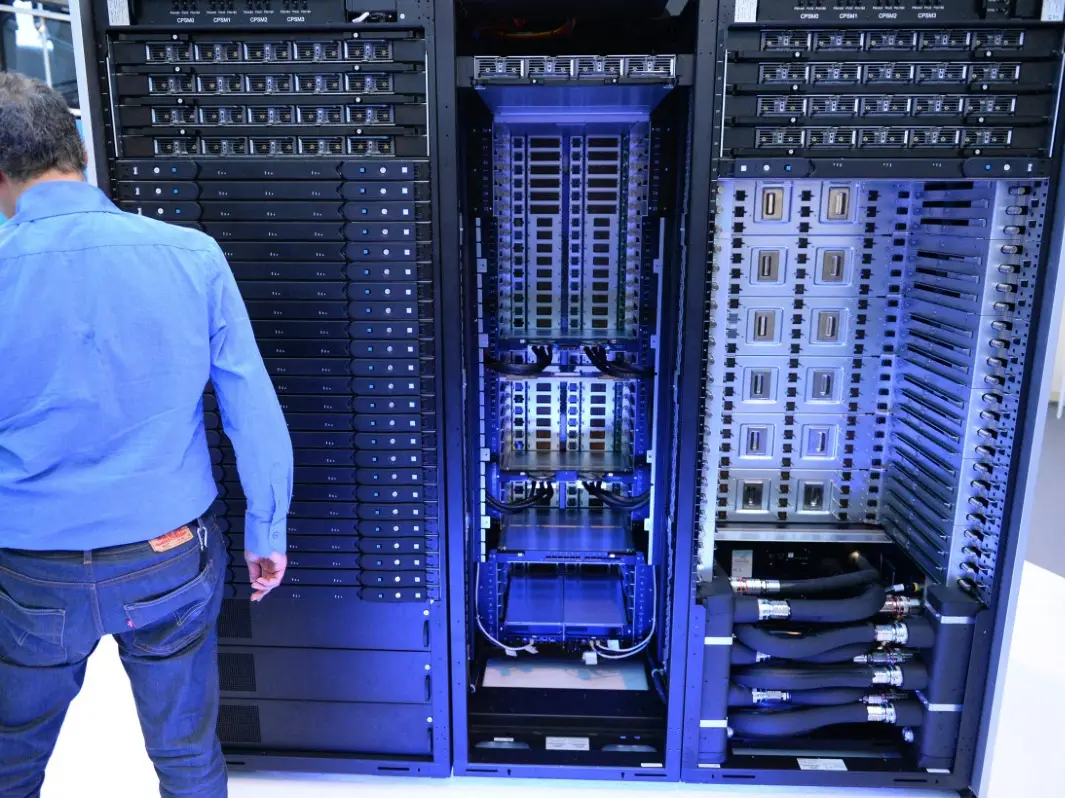
On July 16, a Beijing-based startup released the largest open-weight artificial intelligence model ever built — and within a day, it was ranked above America's best on a closely watched coding leaderboard. Kimi K3, from Moonshot AI, is a 2.8 trillion parameter system built inside a country that is, on paper, cut off from the world's most advanced AI chips.
What Exactly Is Kimi K3
Kimi K3 is what engineers call a sparse mixture-of-experts model. Its 2.8 trillion parameters are divided into 896 specialist ‘experts’, of which only 16, roughly 1.8 percent, activate for any given request. The design delivers the knowledge of a giant model at a fraction of the running cost. The model handles a context window of one million tokens, roughly 700,000 words and processes images natively.
Moonshot says two architectural innovations power the system: Kimi Delta Attention and Attention Residuals, which the company claims sharply speed up processing at long context lengths while improving reasoning quality. Those claims, like all self-reported AI performance, await independent testing.
The ‘open-weight’ part matters most. Unlike OpenAI's GPT models or Anthropic's Claude, whose inner workings are locked behind corporate APIs, Kimi K3's full weights, the model itself, are scheduled for public release by July 27. Anyone, anywhere, will be able to download and run it.
The Benchmark That Turned Heads
Trending Stories
&im=FitAndFill=(700,400)&imwidth=180&imheight=135&format=webp&quality=medium)
What is the real meaning behind Pete Hegseth's tattoos?
&imwidth=180&imheight=135&format=webp&quality=medium)
Viral video shows cross falling on Colombia priest, no official confirmation | WATCH
&imwidth=180&imheight=135&format=webp&quality=medium)
Gravitas | US attack could trigger WW III: Russian planes in Tehran, Israeli jets, US warships in action
&imwidth=180&imheight=135&format=webp&quality=medium)
Bigg Boss 20: Panchayat's Aasif Khan had a massive heart attack at 34, wife reveals why he lied and called it acid reflux
&imwidth=180&imheight=135&format=webp&quality=medium)
'This is humiliation': Vijay Deverakonda under fire over controversial marriage proposal remark on Koffee With Karan 9
&imwidth=180&imheight=135&format=webp&quality=medium)
US Navy, Marine Corps boards defy Trump's transgender military ban, vote to retain troops
&imwidth=180&imheight=135&format=webp&quality=medium)
Will the US attack Iran this weekend? Trump's envoy says, 'absolutely'
&im=FitAndFill=(700,400)&imwidth=180&imheight=135&format=webp&quality=medium)
Why do army tanks have different types of armour?
&imwidth=180&imheight=135&format=webp&quality=medium)
India-China face-off continues near Arunachal’s Taksing, reveals ITBP chief in first official confirmation of tensions
&imwidth=180&imheight=135&format=webp&quality=medium)
Prime Minister Modi to attend final day of "Wings Over Ganges" display
&imwidth=180&imheight=135&format=webp&quality=medium)
Om Prakash Mathur sworn in as 29th Governor of Keralam, sparks row over vegetarian-only kitchen at Lok Bhavan
&imwidth=180&imheight=135&format=webp&quality=medium)
Pakistan airline PIA unveils new crew uniforms, faces online criticism
&imwidth=180&imheight=135&format=webp&quality=medium)
Did Neha Bora call for Bangladesh-like GenZ protest, 'anarchy' in India? WION Fact-checks viral claim
&imwidth=180&imheight=135&format=webp&quality=medium)
'Completely insane, never happened': Trump's son-in-law denies allegations of secret dealings with Saudi, UAE
&imwidth=180&imheight=135&format=webp&quality=medium)
India’s 2022 CWG silver medallist Sabbhineni Meghana announces international retirement
&imwidth=180&imheight=135&format=webp&quality=medium)
Horrific video shows the moment 18-year-old fell to her death from Mexico amusement park ride
&imwidth=180&imheight=135&format=webp&quality=medium)
IND-W vs ZIM-W, 1st ODI: Rawal, Charani star in India’s nine-wicket win over Zimbabwe
&imwidth=180&imheight=135&format=webp&quality=medium)
IND vs NZ: Kumar Kushagra named as cover for Ishan Kishan in India’s T20I squad
&imwidth=180&imheight=135&format=webp&quality=medium)
US midterms 2026: Viral video claims Lindsey Graham paid underage men for sex; clip released weeks before his sister's Senate race
&imwidth=180&imheight=135&format=webp&quality=medium)
US start-up claims it turned Mercury into Gold, beats CERN’s 2025 record
&im=FitAndFill=(700,400)&imwidth=180&imheight=135&format=webp&quality=medium)
New Friday OTT releases (October 23, 2026): Gajab Raat, Dorothy, Chaar Yaar- Watch these 6 new movies and TV shows on Netflix, Prime Video and more
&imwidth=180&imheight=135&format=webp&quality=medium)
US midterms 2026: Trump administration sues to block Alaska Senate election certification if Republican Dan Sullivan loses. What's happening?
&imwidth=180&imheight=135&format=webp&quality=medium)
First Lady Melania Trump secures ceasefire between Russia, Ukraine in Oleshky: White House
&imwidth=180&imheight=135&format=webp&quality=medium)
One man, 8 months of work, and a river dirty again: Why Bittu Tabahi may quit
&imwidth=180&imheight=135&format=webp&quality=medium)
Jenna Ortega plans TV break after Wednesday: ‘I want to leave time for new things’
&imwidth=180&imheight=135&format=webp&quality=medium)
Meghan Markle ‘deeply distressed’ by allegations against estranged father, says she was aware since 2018
&imwidth=180&imheight=135&format=webp&quality=medium)
Delhi High Court rejects AISA chief Neha Bora’s plea against peace bond notice
&imwidth=180&imheight=135&format=webp&quality=medium)
Emmanuel Macron calls Paris suburb shooting a 'racist terrorist attack' after one killed, several injured
Within a day of release, Arena's Frontend Code evaluation, a blind test in which developers compare model outputs without knowing which system produced them, ranked Kimi K3 first at 1,679 points, ahead of Anthropic's flagship Claude Fable 5. Beating the top American model on a major public leaderboard, in blind testing, is the kind of result that moves markets and ministries.
The honest caveat: one leaderboard is not the crown. On aggregate measures across all capabilities, K3 still trails both Claude Fable 5 and OpenAI's GPT-5.6 Sol, and Moonshot's claims of parity with earlier American flagships are self-reported. But the trajectory is the story, Fortune's verdict was that Kimi K3 pushes Chinese AI ‘into Fable-level territory’.
The pricing lands like a weapon: $0.30 per million input tokens on cache hits, $3 on cache misses, and $15 per million output tokens, undercutting comparable American flagship pricing while giving the model itself away.
Built Under Sanctions
Kimi K3 exists despite or perhaps because of, a sweeping American technology blockade. US export controls bar China from buying Nvidia's most advanced processors. Rules announced in May 2026 require licenses for any Blackwell-class chip transfer to entities in China or Macau, and as of mid-July, US officials say only a ‘trivial’ number of Nvidia's H200 chips have shipped under the limited licenses approved.
The controls were designed to keep Chinese AI years behind America's frontier. Kimi K3 is the latest evidence of the workaround economy they created instead: Chinese labs have optimised architectures, squeezed efficiency from restricted hardware, and turned constraint into engineering discipline. The pattern began with DeepSeek's R1 in January 2025, which shocked Silicon Valley by matching American reasoning models at a fraction of the training cost. Kimi K3 escalates it to the frontier's edge.
Why China Gives Its Best AI Away
There is strategy in the generosity. Open-weight releases spread Chinese AI infrastructure through the world's developer ecosystems the way Android spread Google, free, everywhere, foundational. Every startup in Jakarta, Lagos or Bengaluru that builds on Kimi K3 is a company whose AI stack runs on Chinese architecture. American labs keep their best models closed and charge for access; China is giving frontier-class capability away and buying global mindshare with it.
The same week the model dropped, Beijing showed the other half of the play. On July 17, at the World AI Conference in Shanghai, President Xi Jinping launched WAICO, a new intergovernmental AI organisation headquartered in Shanghai, with 29 founding countries including Pakistan, Russia and Kazakhstan. Open models for the world's developers, a governance bloc for the world's governments: the technology and the rulebook, both made in China.
What It Means For The AI Race
For years, the comfortable assumption in Washington was that export controls bought America a lasting lead. The July scoreboard complicates that: China's biggest open model beating America's flagship on a public coding leaderboard, TSMC reporting that AI now drives two-thirds of its record revenue, and the world's developers preparing to download Chinese frontier weights for free.
The race is not decided. On aggregate capability, America's closed flagships still lead, and benchmarks are snapshots, not verdicts. But the gap that sanctions were meant to enforce is visibly narrowing, and it is narrowing in public, one leaderboard at a time.
Kimi K3's full weights arrive on July 27. The world's developers, including India's, will decide what happens next.
