

&imwidth=800&imheight=600&format=webp&quality=medium "Bolivia declares state of emergency, sends troops to crush six-week protest blockade")
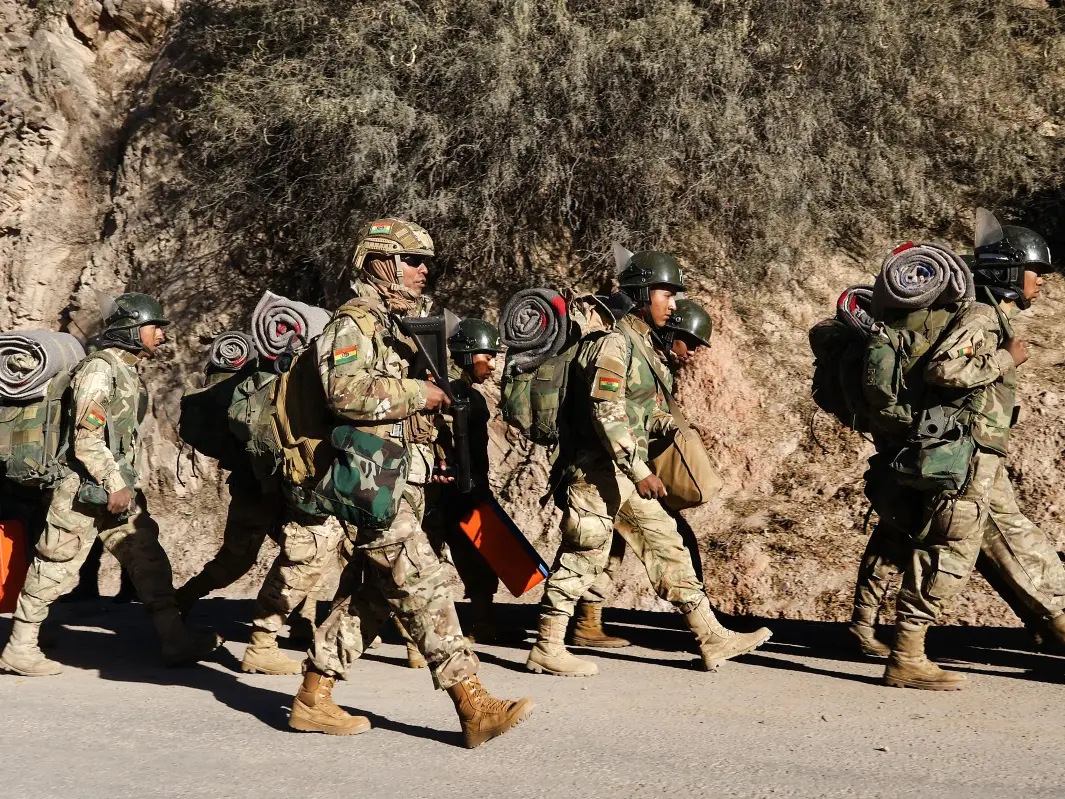
Bolivia's government on Saturday (Jun 20) declared a nationwide state of emergency and deployed troops to clear dozens of roadblocks that have crippled the country for more than six weeks. The move comes after weeks of protests, strikes and highway blockades that have disrupted transport networks and triggered shortages of fuel, food and medicines across the country.
President announces 90-day emergency measure
In a televised address before dawn on Saturday, President Paz announced a 90-day emergency measure that allows the military to operate domestically and places restrictions on public demonstrations. He warned protestors that they would face "the full force of the law".
Also read | FIFA 2026: Japanese men win hearts for cleaning World Cup stadiums. So why is the internet furious at them?
Hours later, security forces began moving into some of the worst-affected areas. AFP reporters in El Alto, one of Bolivia's largest cities and a traditional centre of political mobilisation, witnessed convoys of soldiers, armed police and bulldozers clearing roads blocked with rubble, logs and debris.
Bolivians cannot continue to be held hostage: Paz
Trending Stories
In a social media post, Paz said, "Bolivians cannot continue to be held hostage by blockades that prevent them from working, studying, receiving medical care, getting supplies and bringing food to their homes."
"This state of emergency is not intended to take away normalcy, but to restore it," he added.
Some residents welcomed the operation after weeks of disruption. "I'm very happy," said Carla Butron, a 39-year-old shopkeeper. "Everything has been difficult here in El Alto during these 50-some-days -- work, free movement."
The unrest represents the biggest challenge yet for Paz, whose election last year ended nearly two decades of socialist-led governments in Bolivia. Protesters accuse the conservative president of pursuing economic policies that have deepened hardship in a country already struggling with inflation, fuel shortages and slowing growth.
Protesters demand President Paz step down
The government says the prolonged protests have cost the economy billions of dollars and threatened essential services nationwide.
While one of Bolivia's largest labour federations agreed earlier this week to suspend demonstrations after reaching a preliminary agreement with the government, several Indigenous organisations and grassroots groups remain defiant.
Many protesters are demanding not just policy changes but Paz's resignation. "We want him gone. We don't want him governing," Indigenous leader Lidia Callisaya recently told AFP.
Evo Morales behind the protests?
The crisis has also revived the political influence of former president Evo Morales, who remains a central figure despite being in hiding while facing allegations of trafficking a minor, charges he denies.
Paz has repeatedly accused Morales and his supporters of orchestrating the unrest, calling them "narcoterrorists". On Saturday, Interior Minister Marco Antonio Oviedo did not rule out launching a future operation to arrest the former leader. Security forces "will carry out whatever operations are necessary at the appropriate time," he said, adding that Morales must face the law.
Morales, speaking recently from hiding, rejected the accusations and argued that Bolivians were rising up against what he described as a government aligned too closely with the United States.

