

&imwidth=800&imheight=600&format=webp&quality=medium "BIMSTEC NSA meeting amid security challenges in a complex world: The evolution of cooperation")
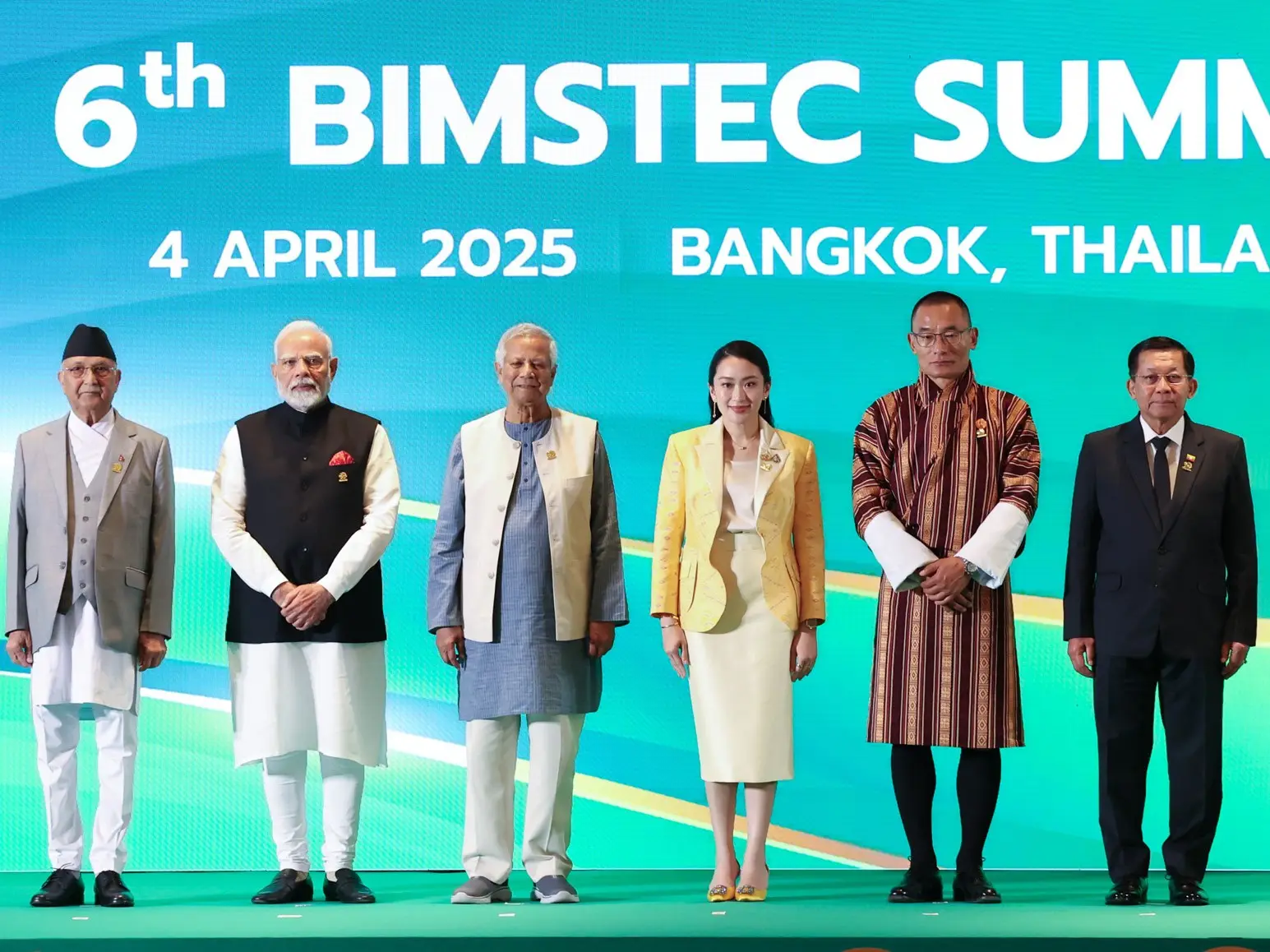
India is hosting the fifth BIMSTEC National Security Chiefs and Advisers' Meeting in New Delhi on Thursday (Jul 16). Chaired by India's National Security Adviser Ajit Doval, the discussions are likely to include counter-terrorism, intelligence sharing and coordinated efforts against cross-border threats. The meeting is taking place amid a number of challenges in a world beset by conflict, including cyber security, transnational organised crime, maritime security, and emerging threats such as violent extremism and disaster response. It is a good time to revisit the evolution of the security cooperation of this grouping.
What is BIMSTEC?
BIMSTEC, or the Bay of Bengal Initiative for Multi-Sectoral Technical and Economic Cooperation, brings together seven countries around the Bay of Bengal, five from South Asia and two from Southeast Asia: Bangladesh, Bhutan, India, Myanmar, Nepal, Sri Lanka, and Thailand. Together, these nations represent nearly 22 per cent of the world's population—about 1.8 billion people—and a combined GDP of around US$5 trillion. Focused on multi-sectoral technical and economic cooperation, its priority sectors include trade, investment and development; environment and climate change; security; agriculture and food security; people-to-people contact; science, technology and innovation; and connectivity. Under the current sectoral structure adopted by BIMSTEC, India is the lead country for the Security pillar.
BIMSTEC security cooperation: Key mechanisms
The National Security Chiefs and Advisers' Meeting is one of the main mechanisms of security cooperation and began after the 2016 Goa Retreat, where leaders agreed to hold regular meetings for intelligence and information sharing and for countering terrorism, violent extremism, and radicalisation. BIMSTEC's Expert Group on Maritime Security Cooperation focuses on Maritime Domain Awareness (MDA), Humanitarian Assistance and Disaster Relief (HADR), oil pollution response, the Blue Economy, and maritime law enforcement guidelines. There are sub-groups focused on intelligence sharing, anti-money laundering and combating the financing of terrorism (AML/CFT), legal and law enforcement issues, countering radicalisation and terrorism, human trafficking, and the prevention of illicit trafficking in narcotic drugs, psychotropic substances and precursor chemicals. Initiatives in the security sector include coastal security workshops and the BIMSTEC Military Exercise or MILEX-18, held in 2018. A joint maritime exercise is planned for November this year. The emphasis is on practical coordination among law enforcement, intelligence, and security agencies without creating a military alliance structure.
Trending Stories
&imwidth=180&imheight=135&format=webp&quality=medium)
Asian Para Games: Nishad Kumar clinches T47 long jump gold; Ravi Budigina bags swimming silver
&imwidth=180&imheight=135&format=webp&quality=medium)
NFl 2026/27 - Saints vs Steelers to go ahead in Paris next week despite protest
&imwidth=180&imheight=135&format=webp&quality=medium)
US to review Russia sanctions waiver within 60 days as Rubio cites India’s ‘substantial’ Russian energy imports
&imwidth=180&imheight=135&format=webp&quality=medium)
Researchers name newly discovered Andean plant after Argentina legend Lionel Messi
&imwidth=180&imheight=135&format=webp&quality=medium)
PCB omits Atherton, Hussain from tri-series commentary panel over Imran Khan interview row
&imwidth=180&imheight=135&format=webp&quality=medium)
India moves to buy 10,000 more AI chips for a national compute pool open to startups
&imwidth=180&imheight=135&format=webp&quality=medium)
Girl 'dead' for 8 hours wakes up at her own funeral, dad insists she wasn't breathing
&imwidth=180&imheight=135&format=webp&quality=medium)
Anirudh Ravichander-Kavya Maran wedding: Telangana CM reveals Chennai reception date
&imwidth=180&imheight=135&format=webp&quality=medium)
Putin wants joint meeting with Trump-Xi summit on Ukraine war, proposes talks alongside APEC: Report
&im=FitAndFill=(700,400)&imwidth=180&imheight=135&format=webp&quality=medium)
New OTT releases this week (October 19-25, 2026): Gajab Raat to Chaar Yaar-8 titles to watch during Dussehra week on Netflix, Prime Video and more
&imwidth=180&imheight=135&format=webp&quality=medium)
'Grassroots leagues help bridge the gap': India's ODI WC winner Suresh Raina lauds ISCL ahead of Season 2
&imwidth=180&imheight=135&format=webp&quality=medium)
'We feel like Mr India': Gujarat’s undercover SHE team guard garba nights at Navratri
&imwidth=180&imheight=135&format=webp&quality=medium)
Saudi Arabia asks skyscraper employees to work from home amid Houthi threats
&imwidth=180&imheight=135&format=webp&quality=medium)
4 killed, 19 critically injured in grass fire at Canada's largest military base
&imwidth=180&imheight=135&format=webp&quality=medium)
Lawrence Bishnoi gang claims responsibility for firing at Tiger Shroff over ties to Salman Khan
&imwidth=180&imheight=135&format=webp&quality=medium)
Why France looks the most fragile in the G7 amid protests and budget deadlock
&imwidth=180&imheight=135&format=webp&quality=medium)
Priest dies after crucifix falls on his head during livestreamed Mass in Ecuador | VIDEO
&imwidth=180&imheight=135&format=webp&quality=medium)
No Ravindra Jadeja, Yashasvi Jaiswal in India’s 2027 ODI World Cup plans: Report
&imwidth=180&imheight=135&format=webp&quality=medium)
Elon Musk features on Lucknow's 'anti-India' Ravan poster alongside Rahul Gandhi, Akhilesh
&im=FitAndFill=(700,400)&imwidth=180&imheight=135&format=webp&quality=medium)
Tesla Roadster engineering: The hidden hardware behind its flying demonstration
&imwidth=180&imheight=135&format=webp&quality=medium)
Brendan Taylor overtakes Andy Flower to become Zimbabwe’s leading ODI run-scorer
&imwidth=180&imheight=135&format=webp&quality=medium)
'It's a joy to see the makers bring it on such a grand scale': SS Rajamouli on Ramayana
&imwidth=180&imheight=135&format=webp&quality=medium)
China responds to Trump's Press Secretary Katie Zacharia after toilet remark: 'Visit China more often'
&imwidth=180&imheight=135&format=webp&quality=medium)
MI5 is opening an AI threat centre, and OpenAI just told MPs the worst isn't over
&im=FitAndFill=(700,400)&imwidth=180&imheight=135&format=webp&quality=medium)
Ghaziabad is world's fastest-growing city; Surat, Patna, Rajkot also feature on list
&imwidth=180&imheight=135&format=webp&quality=medium)
Anthropic’s public benefit plan: What its 5% share commitment means for AI’s future
&imwidth=180&imheight=135&format=webp&quality=medium)
Cattle-feed bran in biscuits, detergent in milk: FSSAI acts against 3 companies
&imwidth=180&imheight=135&format=webp&quality=medium)
Flying car race: Alef Aeronautics welcomes Tesla Roadster '11 years' later, but are the two models the same?
&imwidth=180&imheight=135&format=webp&quality=medium)
Kylie Jenner makes Victoria’s Secret debut in $50 million diamond-encrusted design as Timothée Chalamet cheers
&imwidth=180&imheight=135&format=webp&quality=medium)
Shastri backs Shami comeback; lauds Bhuvi and warns Bumrah on format workload ahead of World Cup
&imwidth=180&imheight=135&format=webp&quality=medium)
After Kennedy Center and reflecting pool disputes, Trump turns to Washington golf course plan amid legal battle
&imwidth=180&imheight=135&format=webp&quality=medium)
Nobel laureate Machado, who dedicated prize to Trump, confirmed as Venezuela opposition leader
&imwidth=180&imheight=135&format=webp&quality=medium)
Karan Johar reimagines Student Of The Year with thriller series After Dark, Shanaya Kapoor to debut on OTT
&imwidth=180&imheight=135&format=webp&quality=medium)
Netanyahu rival Benny Gantz quits Israel election race, vows to push for unity government
BIMSTEC's evolution in past three decades
In 1997, the seeds of BIMSTEC were laid as BIST-EC , or Bangladesh, India, Sri Lanka, Thailand Economic Cooperation, with the Bangkok Declaration aiming to promote technical and economic cooperation in the Bay of Bengal region. Myanmar joined the grouping later in 1997, after which it was renamed BIMST-EC. The grouping expanded in 2004 with the inclusion of Nepal and Bhutan, and adopted its current name, the Bay of Bengal Initiative for Multi-Sectoral Technical and Economic Cooperation. The permanent Secretariat of BIMSTEC was established in Dhaka, Bangladesh, in 2014. The 2016 Goa Retreat, held on the sidelines of the BRICS Summit, gave fresh impetus to security cooperation and the National Security Advisers' meetings. Between 2018 and 2022, BIMSTEC rationalised its areas of cooperation into seven pillars, with Security formalised as one of the key pillars.
India's Act East policy amid SAARC stagnation: Why BIMSTEC matters
BIMSTEC has gathered momentum in recent years as the South Asian Association for Regional Cooperation (SAARC) has stagnated, mainly because of political differences between India and Pakistan. As a platform bridging South and Southeast Asia, it is a key organisation supporting India's "Act East" and "Neighbourhood First" foreign policies. The grouping offers an alternative framework for cooperation on security, connectivity, energy, and trade. While progress has been gradual, it has registered several achievements, including progress on regional energy grid interconnection, cooperation in disaster management, and ongoing negotiations towards a BIMSTEC Free Trade Agreement.

