

&imwidth=800&imheight=600&format=webp&quality=medium "Bangladesh tribunal orders three journalists held until trial, deepening press freedom concerns")
A special tribunal in Bangladesh's capital on Monday ordered three senior journalists to remain in jail pending trial in a case tied to the mass uprising that toppled former Prime Minister Sheikh Hasina in 2024, a decision human rights groups say represents a dangerous escalation in the criminalisation of journalism in the country.
The Tribunal's Order
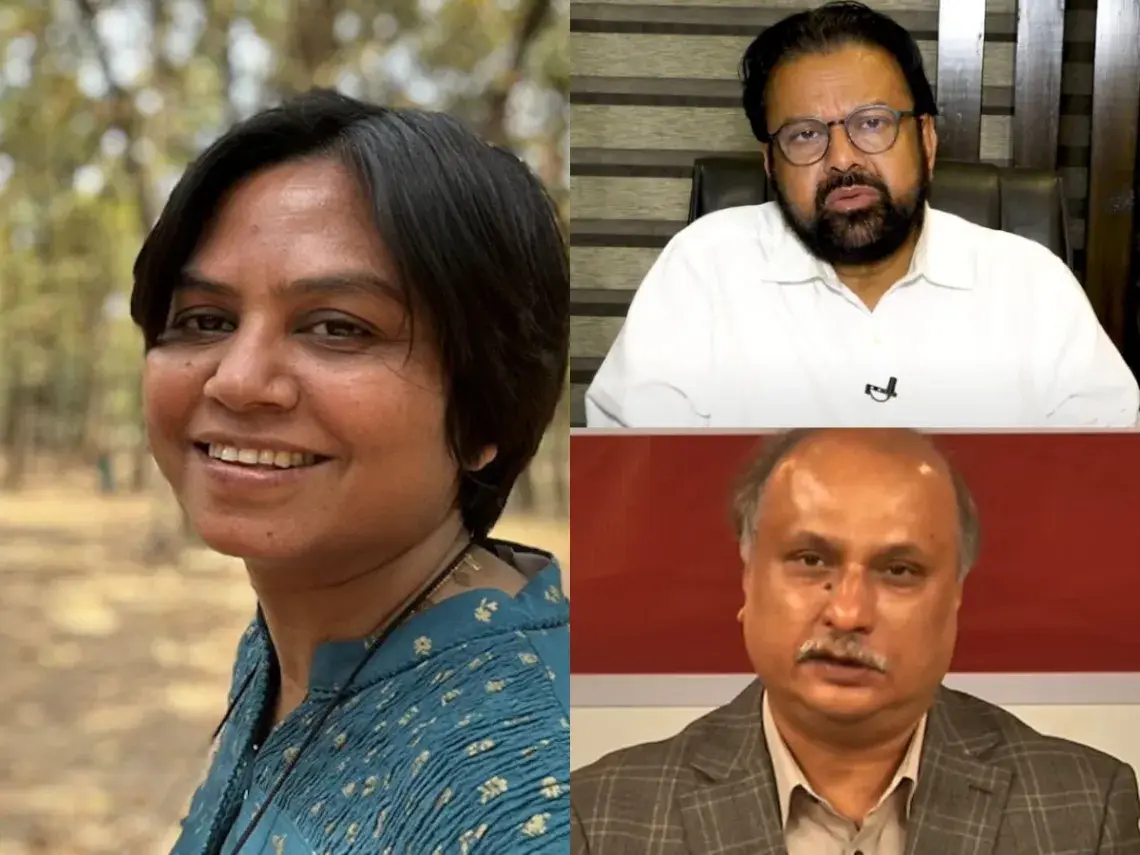
The International Crimes Tribunal-2 directed that Mozammel Babu, editor-in-chief of private broadcaster Ekattor Television; Farzana Rupa, the channel's principal correspondent; and Shyamal Dutta, editor of the daily Bhorer Kagoj and former general secretary of the National Press Club in Dhaka, be shown as formally arrested and sent to jail in the crimes-against-humanity case. The order came after the three appeared before the tribunal, which set October 25 for the next court proceedings and asked investigators to submit their findings against the journalists.
Prosecutor Faruk Ahmed told the tribunal that production warrants had been issued against the three on August 17 in connection with the case, and that prosecutors sought to have them shown as arrested and sent to jail once they appeared on Monday. The three have effectively been held without trial for roughly two years, having initially been detained on separate charges shortly after Hasina's fall.
What They Are Accused Of
The case centers on a press conference held at Hasina's official residence, Gono Bhaban, on July 14, 2024, at which she discussed the civil service quota issue and referred to protesters using a term students considered disparaging. Those remarks triggered protests that same night. Prosecutors allege the three journalists abetted the crimes that followed, and that they helped produce a "counter-narrative" against the student movement between July 14 and August 5, 2024 — the day Hasina was ousted and fled to India.
Trending Stories
&imwidth=180&imheight=135&format=webp&quality=medium)
Brendan Taylor overtakes Andy Flower to become Zimbabwe’s leading ODI run-scorer
&im=FitAndFill=(700,400)&imwidth=180&imheight=135&format=webp&quality=medium)
What is the real meaning behind Pete Hegseth's tattoos?
&imwidth=180&imheight=135&format=webp&quality=medium)
Kim Jong Un death rumours: State media shares photos to prove dictator is alive amid reports of brain haemorrhage
&imwidth=180&imheight=135&format=webp&quality=medium)
Two Indians among 28 arrested in California over alleged voter registration fraud, DOJ says
&imwidth=180&imheight=135&format=webp&quality=medium)
‘Nuclear-use decision should be taken by humans’: India flags AI risks at UN
&imwidth=180&imheight=135&format=webp&quality=medium)
Flying car race: Alef Aeronautics welcomes Tesla Roadster '11 years' later, but are the two models the same?
&imwidth=180&imheight=135&format=webp&quality=medium)
Shastri backs Shami comeback; lauds Bhuvi and warns Bumrah on format workload ahead of World Cup
&imwidth=180&imheight=135&format=webp&quality=medium)
Netanyahu rival Benny Gantz quits Israel election race, vows to push for unity government
&imwidth=180&imheight=135&format=webp&quality=medium)
US Midterm 2026: What do opinion polls and prediction markets say less than two weeks before voting
&imwidth=180&imheight=135&format=webp&quality=medium)
WATCH | Albania protesters set Supreme Court on fire as anti-Rama riots escalate
&imwidth=180&imheight=135&format=webp&quality=medium)
Trump Commerce Secretary Howard Lutnick’s family fortune more than doubles to $7.3 billion, outpacing his boss
&imwidth=180&imheight=135&format=webp&quality=medium)
Pete Hegseth meets Benjamin Netanyahu during unannounced visit to Israel ahead of election
&im=FitAndFill=(700,400)&imwidth=180&imheight=135&format=webp&quality=medium)
Ghaziabad is world's fastest-growing city; Surat, Patna, Rajkot also feature on list
&imwidth=180&imheight=135&format=webp&quality=medium)
'It's a joy to see the makers bring it on such a grand scale': SS Rajamouli on Ramayana
&imwidth=180&imheight=135&format=webp&quality=medium)
‘Spare India from anarchy’: Over 400 Indian-origin academics from MIT, Oxford condemn anti-CEC protests
&imwidth=180&imheight=135&format=webp&quality=medium)
WATCH | Japan launches historic mission to collect samples from Mars' moon Phobos
&imwidth=180&imheight=135&format=webp&quality=medium)
PCB omits Atherton, Hussain from tri-series commentary panel over Imran Khan interview row
&imwidth=180&imheight=135&format=webp&quality=medium)
Trump calls on New Mexico to become 'New America', claims 'home values and incomes would rise'
&imwidth=180&imheight=135&format=webp&quality=medium)
US Congressman Raja Krishnamoorthi describes foiled temple attack as ‘divine intervention’, criticises Vance and MAGA rhetoric
&imwidth=180&imheight=135&format=webp&quality=medium)
Girl 'dead' for 8 hours wakes up at her own funeral, dad insists she wasn't breathing
&imwidth=180&imheight=135&format=webp&quality=medium)
Pujara says 'Samson and Vaibhav cannot be in Playing XI' for India on NZ tour
&imwidth=180&imheight=135&format=webp&quality=medium)
US midterms 2026: From Pooja Sethi to Vivek Ramaswamy, here are Indian-origin candidates to watch out for
&im=FitAndFill=(700,400)&imwidth=180&imheight=135&format=webp&quality=medium)
New OTT releases this week (October 19-25, 2026): Gajab Raat to Chaar Yaar-8 titles to watch during Dussehra week on Netflix, Prime Video and more
&imwidth=180&imheight=135&format=webp&quality=medium)
Baby orangutan rescued in India returns to Indonesia
&imwidth=180&imheight=135&format=webp&quality=medium)
India moves to buy 10,000 more AI chips for a national compute pool open to startups
&imwidth=180&imheight=135&format=webp&quality=medium)
'Not going to let it happen here': From Kansas, Trump ramps up US midterm campaign, points to ‘what’s happening in France’
&imwidth=180&imheight=135&format=webp&quality=medium)
Prince Harry, Meghan Markle never accepted Queen Elizabeth’s terms for royal exit: Report
&imwidth=180&imheight=135&format=webp&quality=medium)
'Whatever I can do to end this war': Trump floats China Summit with Putin and Xi, questions Zelensky's role in peace talks
&imwidth=180&imheight=135&format=webp&quality=medium)
'Paris is going to be a Muslim city very soon': Trump blames immigration for France unrest, urges Macron to tighten border policies
&imwidth=180&imheight=135&format=webp&quality=medium)
WATCH | Viral video shows woman jogging past burning barricade amid Paris unrest, sparks online debate
&imwidth=180&imheight=135&format=webp&quality=medium)
'We feel like Mr India': Gujarat’s undercover SHE team guard garba nights at Navratri
&imwidth=180&imheight=135&format=webp&quality=medium)
Cattle-feed bran in biscuits, detergent in milk: FSSAI acts against 3 companies
&imwidth=180&imheight=135&format=webp&quality=medium)
Feds obtain DNA evidence that could prove Ilhan Omar married her brother: Report
&imwidth=180&imheight=135&format=webp&quality=medium)
Ramayana advance booking: Ranbir Kapoor, Yash's film cross $500K ahead of Diwali release
&imwidth=180&imheight=135&format=webp&quality=medium)
Priest dies after crucifix falls on his head during livestreamed Mass in Ecuador | VIDEO
&imwidth=180&imheight=135&format=webp&quality=medium)
AUS vs SA: Boland grabs opportunity with both ends to help Australia dominate
Rights monitors describe the underlying conduct in starker terms. The Committee to Protect Journalists (CPJ) said prosecutors allege the journalists asked Hasina provocative questions at the July 14 press conference that prompted her disparaging remarks about demonstrators, ahead of a bloody crackdown that followed.
This is only one strand of a wider legal net. Rupa and Babu have separately been held in pre-trial detention since August and September 2024 in connection with murder cases linked to deaths during the uprising, and were also shown arrested in a case tied to the 2013 crackdown on a Hefazat-e-Islam rally at Shapla Chattar in Dhaka, based on their broadcast coverage of those events. Dutta has been detained since September 2024 and faces multiple murder cases stemming from his journalism.
The stakes are severe. Because the tribunal — originally created in 2010 to try 1971 Liberation War crimes — has no sentencing guidelines for specific offenses, the journalists could face the death penalty if convicted.
Human Rights Groups Cry Foul
CPJ has been among the most vocal critics of the case. Its Asia-Pacific program coordinator, Kunal Majumder, called the prosecution deeply troubling, saying: "Launching a crimes-against-humanity case against journalists Shyamal Dutta, Mozammel Babu, and Farzana Rupa for simply asking questions at a press conference is outrageous and deeply troubling."
Majumder added that editorial decisions, even partisan ones, should not be treated as crimes, warning that criminalizing editorial judgment sets a dangerous precedent and undermines Bangladesh's standing as a democracy.
Other organizations have echoed the concern. JusticeMakers Bangladesh in France said the allegations against the three journalists concern statements, questions and media content linked to the uprising, and argued that journalism-related conduct should not attract such grave charges without specific, credible evidence of individual criminal responsibility.
Broader civil society coalitions have raised similar alarms about the pattern of detentions. A joint statement noted that Rupa, Babu, Rupa's husband and fellow Ekattor journalist Shakil Ahmed, and Dutta have all been held in pre-trial detention since mid-2024 in connection with numerous murder cases tied to the uprising, without any charge sheet served and no clear explanation of how their reporting could constitute murder. The groups called on the government to release journalists detained solely for peaceful reporting and the exercise of their rights.
Bangladesh's Democratic Transition: Where Does Press Freedom Stand?
The case against Babu, Rupa and Dutta is emblematic of a much larger reckoning inside Bangladesh's media since Hasina's fall. At least four Bangladeshi journalists whose coverage was seen as supportive of Hasina and her Awami League party were detained soon after the interim government took power in August 2024, with CPJ warning at the time that the cases appeared baseless and retaliatory. More than two dozen journalists were separately named in a complaint filed at the tribunal over alleged involvement in crimes against humanity and genocide during the protests, with 28 others facing related investigations.
The toll of prolonged detention has become a rallying point for press freedom advocates. On World Press Freedom Day this year, the Daily Star reported that five senior journalists had spent between 593 and 620 days in detention without formal charges over deaths linked to the July uprising. Rupa, Shakil Ahmed, Dutta and Babu are accused in connection with the killing of a 21-year-old opposition activist in Mirpur on August 5, 2024, the day Hasina fled — despite the case file describing the victim as shot by security forces and ruling-party activists, not by journalists.
Legal experts inside Bangladesh have questioned the basis for many of these prosecutions. Manzil Morshed, president of Human Rights and Peace for Bangladesh and a senior Supreme Court advocate, said: “The accusations made by the interim government labelling journalists as collaborators of the previous administration are not clearly established.” He added that many such cases appear to be politically motivated.
Independent analysis has drawn attention to the political undercurrents shaping the tribunal's docket. A June report noted that Rupa and Babu were produced before the tribunal on May 14 and remanded back into custody after prosecutors alleged complicity in crimes against humanity and forced disappearances, despite already having spent over 21 months in pre-charge detention on separate murder allegations tied to the crackdown. The report also noted that while government figures acknowledged 11 deaths in the Dhaka-area unrest, Human Rights Watch documented at least 58 deaths — including eight members of the security forces — and that no security personnel have been held accountable for the killings, even as journalists face capital charges.
The political backdrop has also shifted since the uprising. The interim government, and the new administration of Prime Minister Tarique Rahman — who was sworn in on February 17, 2026 — reconstituted the tribunal and amended its founding law to enable prosecution of figures linked to the ousted Awami League government, including Hasina herself, who was later sentenced to death on charges of crimes against humanity and was tried in absentia after fleeing to India. In May 2025, mass protests pushed authorities to amend the tribunal's governing law to allow prosecution of political parties, and the Awami League itself was subsequently banned from political activity pending the tribunal's verdicts.
Taken together, the case against Babu, Rupa and Dutta sits at the intersection of two competing narratives about Bangladesh's post-Hasina transition: a government-led effort to deliver accountability for a bloody crackdown that killed hundreds of protesters, and what press freedom groups describe as a widening campaign that treats journalism critical of the student-led movement — however partisan — as criminal complicity in mass atrocity. With the tribunal's next hearing set for October 25 and formal charges against the three journalists still pending, that tension is likely to remain one of the defining tests of press freedom in Bangladesh's new political order.
