B-52's wings flex so dramatically that tips can move upto 32 feet

&imwidth=600&imheight=450&format=webp&quality=medium "B-52's wings flex so dramatically that tips can move upto 32 feet")
B-52's wings flex so dramatically that tips can move upto 32 feet Photograph: (boeing.com)
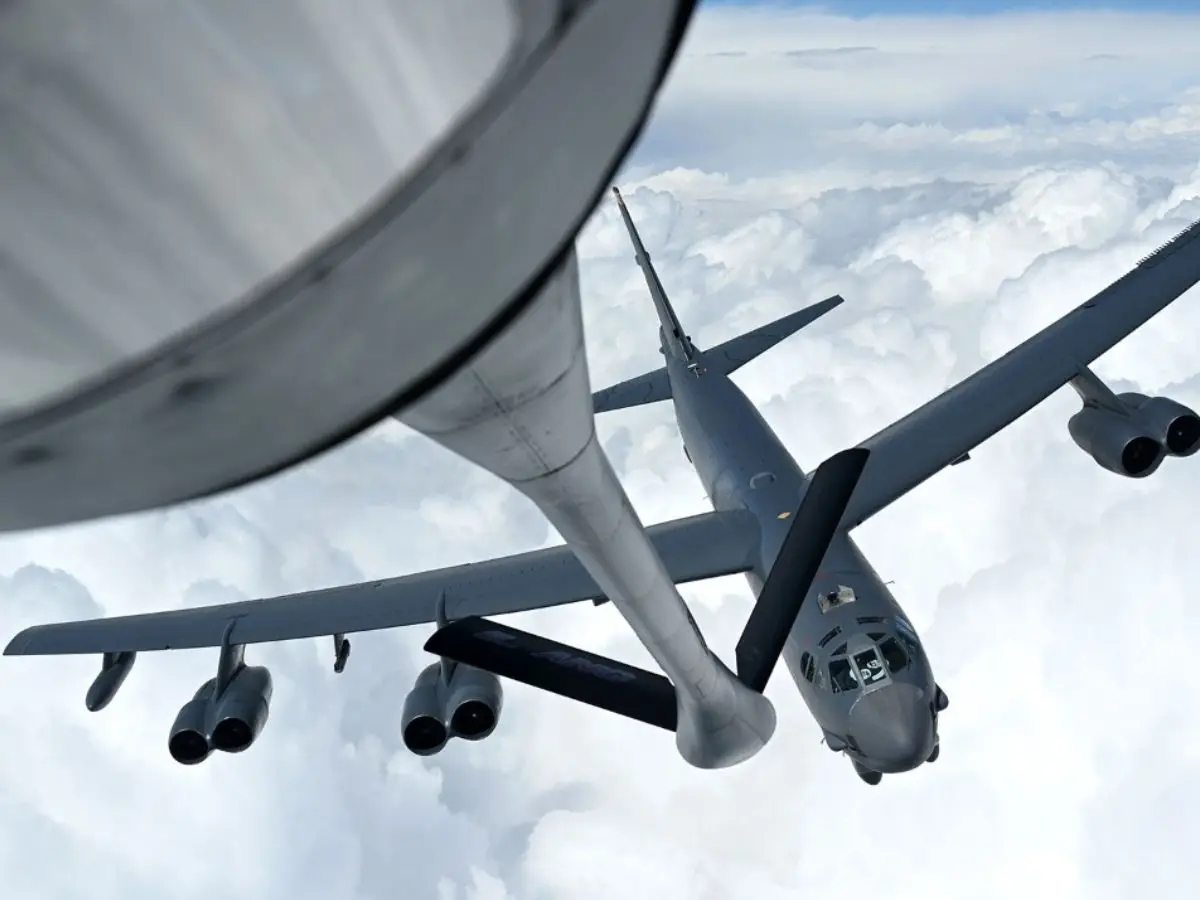
The B-52 Stratofortress has the most flexible wings of any military aircraft in service. Fully loaded on the ground, the wingtips droop up to 12 feet below their neutral position. In flight, each wingtip can travel through a 32-foot arc, 16 feet up and 16 feet down.
If you watch a B-52 Stratofortress sitting on the tarmac with a full fuel load, the first thing you will notice is that the wings appear to be drooping. The massive 185-foot wingspan does not hold level — the wingtips hang visibly downward, sometimes as much as 10 to 12 feet below their neutral position. Small outrigger wheels mounted under each wingtip rest on the ground to prevent the wings from scraping the runway surface. To the untrained eye, it looks like something is broken. In fact, the B-52's wings are doing exactly what they were designed to do.
A 32-Foot Arc Of Flex
The B-52's wings were designed in the early 1950s to be deliberately flexible. According to test data from Boeing, each wingtip can travel through a total arc of approximately 32 feet — 16 feet above and 16 feet below the neutral position — across the full range of flight loads from negative-G to positive 4-G manoeuvres. Test pilot Alvin ‘Tex’ Johnston documented this figure during the aircraft's structural testing programme. In practical terms, if you were standing at one wingtip and watching the other during turbulence, you would see it moving through a range of motion greater than the height of a three-storey building.
Why Flexibility Is Strength
The decision to make the B-52's wings flexible rather than rigid was a deliberate engineering choice. A rigid wing structure, subjected to the constant stresses of turbulence, high-altitude gust loads, and heavy fuel and weapons payloads, would accumulate fatigue damage far more quickly. The B-52's flexible wing acts like a shock absorber — bending and flexing under load rather than transferring those forces directly into the wing root and fuselage. This aeroelastic design is a key reason the B-52's airframe has remained structurally sound for over 60 years and is expected to continue flying until at least 2050.
The Fuel That Makes Them Droop
Trending Stories
)
)
)
)
)
)
)
)
)
)
)
)
)
)
)
)
)
)
)
)
)
)
)
)
)
)
)
)
&im=FitAndFill=(700,400))
)
)
)
)
)
)
)
)
)
)
)
The B-52 stores the majority of its massive fuel load — up to 312,197 pounds of jet fuel at maximum capacity — directly inside the wing structure in what is known as a wet wing design. When the aircraft is fully fuelled on the ground, the sheer weight of that fuel pulls the wingtips downward by as much as 12 feet. As fuel is consumed during flight and the wings lighten, they rise back toward their neutral position. The visible drooping of a fully fuelled B-52 on the ramp is one of the aircraft's most distinctive visual characteristics.
The Outrigger Wheels Nobody Forgets
The small outrigger wheels mounted under each wingtip exist specifically because of this extreme wing flex. On the ground, they prevent the heavy, fuel-laden wings from bending far enough to contact the runway surface. In flight, they retract and serve no purpose — but on the ground, they are the only thing standing between a 185-foot wingspan and the tarmac. No other operational military aircraft in the world requires wingtip landing gear, and the B-52 is the only bomber where watching the wings flex during taxi, takeoff, and turbulence is a routine part of the experience for every crew member and every ground observer.
