'AI Washing': Fake product claims, citing AI as cause of layoffs, and more. And no, AI won't cure diseases, doctors will

&imwidth=600&imheight=450&format=webp&quality=medium "'AI Washing': Fake product claims, citing AI as cause of layoffs, and more. And no, AI won't cure diseases, doctors will")
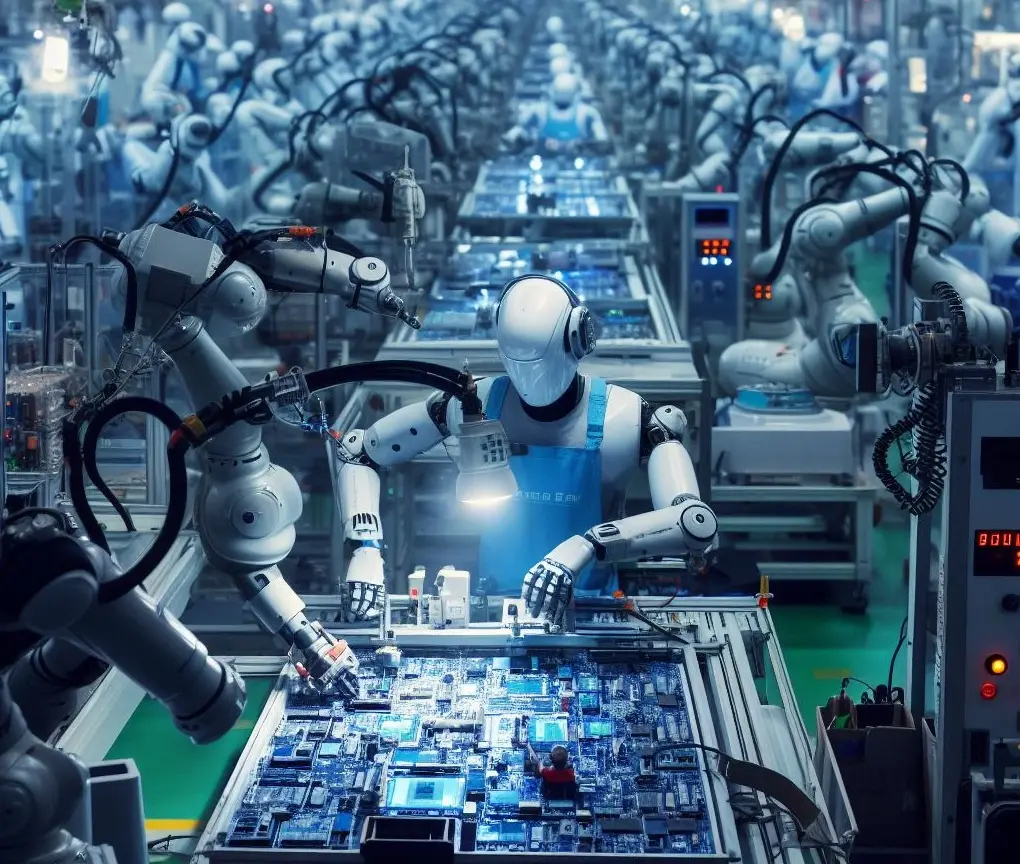
AI washing includes marketing gimmicks, blaming AI for job cuts, and plain lies by AI firms Photograph: (Others)
AI washing is spreading. Fake claims, half-truths, and misleading marketing across healthcare, tech and consumer products are exaggerating AI capabilities. Layoffs are being justified as AI-driven efficiencies. Where is the truth in all this?
“Artificial Intelligence will cure diseases”. This is among the many AI-washing tropes being peddled by several AI evangelists and AI firms readying for stock market debuts. The situation is reminiscent of the startup boom of the mid-2010s, when every company was talking about “making the world a better place”. The world is certainly not a better place in 2026, and neither is AI going to cure diseases; doctors will. The current AI hype is allowing firms to cut jobs in the name of AI-mediated cost efficiencies and push products as 'AI-powered' when hardly any significant AI is involved. Welcome to the era of AI washing.
AI washing: Definition, forms, and examples across industries
AI washing is the exaggeration, misrepresentation, or false portrayal of artificial intelligence capabilities, adoption, or impact. The aim is to capitalise on investor interest, consumer demand, or media attention. This is similar to 'greenwashing', where products and services are promoted as sustainable and environmentally friendly when they are not. In AI washing, the actual AI component is limited, unproven, or entirely absent.
'AI can cure diseases': The claims versus reality in healthcare and medicine
AI evangelists often claim that AI can work miracles in healthcare and medicine: revolutionary advances in diagnostics, the elimination of human medical errors, and fully personalised medicine driven by AI. While AI did achieve some genuine advances, the most ambitious claims remain far ahead of real-world outcomes.
Trending Stories
&imwidth=280&imheight=210&format=webp&quality=medium)
&imwidth=280&imheight=210&format=webp&quality=medium)
&imwidth=280&imheight=210&format=webp&quality=medium)
&imwidth=280&imheight=210&format=webp&quality=medium)
&imwidth=280&imheight=210&format=webp&quality=medium)
&imwidth=280&imheight=210&format=webp&quality=medium)
&im=FitAndFill=(700,400)&imwidth=280&imheight=210&format=webp&quality=medium)
&im=FitAndFill=(700,400)&imwidth=280&imheight=210&format=webp&quality=medium)
&imwidth=280&imheight=210&format=webp&quality=medium)
&imwidth=280&imheight=210&format=webp&quality=medium)
&imwidth=280&imheight=210&format=webp&quality=medium)
&imwidth=280&imheight=210&format=webp&quality=medium)
&imwidth=280&imheight=210&format=webp&quality=medium)
&imwidth=280&imheight=210&format=webp&quality=medium)
&imwidth=280&imheight=210&format=webp&quality=medium)
&imwidth=280&imheight=210&format=webp&quality=medium)
&im=FitAndFill=(700,400)&imwidth=280&imheight=210&format=webp&quality=medium)
&imwidth=280&imheight=210&format=webp&quality=medium)
&im=FitAndFill=(700,400)&imwidth=280&imheight=210&format=webp&quality=medium)
&imwidth=280&imheight=210&format=webp&quality=medium)
&imwidth=280&imheight=210&format=webp&quality=medium)
&imwidth=280&imheight=210&format=webp&quality=medium)
&imwidth=280&imheight=210&format=webp&quality=medium)
&imwidth=280&imheight=210&format=webp&quality=medium)
&imwidth=280&imheight=210&format=webp&quality=medium)
&imwidth=280&imheight=210&format=webp&quality=medium)
&imwidth=280&imheight=210&format=webp&quality=medium)
&imwidth=280&imheight=210&format=webp&quality=medium)
&imwidth=280&imheight=210&format=webp&quality=medium)
&imwidth=280&imheight=210&format=webp&quality=medium)
&im=FitAndFill=(700,400)&imwidth=280&imheight=210&format=webp&quality=medium)
&imwidth=280&imheight=210&format=webp&quality=medium)
&imwidth=280&imheight=210&format=webp&quality=medium)
&imwidth=280&imheight=210&format=webp&quality=medium)
IBM Watson Health was promoted as a transformative AI platform capable of assisting with cancer diagnosis and treatment decisions. However, investigations found that many recommendations were based on hypothetical or limited datasets rather than extensive real-world clinical evidence. Several hospitals scaled back or discontinued deployments, and IBM ultimately sold major Watson Health assets in 2022. This is one of the most frequently cited examples of AI or machine-learning hype exceeding practical clinical performance.
AI-driven drug discovery firms often advertise dramatic reductions in the time needed to develop medicines. Indeed, AI has helped identify drug candidates more quickly and improve research efficiency. Yet no major disease has been cured by AI, yet. The pharmaceutical development process - both for preventive vaccines and medicines - still requires extensive laboratory validation, animal testing, multiple phases of human clinical trials, and regulatory approval. AI can accelerate research, but it is not an autonomous medical innovator.
Even in medical imaging, one of AI's genuine success stories, marketing often exceeds reality. AI systems can assist radiologists in identifying abnormalities in X-rays, CT scans, and mammograms, but most approved tools are decision-support systems rather than replacements for physicians. Human oversight remains essential because AI models can produce false positives, false negatives, and performance variations across patient populations.
Headlines frequently suggest that AI can detect diseases earlier than doctors, eliminate diagnostic errors, or transform healthcare delivery. In reality, successful implementations are generally narrow, specialised, and heavily supervised by healthcare professionals.
Also read: ‘Delighted to be wrong’: Sam Altman says AI may not trigger feared white-collar job apocalypse
AI as an excuse for layoffs: Cost-cutting, or paying for servers from people's salaries?
AI washing is extensively used to justify the ongoing large-scale workforce reductions, particularly in the technology sector. Companies frequently cite "AI-driven efficiencies" or productivity gains when announcing layoffs. In reality, the primary drivers are often traditional cost-cutting measures, post-pandemic hiring corrections, and efforts to fund expensive AI infrastructure investments such as servers, GPUs, and data centres.
Technology firms have invested tens of billions of dollars in AI infrastructure, including specialised chips, power plants, and massive data centres. References to AI efficiencies often serve as a narrative that makes layoffs appear strategic, logical, and innovative. In many cases, however, the underlying motivation is financial. It is about keeping the bottom line in the green. The only cash outflow that many companies can control is the salaries of their employees. And that's where the axe falls, ofen explained out as ‘AI efficiency’.
Also read: Zoho founder Sridhar Vembu says AI giving no gains, tech firms firing workers for no real reason
False marketing of 'AI products': human labour disguised as AI
AI washing also occurs when products marketed as autonomous AI systems rely heavily on hidden human labour. A notable example is Amazon's Just Walk Out technology, which was promoted as an AI-powered cashierless shopping experience. Reports later revealed that around 1,000 workers in India were involved in reviewing transactions and validating purchases. According to reports, approximately 700 out of every 1,000 transactions required some level of human review. The case became a prominent example of human labour being obscured behind AI branding.
Rebranding existing technology as AI: Another form of AI washing
Increasingly, companies are rebranding and repositioning traditional software, automation systems, or statistical models as AI products. Rule-based systems, recommendation engines, and simple algorithms are frequently marketed as "AI-powered" despite using technologies that predate modern machine learning and large language models (LLMs).
Many startups simply wrap existing LLMs such as ChatGPT with minimal modifications and market the resulting products and services as proprietary AI innovations. In some cases, the underlying technology is largely unchanged from the third-party model on which it depends.
Fake or false AI branding of FMCG products
A wide range of consumer products, from electronics to household appliances, are now marketed as AI-driven or AI-powered. Refrigerators, washing machines, robot vacuums, beauty devices, air purifiers, smart home appliances, spectacles, and watches are among the products sold as AI-enabled.
The underlying functionality often consists primarily of sensors, pattern recognition, or predefined optimisation rules, many of which predate the current AI boom.
Samsung's Bespoke AI appliance range, LG's AI DD washing machines, and numerous robot vacuum manufacturers advertise features such as "AI navigation". Some of these products do contain useful automation and machine-learning capabilities. However, the AI involved is frequently more limited or rudimentary than what marketing materials suggest.
Regulators are slowly catching up with AI washing
Slowly but surely, regulatory action is catching up on misleading AI claims as a material disclosure issue rather than mere marketing exaggeration. In March 2024, the US Securities and Exchange Commission (SEC) charged investment advisers Delphia (USA) Inc and Global Predictions Inc with making misleading statements about their AI capabilities, resulting in civil penalties totalling US$400,000. The SEC found that these companies overstated or falsely represented the extent of their AI-driven services.
AI washing will continue unless the whip cracks harder on false or fake AI claims. Till then, the world will not be a better place.