AI paints shocking picture of the future of homelessness in Canada

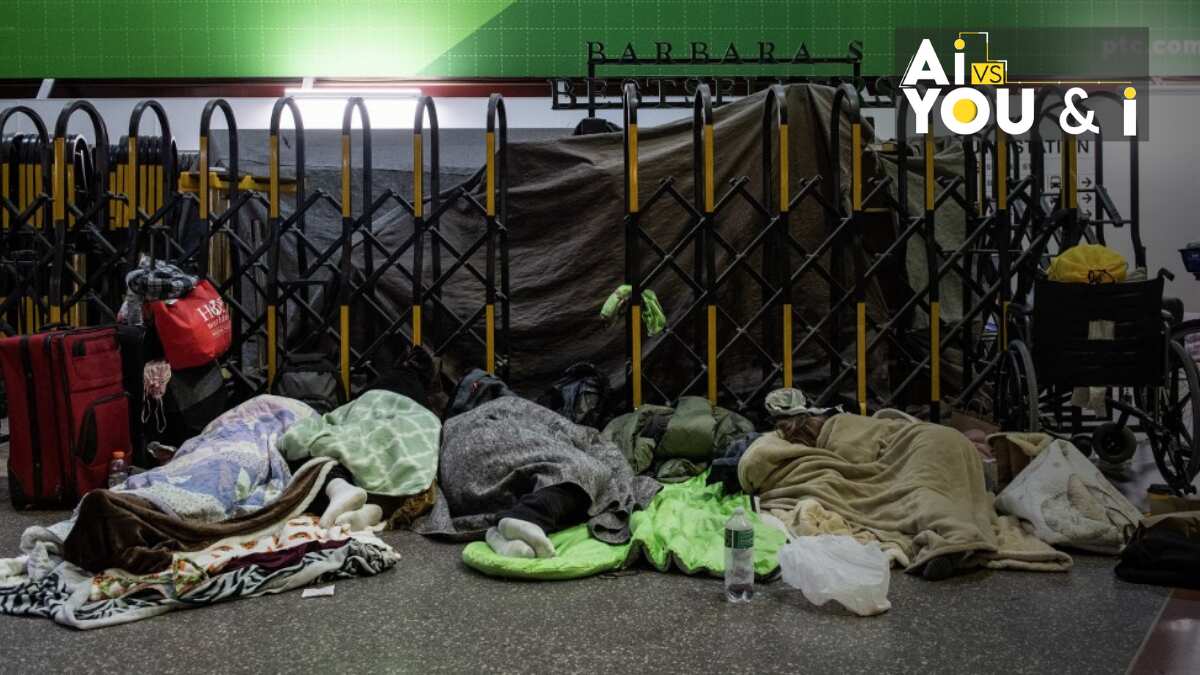
Homeless in Canada
Canada is facing a problem that is increasingly getting more and more drastic: homelessness.
Now, Artificial Intelligence (AI) has predicted that by the end of this decade, the problem is going to almost triple in terms of numbers.
Homelessness and Canada

In Canada, currently, as per estimates by the Homeless Hub, a research organisation run by York University, there are somewhere between 150,000 to 300,000 people experiencing homelessness.
As per a prediction by an Artificial Intelligence algorithm, by 2030, the number of homeless in Canada will grow to about 550,000 to 570,000.
)
Why asking questions could be more important than memorising answers
)
Osama Bin Laden ‘planned’ to target India, CIA reveals dozens of declassified documents
)
'Iran won't surrender': Pezeshkian sends blunt message to US while attending BRICS Summit in India
)
BRICS Summit 2026: Global leaders of BRICS nations attend main open session
)
Celine Dion makes emotional stage comeback after six years: 'I'm so delighted to see you'
)
PM Modi and China's Xi offered to help resolve Russia-Ukraine war: Kremlin
)
Why dehydration is the hidden cause of travel fatigue on long flights
&im=FitAndFill=(700,400))
Meet top 5 batters fastest to 3000 runs in T20Is
)
Top 5 places to visit in Goa beyond its famous beaches
)
'He is popular...': Malaysian PM Anwar Ibrahim's praise for PM Modi during bilateral meeting | WATCH
)
BRICS Summit 2026: PM Modi, Xi reach key consensus on ties, China to assume BRICS chairmanship in 2027
)
BRICS Summit 2026: Consensus on joint declaration, diplomatic win for India
)
Trump says Canada eager to reach a deal, it could come ‘fairly soon’ if Ottawa treats US farmers better
)
‘Partners, not rivals’: Xi outlines four point plan for stronger India-China ties
&im=FitAndFill=(700,400))
Why Chinese PL-15 air-to-air missiles use dual-pulse motors compared to European interceptors
)
Could staying indoors all day affect your health?
)
BRICS Summit 2026: PM Modi addresses Day 2 of 18th BRICS summit
)
Who is the smiling man beside Modi, Putin and Xi at BRICS Summit 2026?
)
800 million years old - Scientists discover 'fingerprints' of supercontinent Gondwana in ancient rocks
)
Why going digital does not always mean becoming more efficient
&im=FitAndFill=(700,400))
Why do air defence missiles explode near their target instead of hitting it?
)
Russian drone hits Warsaw-bound train near Polish border, Zelensky accuses Moscow of ‘deliberate’ targeting
)
War is making Russia stronger? How Ukraine is shaping Moscow’s next generation of weapons
)
Migration protests return to Portsmouth as rival demonstrations face off
)
From severe mobility problems to recovery: Madhuri the elephant’s journey of wildlife care
)
BRICS Summit day 1: New Delhi declaration adopted with full consensus, big diplomatic win for India
)
Did Iran President Pezeshkian touch feet of Hindu spiritual leader at Delhi event as shown in viral video?
)
9-year-old Chennai prodigy clears Cambridge IGCSE grade 10 exams
)
Why does your body need time to adjust after a long journey?
)
BRICS Summit 2026: PM Modi to hold bilateral with leaders of seven countries
)
Ramanathaswamy temple takes centre stage as PM Modi welcomes world leaders at BRICS
)
Houthis launch cross-border strike on Saudi Arabia as Yemen war escalates
)
BRICS Summit 2026: Chinese president Xi Jinping departs from New Delhi after attending BRICS summit
)
Why does your skin need protection from UV rays?
)
How does the loss of forests affect the way wildlife lives and moves?
)
IND vs AFG, 1st T20I: When and where to watch live streaming in India?
)
Why do wild animals need quiet places to survive?
)
Bigg Boss 20: Qazi Touqeer gets a special ‘rockstar’ moment from Salman Khan
)
Humans may lose control of AI: Anthropic CEO calls for slowdown, Altman, Musk back him
The prediction has been made by HelpSeeker, a Calgary-based technology company's predictive AI.
Speaking at a press conference on Monday (Dec 4th), Alina Turner, CEO of HelpSeeker, said that the prediction "doesn't mean that we're going to be looking at visible homelessness."
"We have layers of visibility, we have rough sleeping, an encampment, we've got people that are in those unsafe situations (and) we have people that are couch surfing," CTV News quotes her as saying.
How did the AI predict this?
HelpSeeker's AI prediction used a variety of data sourced from municipalities across Canada. This included the country's shelter usage, hidden homelessness estimates, inflation trends, unemployment numbers and other factors like housing and rental stock.
The prediction also factored in the expected population growth, which, as per Statistics Canada, could reach between 42.9 million and 52.5 million in 2043.
Compounding the variety of factors, the AI predicted that homelessness will increase by around 83 per cent by the end of this decade.
Overall, close to a million Canadians are at risk of homelessness. This includes hidden homelessness — those couch-surfing and not enrolling in shelters — that, as per the AI, could number around 300,000 people by 2030.
It predicted that those living in absolute homelessness conditions, i.e., without a physical home and spending nights in emergency shelters, could reach around 200,000 by 2030.
How can the problem be dealt with?
Researchers as per the CTV News report say that increasing beds with medical care by 103,000, and an additional 50,000 recovery and transitional care beds, 30,000 emergency shelter beds and 1.3 million non-market housing units could help tackle the issue.
As per HelpSeeker estimates, this would cost Canada more than $169 billion to build. A further $16 billion each year would be needed for the maintenance.
However, Turner warns that "If we're not able to build these systems now, these trajectories are going to go unchanged."
(With inputs from agencies)

