

&imwidth=800&imheight=600&format=webp&quality=medium "After diplomacy and economy, Asim Munir has new role in Pakistan: Population control")
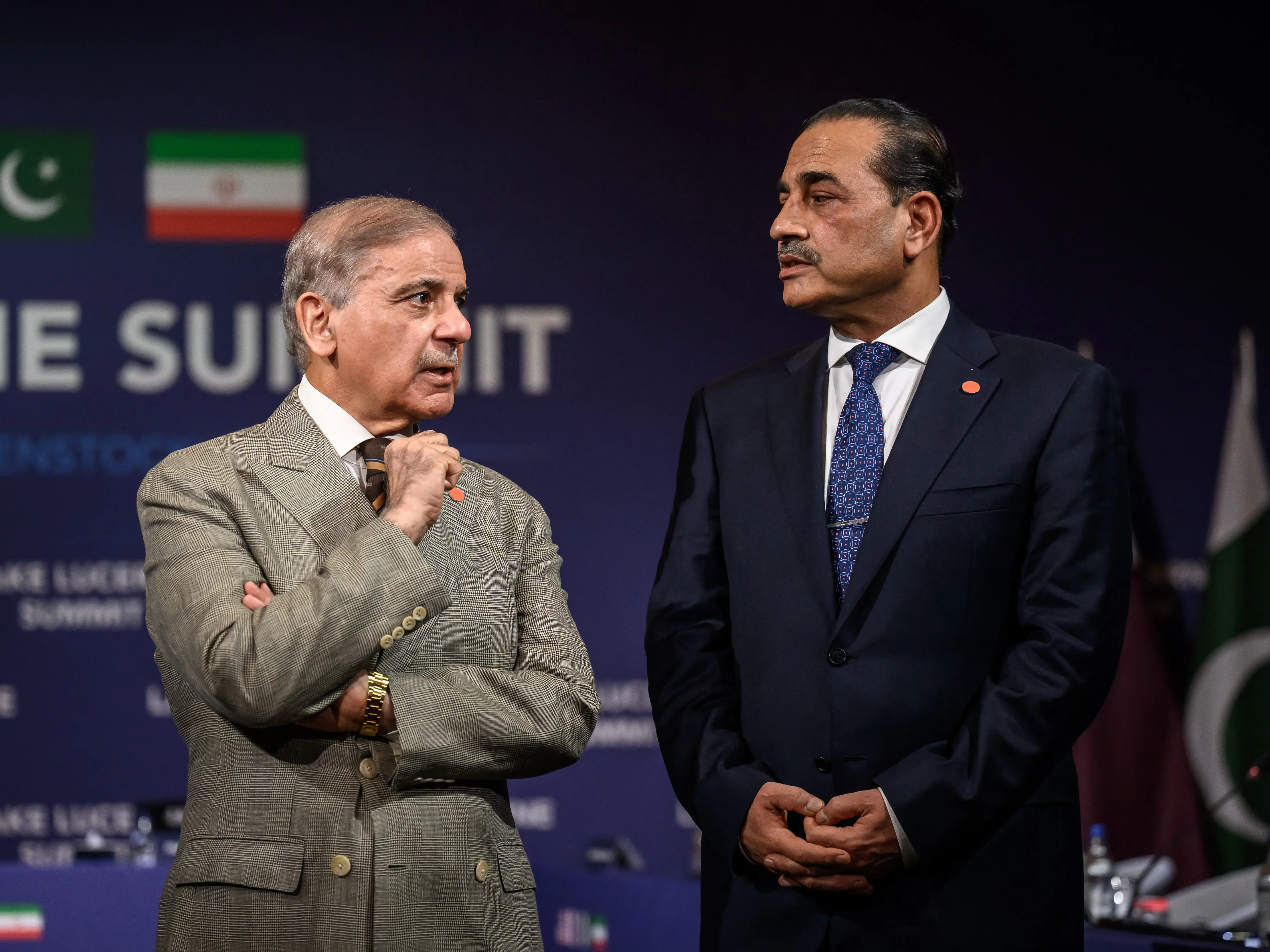
Pakistan's all-powerful Army Chief Asim Munir seems to have become Islamabad's answer to almost every pressing challenge, be it the country's enduring economic crisis or diplomatic engagement with world powers. Now, Munir has another role: helping tackle Pakistan's population challenge.
It may be unusual for an army chief to dabble in civilian administrative matters in most countries, but Pakistan increasingly seems to have only one answer to every major challenge: the omnipotent Asim Munir.
As Pakistan's population continues to grow rapidly despite already being the world's fifth most populous country, and with projections suggesting it could overtake Indonesia by around 2030 to become the fourth largest, the country has little choice but to address the mounting demographic pressure alongside its economic challenges.
To tackle the issue, Prime Minister Shehbaz Sharif has constituted a committee to recommend policy reforms aimed at slowing population growth, with Munir among its members.
Pakistani Health Minister Syed Mustafa Kamal announced the move during a Senate meeting earlier this week, Dawn reported.
According to Kamal, the fact that Prime Minister Shehbaz Sharif joined hands with Munir on the matter "reflects the government's seriousness in tackling the rapid population growth". However, he did not elaborate on the measures being considered or any specific suggestions made by Munir.
Trending Stories
&imwidth=180&imheight=135&format=webp&quality=medium)
Pakistan to head IMF, World Bank boards after 74 years amid persistent economic crisis
&imwidth=180&imheight=135&format=webp&quality=medium)
'We are not sitting in ivory towers, we are aware': SC issues notice to Rahul Gandhi, Akhilesh Yadav
&imwidth=180&imheight=135&format=webp&quality=medium)
‘I have very severe problems’: Trump fuels health speculation during address to firefighters
&imwidth=180&imheight=135&format=webp&quality=medium)
SC panel launches portal to submit evidence of July Jantar Mantar violence
&imwidth=180&imheight=135&format=webp&quality=medium)
Trump invokes national interest to waive new Russia sanctions, tariffs; India gets relief from 100% tariff threat
&imwidth=180&imheight=135&format=webp&quality=medium)
Lizard people? Ex-US Army sniper claims soldier killed by 'reptilian beings' in battle near Area 51
&imwidth=180&imheight=135&format=webp&quality=medium)
Ankita Bhandari murder case: Parents meet CBI, seek impartial investigation
&imwidth=180&imheight=135&format=webp&quality=medium)
Bangladesh resort fire kills 10 tourists, including a 5-year-old child
&imwidth=180&imheight=135&format=webp&quality=medium)
At least 19 killed in stampede-like situation after part of Kolkata Durga Puja pandal collapses
&imwidth=180&imheight=135&format=webp&quality=medium)
IMF chief warns inflation hurts poor countries, AI optimism risks market correction
&imwidth=180&imheight=135&format=webp&quality=medium)
Iranian woman, 23, handed death sentence for ‘blasphemy’ in social media post; appeals for help
&imwidth=180&imheight=135&format=webp&quality=medium)
'Reason UN has lost credibility': Amid SIR protests India hits out at report alleging 'youth repression'
&imwidth=180&imheight=135&format=webp&quality=medium)
Rain washes out 5th T20I as India-West Indies share honours 2-2
&imwidth=180&imheight=135&format=webp&quality=medium)
Abhijeet Dipke released after fresh arrest, signs peace bond for second time
&imwidth=180&imheight=135&format=webp&quality=medium)
‘My president, I mean my husband’: Trump's new press secretary Katie Zacharia's first briefing goes off the rails in 14 minutes
&imwidth=180&imheight=135&format=webp&quality=medium)
China responds to Trump's Press Secretary Katie Zacharia after toilet remark: 'Visit China more often'
&imwidth=180&imheight=135&format=webp&quality=medium)
COVID-19 pandemic led to increase in divorce cases, observes Madras High Court
&imwidth=180&imheight=135&format=webp&quality=medium)
At least 400 arrested as protests turn violent in France; PM blames far left
&imwidth=180&imheight=135&format=webp&quality=medium)
2026 midterms, 2028 ambitions: Five politicians in focus
&imwidth=180&imheight=135&format=webp&quality=medium)
Israel examines Russia's Shahed-type drones sent by Ukraine to combat Iran | Gravitas
&imwidth=180&imheight=135&format=webp&quality=medium)
WATCH | iPhones, luxury perfumes floating in Hormuz? Iranian fishermen make bizarre discovery
&imwidth=180&imheight=135&format=webp&quality=medium)
China’s ‘dark tourism’ boom: Why are young travelers paying to experience simulated disasters?
&imwidth=180&imheight=135&format=webp&quality=medium)
WATCH | Zelensky gives cheeky response when asked if Trump is making him a scapegoat ahead of US midterms
&im=FitAndFill=(700,400)&imwidth=180&imheight=135&format=webp&quality=medium)
Durga Puja 2026: Kajol, Jaya Bachchan, Mouni Roy and other celebs bring festive glam to pandals
&imwidth=180&imheight=135&format=webp&quality=medium)
US business activity grows in June, but tariffs and inflation cloud outlook
&imwidth=180&imheight=135&format=webp&quality=medium)
No Ravindra Jadeja, Yashasvi Jaiswal in India’s 2027 ODI World Cup plans: Report
&imwidth=180&imheight=135&format=webp&quality=medium)
Kolkata Durga Puja stampede: PM Modi announces Rs 2 lakh ex-gratia for kin of dead, Amit Shah to visit injured
&im=FitAndFill=(700,400)&imwidth=180&imheight=135&format=webp&quality=medium)
Inside Tesla's Roadster: 10 features of Elon Musk's 'flying car' that push the limits of electric vehicles | In Pics
&imwidth=180&imheight=135&format=webp&quality=medium)
Anirudh Ravichander-Kavya Maran wedding: Telangana CM reveals Chennai reception date
&im=FitAndFill=(700,400)&imwidth=180&imheight=135&format=webp&quality=medium)
New Friday OTT releases (October 16, 2026): DC, Sacrifice, Aasha- 6 new movies and TV shows coming on Netflix, Zee 5, Prime Video and more
&imwidth=180&imheight=135&format=webp&quality=medium)
One species, two lineages: Why Sri Lanka’s spectacled cobra differs genetically from Indian variant
&imwidth=180&imheight=135&format=webp&quality=medium)
Oil tanker carrying over 2M barrels of crude hits mine in Strait of Hormuz, catches fire, says Iran
&imwidth=180&imheight=135&format=webp&quality=medium)
France protests: 'Block everything' movement escalates as public fury over austerity grows; over 200 arrested. Here's all you to need to know
&imwidth=180&imheight=135&format=webp&quality=medium)
'We feel like Mr India': Gujarat’s undercover SHE team guard garba nights at Navratri

US ends automatic work permit extensions; Indian workers lose 540-day safety net: What it means
&imwidth=180&imheight=135&format=webp&quality=medium)
US lawmaker Pramila Jaypal writes to Rubio, urges to raise handling of CJP protest with India
"The government is treating this issue with the highest priority and important policy decisions are being taken at every level," the health minister was quoted as saying. He added that the finance and planning ministers are also members of the committee.
According to Dawn, the government could also revise the formula for allocating federal revenue to provinces. At present, revenue is distributed largely on the basis of population, a system that effectively gives provinces an incentive to maintain higher population numbers.
Also Read: Iran's Supreme Leader vows to 'avenge the blood' of his slain predecessor and father 'soon'
From diplomacy to the economy
Even before adding this new responsibility to his portfolio, Munir had increasingly emerged as Islamabad's top diplomat, making multiple high-profile visits to China, the United States and countries in the Middle East.
Munir led Pakistan's mediation efforts during the recent US-Iran conflict, juggling diplomacy between Tehran and Washington before Islamabad hosted high-level talks on April 11 and 12, which were attended by US Vice President JD Vance, just days after an initial ceasefire on April 7.
In June 2023, months after taking over as army chief, Munir established the Special Investment Facilitation Council. The body acts as a powerful clearinghouse designed to bypass Pakistan's bureaucratic red tape and gives the military direct decision-making powers in sectors including agriculture, mining, information technology, energy and defence production.
Munir's powers expand after Operation Sindoor
Following India's Operation Sindoor, Pakistan elevated Munir to the rank of Field Marshal despite suffering heavy losses during the 72-hour conflict.
Islamabad further expanded its authority through the 27th Constitutional Amendment passed in November 2025, creating the post of Chief of Defence Forces and placing the navy and air force under his command in addition to the army.
The Pakistan Army Act was also amended to extend the tenure of the army chief from three years to five years. Munir, who was originally due to retire in 2027, can now remain in office until 2030. After completing his tenure, he will retain the rank of Field Marshal and enjoy legal immunity for life.
