&imwidth=800&imheight=600&format=webp&quality=medium "Two monster stars raced past our Sun, creating a protective shield around Earth")
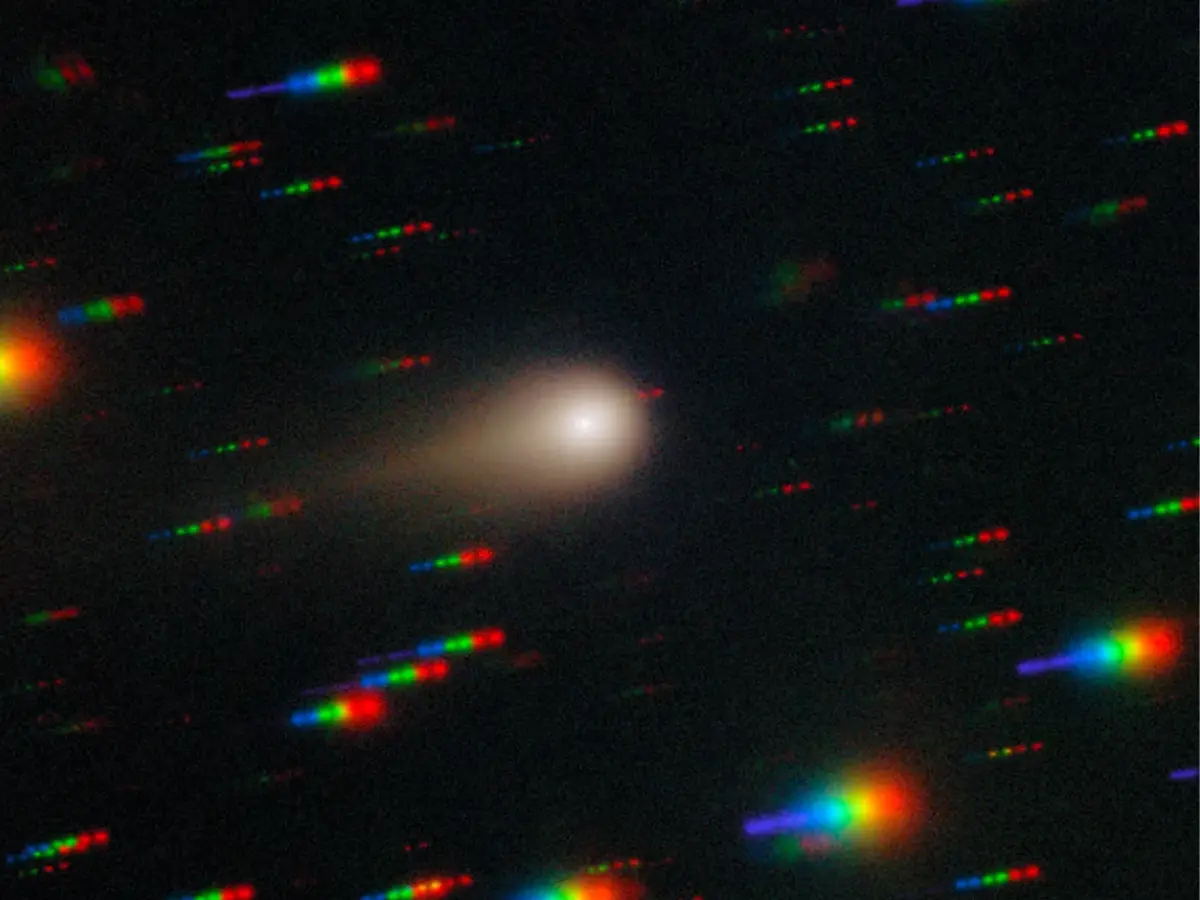
When the Hubble telescope observed interstellar clouds surrounding our solar system in the 1990s, it picked up something odd that had no explanation. It spotted ionisation in the clouds, a process in this case where atoms had lost electrons. While the reason for this remained a mystery for years, scientists have now found what happened in the clouds. According to a study published in The Astrophysical Journal, two massive stars raced past our sun millions of years ago, leading to a scary encounter. Researchers from the University of Colorado Boulder revealed that this flyby happened 4.4 million years ago, and the stars were approximately 30 light-years away from the Sun, and 13 times more massive than our star. When the duo paid this visit, it led to the stars emitting powerful radiation, leading to ionisation in the local clouds around the solar system.
This event not only solves a decades-old mystery, but according to the researchers, can also throw light on why Earth is a habitable planet. To understand what happened to these clouds, the researchers simulated what the solar system and surrounding region would have looked like millions of years ago. Michael Shull, an astrophysicist and lead author of the study, said in a statement that this was like a "jigsaw puzzle", since the Sun and the solar system are moving at a speed of 93,000 kilometres per hour. Every object, as we know now, would have been all over the place at the time.

The two stars life 400 light-years away today
They also know which two stars zoomed past the Sun. Epsilon Canis Majoris, also known as Adhara, and Beta Canis Majoris, or Mirzam, which live in the Canis Major constellation, are likely the culprits in this case. They are both hot and heavy, burning at temperatures of 38,000 and 45,000 degrees Fahrenheit. In comparison, our Sun's maximum temperature is only about 10,000 degrees Fahrenheit.
Trending Stories
)
Saudi vs Houthis: Houthis claim missiles & drones used in attack on key Saudi sites
)
Nepal forms 7-member panel to probe August 26 Bhotekoshi flood from source to downstream
)
Gaza under attack: Health chief's son killed in IDF strikes
)
Reacher star Alan Ritchson opens up about alleged blackmail, suicide attempt during difficult period
)
Delhi voter roll shake-up: 3.31 million electors flagged in SIR review
)
US-Iran war: Tehran draws red lines — seven demands before any peace talks
)
‘End of my career...’: NSA Doval recalls tense Sikkim mission when China captured Indian intelligence team
)
Mark Carney mimics Trump in hilarious moment over C$70 billion clean-energy investment; room erupts in laughter
)
9 women found dead near Johannesburg: South Africans rally, demand 'enough' to femicide
)
Report: Iran rebuilding Taleghan 2, nuclear site tied to past weapons research, hit twice by Israel
)
Iran sets 7 conditions to end war with US: What are Tehran’s demands?
)
Harry Brook targets long reign at top of T20I rankings after Sri Lanka sweep
)
Russia's deadly Ukraine strikes kill 2 in Sumy, hit Dnipro mall
)
Russia-Europe tensions: Polish PM warns Russian attacks could test NATO's unity
66 years of the Indus Waters Treaty: How India and Pakistan settled a bitter river dispute
)
Trump defends AI amid growing alarm, announces new 'AI force' and promises an 'AI czar'
&im=FitAndFill=(700,400))
How many F-35s does Britain, Japan and Israel have?
)
Raphinha hat-trick powers Barcelona to 3-1 win over Sevilla in La Liga
)
EXCLUSIVE | Singer Hanita Bhambri on her Toxic debut, working with Vishal Mishra and more
)
Trump announces ‘AI Force’ as debate grows over AI risks and regulation
)
Africa is splitting, and a lot sooner than estimated, giving way to a new ocean
)
Nigeria: Protesters take to the streets, police fire shots
&im=FitAndFill=(700,400))
‘Not the US or China’: These are the countries leading the world in arable land
)
China may have gained access to US's classified F-35 jets; parts meant for repairs diverted to Hong Kong, sparking Pentagon inquiry
)
Flying cars in UAE: Ras Al Khaimah signs deal with Chinese company to test new transport
)
The Verdict | When precision fails: US commits war crime in Minab school strike, UN finds
)
Aravana prasadam shortage at Sabarimala temple in Kerala triggers protests, TDB questioned
)
Trump 2.0: Dark days ahead for America’s ‘imperial presidency’
)
‘Will go to any extent’: Pakistan vows to defend Saudi Arabia amid Houthi attacks
)
Cochin shipyard starts building Indian Navy's next-gen missile vessels
)
Kampala-Ankara rift deepens: Uganda suspends military ties, seeks Fred Lumbuye's extradition
)
US-Iran war: Tehran sets seven conditions to re-engage in talks with US
)
Arvind Kejriwal, family members, Delhi CM Rekha Gupta get SIR notices
)
Russia holds first parliamentary elections since the beginning of the Ukraine war
)
Several petrol pumps, other businesses to refuse UPI payments above Rs 2,000 from Oct 16: Is it legal?
)
Ed Sheeran addresses Macklemore's removal, Gaza conflict during Philadelphia concert: 'I cannot hide how I feel'
Russia attacks Ukraine with 174 drones, kills 8; 2 vessels hit in Black Sea
&im=FitAndFill=(700,400))
Meet top 5 Indian batters with fastest T20I centuries
)
Trump bans CNN, MS NOW and Politico from White House over ‘FAKE NEWS’
)
)
Epsilon and Beta Canis Majoris came around 30-35 light-years from the Sun, or 281 trillion kilometres, which means both of them would have been clearly visible from Earth. “If you think back 4.4 million years, these two stars would have been anywhere from four to six times brighter than Sirius is today, far and away the brightest stars in the sky,” Shull said. Another thing to note is that these clouds could be the reason why Earth is able to harbour life. The event led to the ionisation of hydrogen and helium in the clouds, which now shield the solar system from ionising radiation.