Marauding couple on liver hunt triggered a great vanishing in South Africa

&imwidth=600&imheight=450&format=webp&quality=medium "Marauding couple on liver hunt triggered a great vanishing in South Africa")
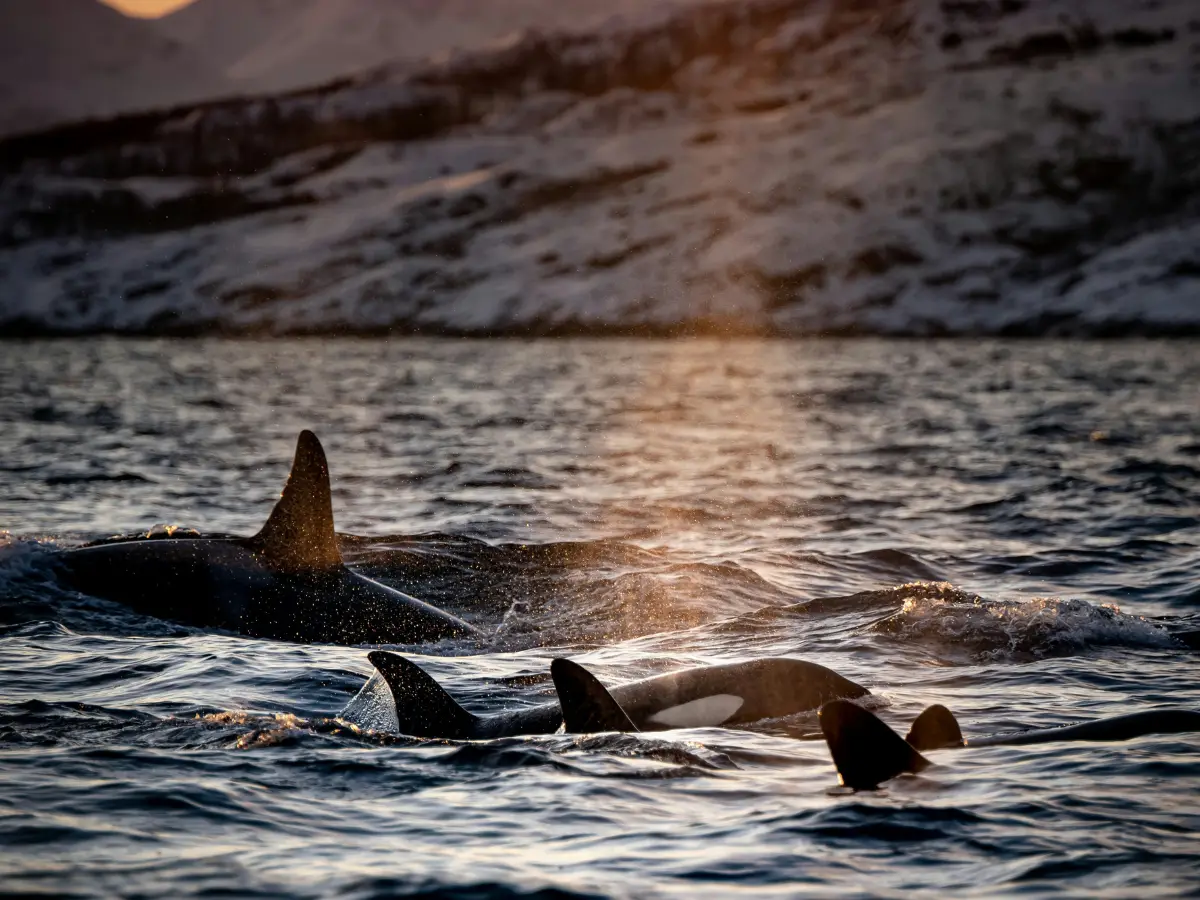
Killer whales are eating Great White Sharks on South Africa. Photograph: (Unsplash)
Great White Sharks have vanished in a Cape Town bay. Scientists say a murderous pair is killing them for their livers, which led the apex predator to escape. But some say humans are killing more sharks than any orcas can.
Scientists have found the reason for the vanishing of Great White Sharks in a South African Bay. The numbers started to dwindle in 2015, and by 2018, oceanographers found almost no traces of this beast. It remained a mystery for the longest time, before they finally zeroed in on the culprits - Orcas Port and Starboard. David Hurwitz, a whale-watching tour operator, was the first to see two male orcas hunting and killing sharks. They were hunting in pairs, when orcas typically hunt in groups. They were not trying to eat the whole animal and instead only targeted the liver for its dense calories. In 2022, five more orcas were seen working in cahoots, targeting a great white shark to remove its liver in one swift motion. What shocked the scientists the most was that great whites were never the prey. So when they faced this sudden threat from killer whales, they fled the sea and moved to other coastlines.
Orca pair hunting Great White Sharks
The great mystery of the disappearance of the sharks led scientists to do a deep dive. CBS News this year, and the Washington Post last year, carried out separate investigations to uncover the reason for the creatures leaving the False Bay near Cape Town. Wildlife photographer Chris Fallows documented witnessing around 250 to 300 different great white sharks in the area before 2015. Then, marine biologist Alison Kock came across smaller shark carcasses on the sea floor. They had surgical-looking incisions, which were so clean that they appeared to have been made by humans. Further investigation revealed that they were tooth marks from orcas that her team saw hunting in their study area. Two years later, great white shark carcasses started washing ashore, and all of them had the same incision marks. Necropsies confirmed that orcas have been feeding on great whites, specifically for their livers. This meant that the killer whales had found a new source of food, driving the great whites away in fear.
Are humans passing the blame onto Orcas?
Trending Stories
)
)
)
)
)
)
)
)
)
)
)
)
)
)
)
)
)
)
&im=FitAndFill=(700,400))
)
)
)
&im=FitAndFill=(700,400))
)
&im=FitAndFill=(700,400))
&im=FitAndFill=(700,400))
)
Orcas have never been known to hunt in pairs, which made this finding extremely intriguing. Second, they seem to have passed on their knowledge to other killer whales, as five of them were seen killing one great white in 2022. Although whales hunt sharks off the coast of California and around Australia, it had never been seen in South Africa. More shockingly, the sharks eventually return in the former regions, but not in South Africa. Kock told CBS News that Great white sharks are apex predators, but orcas are smart hunters and "learning all the time." However, Italian marine biologist Enrico Gennari blames humans for their disappearance. He says great whites are getting stuck in long-line hooks in commercial fishing boats. He added that South African nets and baited hooks meant to protect swimmers kill more than 20 great whites every year.

