El Nino record: Earth's oceans in 2026 are the hottest in 125,000 years

&imwidth=600&imheight=450&format=webp&quality=medium "El Nino record: Earth's oceans in 2026 are the hottest in 125,000 years")
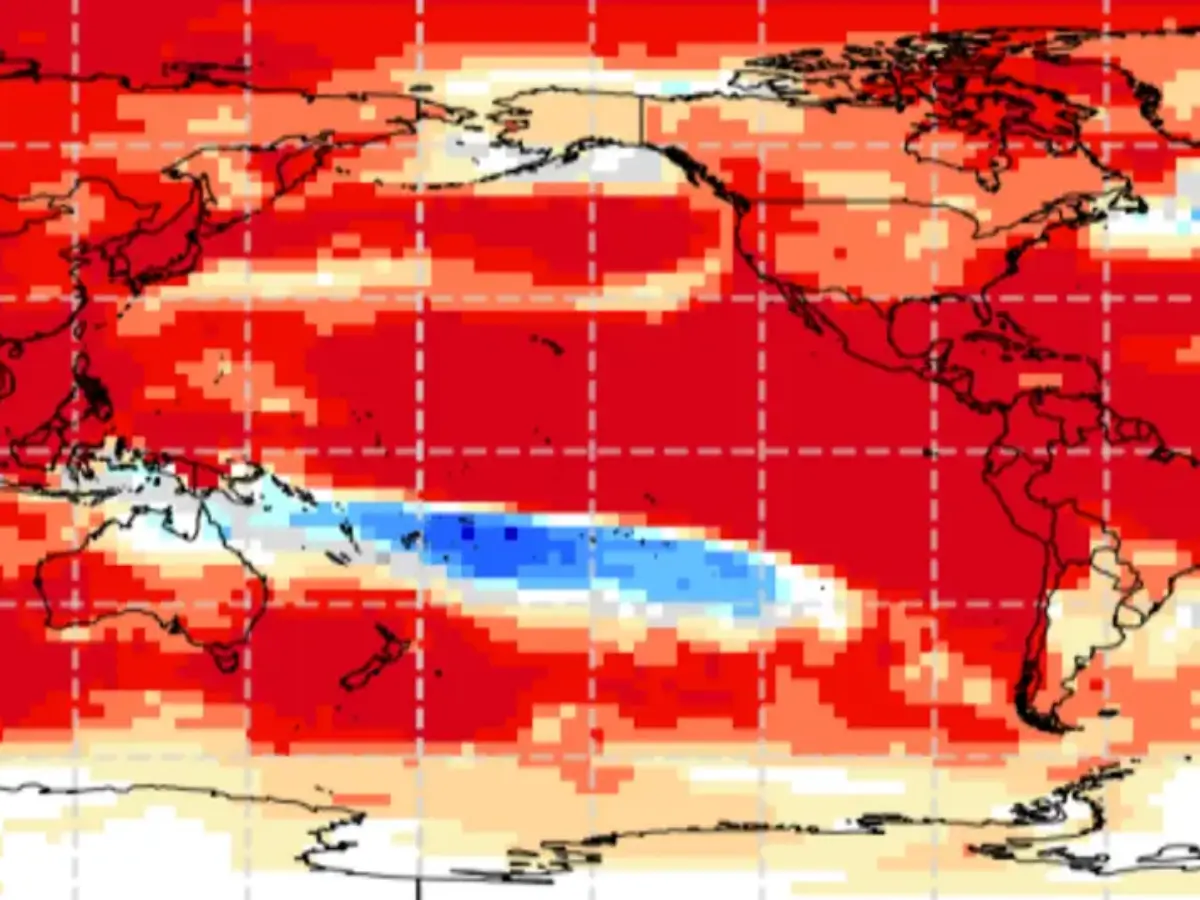
El Nino has heated up the oceans so much that the current temperatures might be a 125,000-year record. Photograph: (World Meteorological Organization)
The world's oceans today are the hottest they have been at any time in the Holocene epoch that started 11,700 years ago. But an expert believes that ocean surface temperatures might actually be the highest in the past 125,000 years.
An environmental studies expert has said the world's oceans are the hottest in 2026 than they have been in the last 125,000 years. A monster El Niño has gripped the planet this year, causing extreme heatwaves in many countries. Europe witnessed back-to-back heatwaves, and the United States was not spared either. There have been devastating wildfires on the one hand, and extreme rainfall on the other. Experts say the effects of this El Niño won't subside in the winter season either.
Hottest oceans in the Holocene epoch
El Niño has heated the oceans, with surface temperatures touching 21 degrees Celsius in 2026. This is the hottest they have been since records began. Ocean heat usually peaks around March and April, but this year the heat has remained turned on even in August.
According to University of Ottawa environmental studies professor Ryan Katz-Rosene, the current ocean surface temperature is likely the new high "for the entire Holocene period, and possibly even as far back as the last Interglacial 125,000 years ago."
Also Read: WMO warns Super El Niño is set to become monstrous between Aug-Oct - This was ‘only a warm-up act’
He wrote in a social media post, “August 21st likely marked the warmest Sea Surface Temperatures have been for the entire Holocene period, and possibly even as far back as the last Interglacial 125,000 years ago. Should be major news!”
Trending Stories
&imwidth=280&imheight=210&format=webp&quality=medium)
&im=FitAndFill=(700,400)&imwidth=280&imheight=210&format=webp&quality=medium)
&imwidth=280&imheight=210&format=webp&quality=medium)
&imwidth=280&imheight=210&format=webp&quality=medium)
&imwidth=280&imheight=210&format=webp&quality=medium)
&im=FitAndFill=(700,400)&imwidth=280&imheight=210&format=webp&quality=medium)
&imwidth=280&imheight=210&format=webp&quality=medium)
&imwidth=280&imheight=210&format=webp&quality=medium)
&imwidth=280&imheight=210&format=webp&quality=medium)
&imwidth=280&imheight=210&format=webp&quality=medium)
&imwidth=280&imheight=210&format=webp&quality=medium)
&imwidth=280&imheight=210&format=webp&quality=medium)
&imwidth=280&imheight=210&format=webp&quality=medium)
&imwidth=280&imheight=210&format=webp&quality=medium)
&imwidth=280&imheight=210&format=webp&quality=medium)
&imwidth=280&imheight=210&format=webp&quality=medium)
&imwidth=280&imheight=210&format=webp&quality=medium)
&imwidth=280&imheight=210&format=webp&quality=medium)
&imwidth=280&imheight=210&format=webp&quality=medium)
&imwidth=280&imheight=210&format=webp&quality=medium)
&imwidth=280&imheight=210&format=webp&quality=medium)
&imwidth=280&imheight=210&format=webp&quality=medium)
&imwidth=280&imheight=210&format=webp&quality=medium)
&imwidth=280&imheight=210&format=webp&quality=medium)
&im=FitAndFill=(700,400)&imwidth=280&imheight=210&format=webp&quality=medium)
&imwidth=280&imheight=210&format=webp&quality=medium)
&imwidth=280&imheight=210&format=webp&quality=medium)
&imwidth=280&imheight=210&format=webp&quality=medium)
&imwidth=280&imheight=210&format=webp&quality=medium)
&imwidth=280&imheight=210&format=webp&quality=medium)
&imwidth=280&imheight=210&format=webp&quality=medium)
&imwidth=280&imheight=210&format=webp&quality=medium)
&imwidth=280&imheight=210&format=webp&quality=medium)
&imwidth=280&imheight=210&format=webp&quality=medium)
&imwidth=280&imheight=210&format=webp&quality=medium)
Effects of hotter oceans
The temperature was recorded by the European Union’s Copernicus Climate Change Service (C3S), and it simply means that many more devastating weather events will hit us in the coming months. Huge storms could shape up, bringing intense rainfall and flooding. Hotter oceans also mean they no longer have the ability to absorb any more carbon dioxide, which creates an excess in the atmosphere.
Also Read: NASA satellite spots strongest sign of Super El Nino, confirming all predictions - What to expect?
The agency warns that this heating is in addition to what humans have already done to the world. “The consequences are already visible: the number of marine heatwave days globally has more than tripled since the early 1990s,” C4S researcher Samantha Burgess told The Guardian.
The oceans are clearly in distress, as the National Oceanic and Atmospheric Administration stated that around 42 per cent of them are covered in marine heatwaves, approaching a record proportion of 46 per cent set in 2024.

