
&imwidth=800&imheight=600&format=webp&quality=medium "Da Vinci's Mona Lisa captured a disease that was not medically discovered for 346 years")
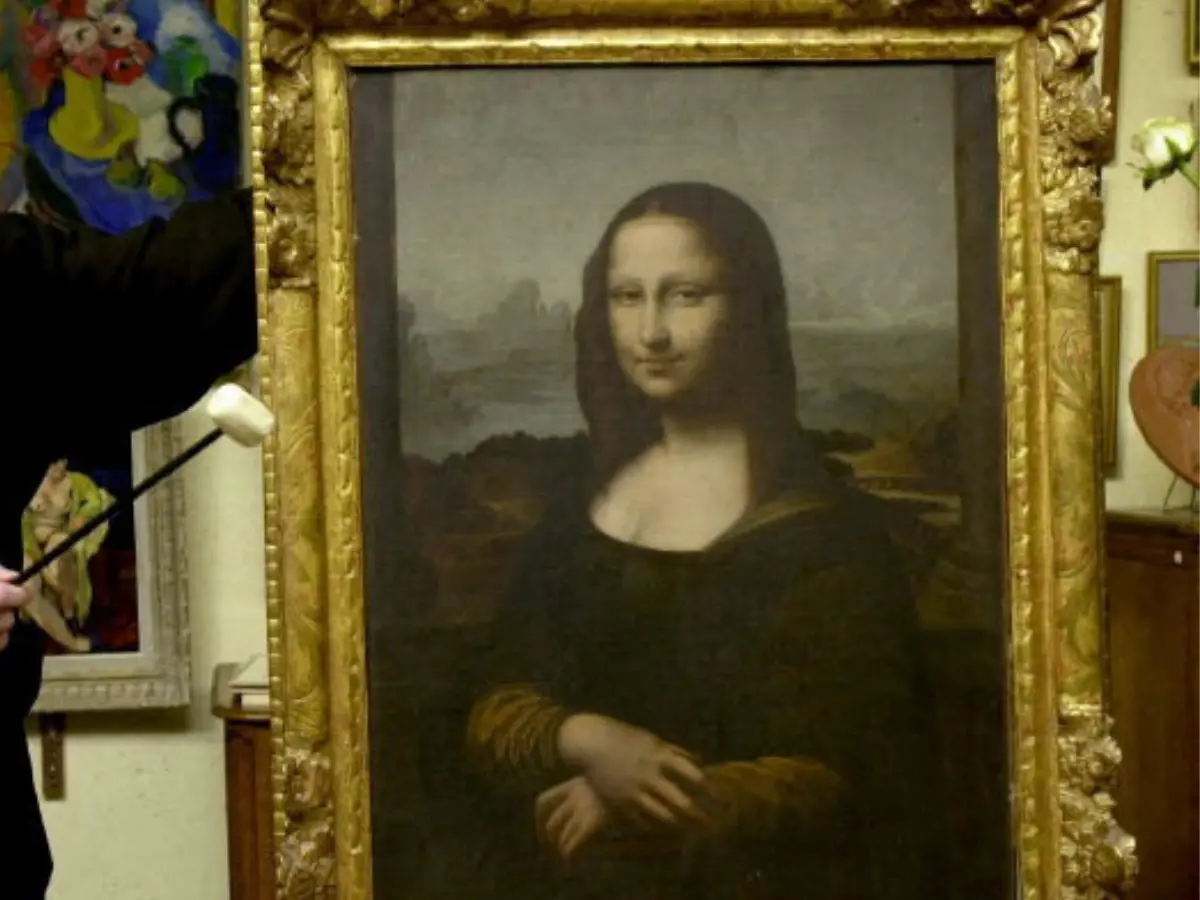
Leonardo da Vinci, the Renaissance Master whose works continue to influence modern creative, engineering, and digital fields, unknowingly captured a disease that wasn't medically described for another three centuries. His most famous work, Mona Lisa, also known as La Gioconda or La Joconde, shows two clear signs of a hereditary cholesterol disorder. Apparently, Lisa Gherardini, the subject of the painting, died at the age of 37, and a nearly two-decade-old paper states that her early death likely proves that she was suffering from it. The tell-tale signs are visible in the painting: a yellowish, irregular patch in the inner corner of her left upper eyelid, and a swelling on the back of her right hand. They are both typical physical markers associated with familial hypercholesterolemia (FH). This condition is linked to the presence of a defective gene in the body that doesn't allow low-density lipoprotein (LDL, or “bad” cholesterol) to be flushed out.
A 2008 scientific paper published in Current Cardiology Reviews talks about these two physical anomalies present in the Mona Lisa. The patch near the eye is what modern medicine calls xanthelasma, while the approximately three-centimetre-long swelling near the index finger is a lipoma or xanthoma. While the Mona Lisa was painted in 1506, the generic disorder got a formal clinical description in 1852. Leiv Ose of the Rikshospitalet in Oslo, the author of the paper, stated that the portrait is probably the first recorded evidence of familial hypercholesterolemia, over three centuries before science gave it a name.

Ose says that the presence of these lesions in a woman between 25 and 30 years old is not a coincidence. The disease linked to cholesterol is known to manifest at an early age. Gherardini died at the age of 37, although the exact cause remains unknown. However, the scientist believes that her death at a young age is consistent with the elevated cardiovascular risk associated with the condition.
Another painting also revealed the deadly disease
Trending Stories
)
Justice eludes Air India 1985 bombing victims as Canada probe goes 'inactive' | Gravitas
)
Trump revives India-Middle East-Europe economic corridor as India emerges central to West Asia’s future: What is it?
)
Erdogan again raises Kashmir issue at UNGA, calls for dialogue under UN Charter
)
The Verdict | Moral policing isn’t culture or discipline, it’s crime
)
Trump signs Greenland security deal with Denmark, paving way for two new US military bases
)
Most Americans want greater federal AI oversight
)
Major League Soccer referee sacked for sexist comment about female match referee
)
IND vs JPN T20I: How an overturned wide became point of difference between India's win and a tie
)
Trump-Xi summit: From trade to Taiwan, what will the US and Chinese presidents discuss in Washington?
)
Cyclone Arnab: Landfall expected before midnight tomorrow as IMD issues orange alerts across six states
)
ICC plans T20I expansion and fewer ODIs in 2027–2031 FTP cycle: Report
)
'Mumma’s boy from Gwalior who dared to dream': Kartik Aaryan pens long note after first National Award win
)
Gravitas | Boosting NHS productivity could save 20,600 lives in UK annually: Report
)
Nor'easter could batter 13 US states this week. What you should know
)
US and China vie for AI dominance as calls grow for regulation | Gravitas
)
Yemen clashes kill 154 people in two days as cornered Saudi battles Houthi offensive | Gravitas
)
Bomb scare in New York amid UNGA: Suspicious suitcase found near UN headquarters
)
IND vs JPN, one-off T20I: Japan captain Kendel on pushing India to the brink - ‘It was special’
)
Raaka creates history! Allu Arjun’s film secures Guinness World Record ahead of release
)
Mikel Arteta verbally agrees to three-year extension with Arsenal after title-winning Premier League season
)
WION Iconic Tourism Summit and Awards 2026: Key voices to discuss India’s tourism future
)
WION Iconic Tourism Summit and Iconic Awards 2026: India's travel economy leaders gather in Delhi
)
American manufacturing is reshoring faster than its factory floors can absorb
&im=FitAndFill=(700,400))
New OTT releases this week (September 21-27, 2026): Shaque: Trust No One, Hunkkaar, Don’t Be Shy- 5 new titles coming to Netflix, Prime Video and more
)
81st UN General Assembly: Burnham announces UK-US AI defence tie-up
)
Trump calls on nations to quit ‘rogue’ and ‘out-of-control’ International Criminal Court, rips UN
)
Infections transmitted from pregnant woman linked to autism risk
)
'What kind of confession is this?': Pakistan PM Shehbaz Sharif’s 'terrorists would be roaming New York' remark goes viral, raises alarm online. Watch
)
Elephants hide behind trees, stage surprise attack on poachers targeting rhinos in South Africa
)
IIT Bombay professor Suryanarayana Doolla sent on leave amid Sahil Wakode death probe
)
'This is normally what toddlers do': Why a psychiatrist is raising fresh questions about Trump’s recent behaviour
&im=FitAndFill=(700,400))
National Film Awards 2026: Kartik Aaryan, Mammootty, Yami Gautam, Randeep Hooda and other key winners
)
‘Strike a deal or drive Iran into hell’: Trump issues fresh warning to Tehran at UNGA
)
Anne Hathaway to run in supporting race for Nolan's epic
)
Over 4,200 books withdrawn from circulation in J&K colleges, 94% from Kashmir
)
From Gaddafi tearing up UN Charter to Trump’s ‘escalatorgate’: Most unforgettable UNGA moments
)
Explainer: Why rare-earth export licences and Board of Trade are US priorities ahead of Trump-Xi summit
)
Asia prepares for record El Nino, food shock
)
Oil slips to $98 as Saudi Arabia restarts East-West oil pipeline
)
Four female students raped during 'Red Zone' at California university. What we know
The paper further states that the Mona Lisa is not the only portrait to reveal signs of this disease. Dutch master Frans Hals's 1663 Portrait of an Old Woman shows xanthoma lesions on the back of the hand of a 60-year-old woman. However, the eyelid marker is missing. She likely inherited only one defective copy of the relevant gene, which meant only one marker was present. Today, several people take cholesterol medication belonging to a class of drugs known as statins. They weren't made until the 1900s. Physician Carl Müller was the first person to identify in 1937 that elevated cholesterol was linked to heart disease. Then, in 1971, Japanese scientist Akira Endo started screening thousands of microbial strains, and his work ultimately led to the invention of mevastatin, a drug that came before statins. So technically, da Vinci revealed familial hypercholesterolemia to the world over four centuries before it was diagnosed and treated.

