Archaeologists find rare Roman-era pleasure ship beneath Alexandria’s port: What does this 2,000-year-old reveal about Egypt?

&imwidth=600&imheight=450&format=webp&quality=medium "Archaeologists find rare Roman-era pleasure ship beneath Alexandria’s port: What does this 2,000-year-old reveal about Egypt?")
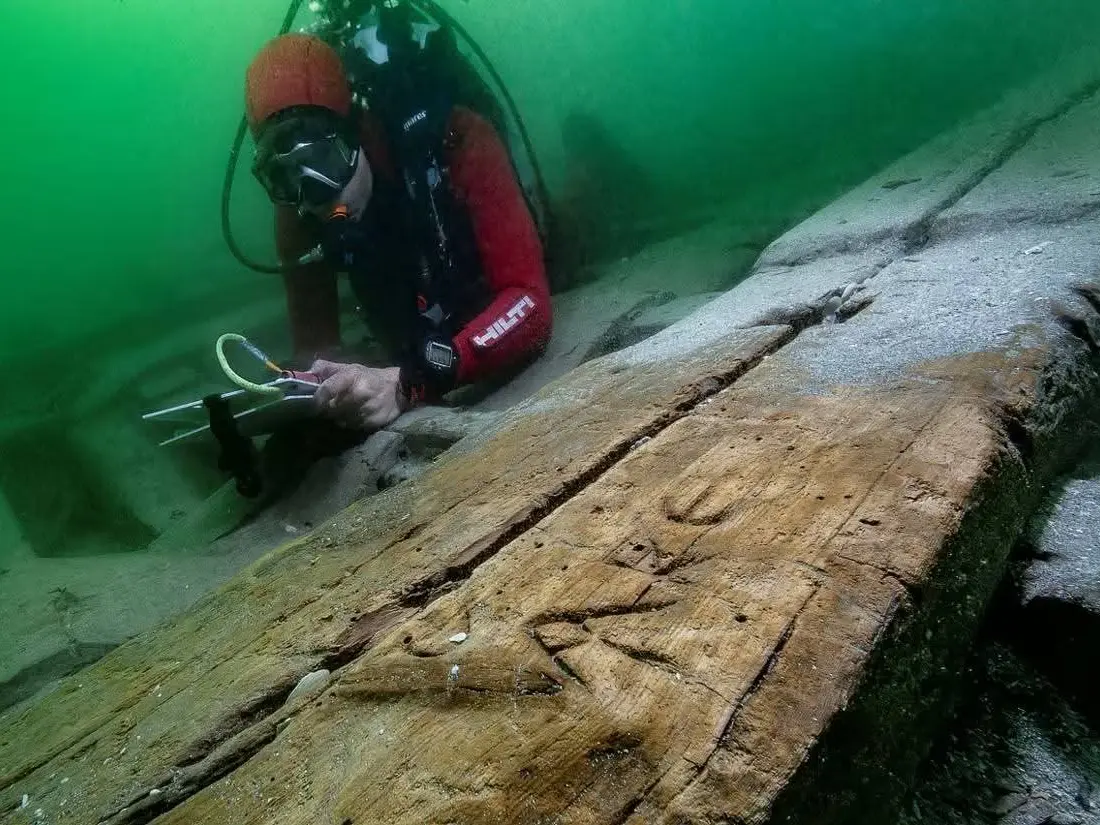
Archaeologists at the Port of the Royal Island of Antirhodos. Photograph: (X/@Lucius_Gellius)
Archaeologists hinted that the vessel is depicted as a thalamagos, a pleasure barge that would have hosted renowned figures, else it would have taken part in ceremonial processions in Roman Egypt.
A team of archaeologists from the European Institute of Underwater Archaeology (IEASM) discovered around 2,000-year-old ‘Pleasure Boat’ in a recent exploration mission at the Port of the Royal Island of Antirhodos, which is located inside Portus Magnus, the ancient main harbour of Alexandria, Egypt. The ship is remarkably well preserved, meaning its structure and remains are in very good condition despite its age.
Archaeologists postulate that the vessel is depicted as a thalamagos, a pleasure barge that would have hosted renowned figures, else it would have taken part in ceremonial processions in Roman Egypt. They have discovered around 90 feet of preserved timbers, showing a ship of nearly 115 feet long and 23 feet wide, as per the IESM’s press release.
The discoverer has identified the wreck as a luxurious first-century A.D. pleasure barge, likely built soon after Egypt came under Roman rule. Its wide beam and flat-bottomed hull indicated that it was shaped for elegant travel through Alexandria’s calm canals, offering covered dining space for elite passengers.
They indicated that those lavish barges were common among the wealthy, echoing the grand thalamagoi once used by the Ptolemies, including Cleopatra VII. Experts also believe that the ship was designed and constructed in Alexandria, which was richly decorated, and powered by oars.
Alexandria's port became the heart of the Ptolemaic empire
Franck Goddio, IEASM director, indicated that it might have been linked to the temple of Isis on Antirhodos Island and could have sunk around 50 A.D. during the destruction of the temple. If connected to the navigational side, the barge may have served as a symbolic “solar barque” carrying Isis during annual religious processions.
Trending Stories
)
)
)
)
)
)
)
)
)
)
)
)
)
)
)
)
)
)
)
)
)
)
)
)
&im=FitAndFill=(700,400))
)
)
)
)
)
)
)
)
)
)
)
The finding of the pleasure barrage also highlights the extraordinary history of the port of Alexandria, indicating that a small fishing village became the heart of the Ptolemaic empire after the city was founded by Alexander the Great. It was the largest trading hub in the world under Roman rule, as it was handling everything from grain shipments to luxury imports.

