Zuckerberg to go bankrupt? Meta faces $1.4 Trillion in penalties in teen mental health trial

&imwidth=600&imheight=450&format=webp&quality=medium "Zuckerberg to go bankrupt? Meta faces $1.4 Trillion in penalties in teen mental health trial")
Zuckerberg to go bankrupt? Meta faces $1.4 Trillion in penalties in teen mental health trial Photograph: (Reuters)
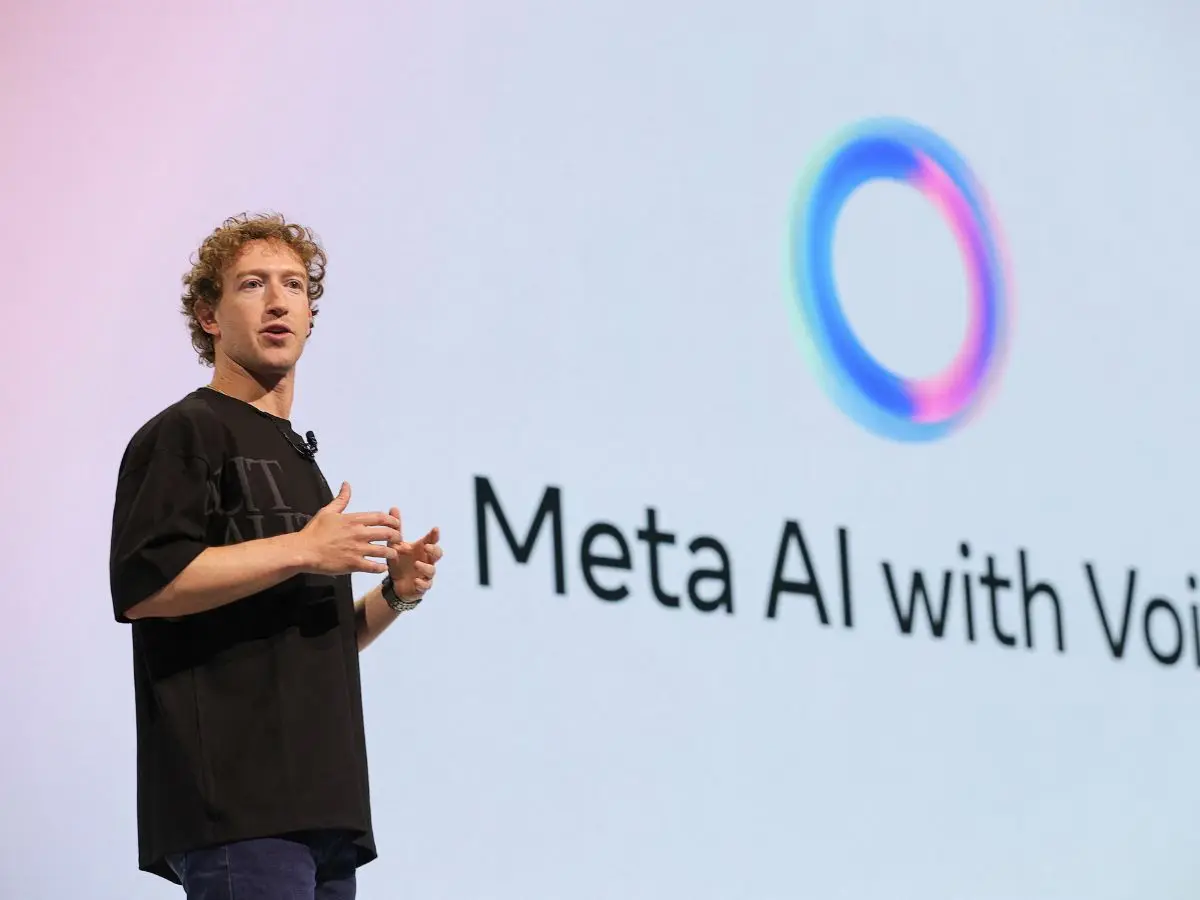
Four US states are seeking $1.4 trillion in penalties against Meta — a figure that nearly matches the company's entire market capitalisation of $1.5 trillion. The August 2026 trial in Oakland, California will determine whether Meta's intentional design of addictive features on Instagram and Facebook constitutes a consumer protection violation affecting millions of children. Meta calls the demand ‘unprecedented in the history of consumer protection enforcement.’ Analysts call it an existential threat.
The number is almost too large to process: $1.4 trillion. That is how much four US states are seeking in penalties from Meta Platforms in a trial scheduled for August 2026. To put it in context, Meta's entire market capitalisation — the total value of every share of the company — is approximately $1.5 trillion. The penalty being sought by California, New Jersey, Colorado, and Kentucky is not a fine. It is a demand that amounts to virtually erasing the company from existence.
What The Four States Are Accusing Meta Of
The four-state lawsuit centres on a specific and damning claim: that Meta deliberately designed Instagram and Facebook with addictive features it knew were harmful to teenagers, then misled the public about what it knew. The accusation is not that social media happened to be addictive. It is that Meta's engineers built in the addiction by design — the infinite scroll, the variable reward of likes and notifications, the algorithmic amplification of emotionally triggering content — and that executives knew the psychological damage this was causing to young users and hid it.
How $1.4 Trillion Was Calculated
The penalty figure is not arbitrary. It was calculated by multiplying the estimated number of violations — roughly equivalent to the number of young users affected by Meta's addictive design choices — by the fine amounts designated under each state's consumer protection law. In other words, each child affected counts as a separate violation. Across millions of young users in four states, that multiplication produces a number that exceeds the GDP of most countries. Meta attorneys have described the calculation as ‘unsupported by the evidence’ and noted that ‘Meta has not found any case, under any cause of action, where one defendant was ordered to pay over one trillion dollars’ — or anything remotely close.
The Broader War: 33 States, 3,000 Cases
Trending Stories
)
)
&im=FitAndFill=(700,400))
)
)
)
&im=FitAndFill=(700,400))
)
)
)
&im=FitAndFill=(700,400))
)
&im=FitAndFill=(700,400))
)
)
)
)
)
)
)
)
)
)
)
)
&im=FitAndFill=(700,400))
)
)
)
)
)
)
)
)
The four-state case is only part of a much larger legal assault. A total of 33 states have joined together in a separate but related lawsuit alleging that Meta exploited young users and collected data from children without parental consent in violation of federal law. In California alone, Meta faces over 3,000 individual cases making similar addiction and harm claims. Fourteen additional states are pursuing comparable claims. The August trial is the most consequential single proceeding, but it is not the only front on which Meta is fighting.
The New Mexico Verdict: A Warning Shot That Was Already Fired
This is not the first time a court has found against Meta on children's safety issues. In March 2026, a New Mexico jury determined that Meta knowingly harmed children's mental health and concealed what it knew about child sexual exploitation on its platforms. The jury found thousands of individual violations and imposed a $375 million penalty — the first time a US state successfully sued Meta over child safety. A separate judge also held Meta and Google jointly liable and ordered $6 million in damages in an individual case involving a young woman who alleged that deliberately addictive design features on Instagram got her hooked from a young age.
The Judge Who Refused To Let Meta Walk Away
US District Judge Yvonne Gonzalez Rogers in Oakland rejected Meta's motion to have the addiction claims dismissed before trial. That ruling kept the August proceeding alive and cleared the way for the $1.4 trillion penalty demand to be argued before a jury. Meta had hoped to end the case before it reached that point. It did not. Judge Gonzalez Rogers' decision to let the trial proceed is what transformed this from a manageable legal risk into what Gizmodo called an ‘existential threat.’
What Happens To Meta If It Loses
If a jury finds in favour of the four states and awards penalties anywhere near the $1.4 trillion being sought, the consequences for Meta would be unlike anything in corporate history. The company's entire market value would not cover the judgment. A penalty of that scale would trigger immediate financial crisis — capital raises, asset sales, potential restructuring. Meta has already warned investors in filings that it anticipates ‘material losses’ from youth-related litigation in 2026. That is the sanitised corporate language for: this is going to cost us seriously.
Zuckerberg's Position And Meta's Defence
Mark Zuckerberg has not commented publicly on the $1.4 trillion demand. Meta's legal team has been emphatic that the figure has ‘no analog in the history of consumer protection enforcement’ and that a sanction of that size would be constitutionally disproportionate. The company's defence is expected to argue that social media's effects on teen mental health are complex, disputed by research, and not the direct result of intentional harmful design. Whether that argument survives contact with a jury — in a political and cultural environment where teen mental health has become one of the most charged issues in American public life — is the $1.4 trillion question.
