What is Nvidia building beyond chips, and why does it matter now?

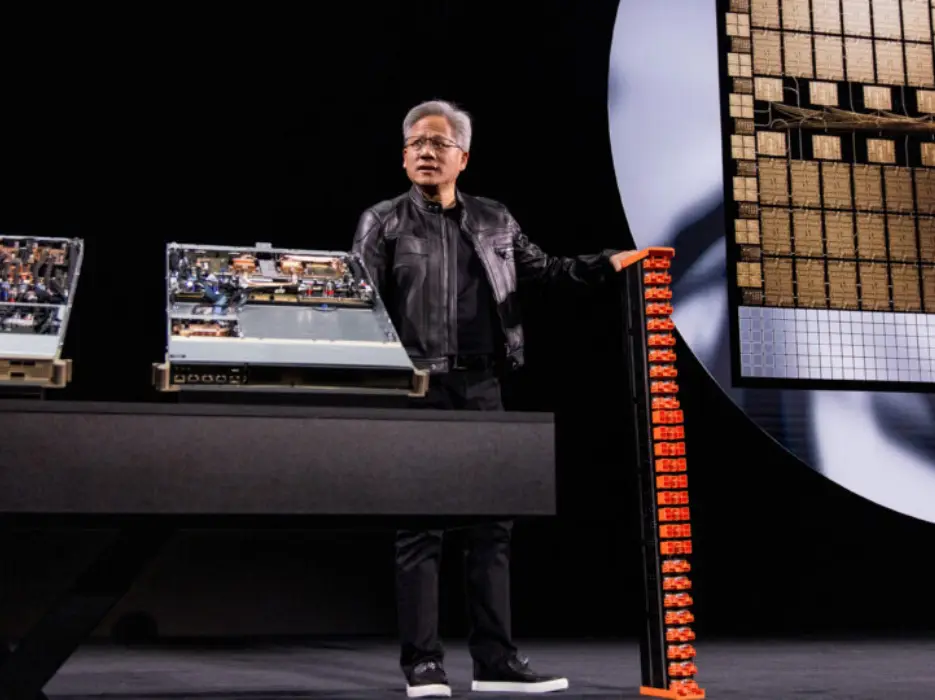&imwidth=600&imheight=450&format=webp&quality=medium "What is Nvidia building beyond chips, and why does it matter now?")
Nvidia’s networking business surges as AI infrastructure demand grows
NVIDIA is evolving beyond GPUs into a full-stack AI infrastructure company, with its networking business emerging as a major growth driver. The division generated $11 billion in quarterly revenue and is now Nvidia’s second-largest segment.
Nvidia has been known for its powerful graphics processing units (GPUs). These chips have become central to artificial intelligence. However, the company is now building much more than chips, and this shift is becoming increasingly important.
Under CEO Jensen Huang, Nvidia has expanded into networking, infrastructure and full-stack AI systems that power modern data centres.
Nvidia’s second-biggest business: Networking
Nvidia’s networking division has quietly grown into one of its largest revenue drivers.
According to the company’s latest earnings:
$11 billion revenue in a single quarter
Trending Stories
&imwidth=280&imheight=210&format=webp&quality=medium)
&imwidth=280&imheight=210&format=webp&quality=medium)
&imwidth=280&imheight=210&format=webp&quality=medium)
&imwidth=280&imheight=210&format=webp&quality=medium)
&imwidth=280&imheight=210&format=webp&quality=medium)
&imwidth=280&imheight=210&format=webp&quality=medium)
&imwidth=280&imheight=210&format=webp&quality=medium)
&imwidth=280&imheight=210&format=webp&quality=medium)
&imwidth=280&imheight=210&format=webp&quality=medium)
&imwidth=280&imheight=210&format=webp&quality=medium)
&imwidth=280&imheight=210&format=webp&quality=medium)
&imwidth=280&imheight=210&format=webp&quality=medium)
&imwidth=280&imheight=210&format=webp&quality=medium)
&imwidth=280&imheight=210&format=webp&quality=medium)
&imwidth=280&imheight=210&format=webp&quality=medium)
&im=FitAndFill=(700,400)&imwidth=280&imheight=210&format=webp&quality=medium)
&imwidth=280&imheight=210&format=webp&quality=medium)
&imwidth=280&imheight=210&format=webp&quality=medium)
&imwidth=280&imheight=210&format=webp&quality=medium)
&im=FitAndFill=(700,400)&imwidth=280&imheight=210&format=webp&quality=medium)
&imwidth=280&imheight=210&format=webp&quality=medium)
&imwidth=280&imheight=210&format=webp&quality=medium)
&imwidth=280&imheight=210&format=webp&quality=medium)
&imwidth=280&imheight=210&format=webp&quality=medium)
&imwidth=280&imheight=210&format=webp&quality=medium)
&imwidth=280&imheight=210&format=webp&quality=medium)
&imwidth=280&imheight=210&format=webp&quality=medium)
&imwidth=280&imheight=210&format=webp&quality=medium)
&imwidth=280&imheight=210&format=webp&quality=medium)
&imwidth=280&imheight=210&format=webp&quality=medium)
&imwidth=280&imheight=210&format=webp&quality=medium)
&imwidth=280&imheight=210&format=webp&quality=medium)
&imwidth=280&imheight=210&format=webp&quality=medium)
&imwidth=280&imheight=210&format=webp&quality=medium)
267 per cent year-on-year growth
Over $31 billion annual revenue
This makes networking Nvidia’s second-largest segment after compute. Analysts say this growth is directly linked to rising demand for AI infrastructure.
Kevin Cook, a strategist at Zacks Investment Research, noted that Nvidia’s quarterly networking revenue is now comparable to what some traditional networking companies generate in a full year.
What exactly is Nvidia building?
Nvidia’s networking business focuses on connecting thousands of GPUs inside data centres.
Key technologies include:
NVLink: connects GPUs within servers
InfiniBand switches: enable high-speed data transfer
Spectrum-X: Ethernet platform designed for AI workloads
Photonics switches: improve speed and energy efficiency
These tools ensure that AI systems can process massive amounts of data quickly and efficiently.
Instead of working as separate parts, these technologies are designed to function together as a single system.
The idea of an ‘AI factory’
Nvidia describes modern data centres as “AI factories”. These are facilities designed to train and run AI models at scale.
In this setup:
GPUs act as the computing engine
Networking acts as the backbone
Storage and software complete the system
Nvidia’s strategy is to provide all these components as an integrated package.
This approach allows companies to build large-scale AI systems more efficiently.
Mellanox acquisition: The turning point
Nvidia’s expansion into networking began with its acquisition of Mellanox in 2020 for $7 billion. Mellanox, an Israeli company, specialised in high-performance networking.
At the time, the move did not attract much attention. However, it has since become a key part of Nvidia’s growth.
Industry experts say the acquisition helped Nvidia turn its GPUs into a complete solution by adding the missing networking layer.
Full-stack strategy: Why it matters
Unlike companies that sell individual components, Nvidia is focusing on a full-stack approach.
This means it offers:
Hardware (GPUs and networking)
Software tools
Integrated systems
The company also works through partners to deploy these systems globally.
According to Nvidia executives, this integrated model gives the company an advantage, as AI workloads require tight coordination between compute and networking.
New announcements at GTC
At its recent GTC conference, Nvidia announced several updates to strengthen its AI infrastructure:
New Rubin platform for AI supercomputing
Improved Spectrum-X networking systems
Inference memory storage solutions
These developments aim to make AI systems faster and more efficient.
Why this matters for the AI race
The global AI race is no longer just about building better models. It is also about building the infrastructure that powers them.
AI models require:
Massive computing power
High-speed data transfer
Efficient system integration
Nvidia’s networking business addresses these needs.
Experts say the company’s success lies in understanding that networking is not just a support function it is central to how AI systems operate.
The bigger picture
Nvidia’s shift shows how the AI industry is evolving. Companies are moving from standalone tools to complete ecosystems. While GPUs remain critical, networking and infrastructure are becoming equally important. As demand for AI continues to grow, the ability to build and manage large-scale systems may define the next phase of the industry. Nvidia’s strategy suggests that the future of computing is not just about chips it is about how everything connects.