
&imwidth=800&imheight=600&format=webp&quality=medium "The AI job revolution: Which roles will survive and which are at risk?")
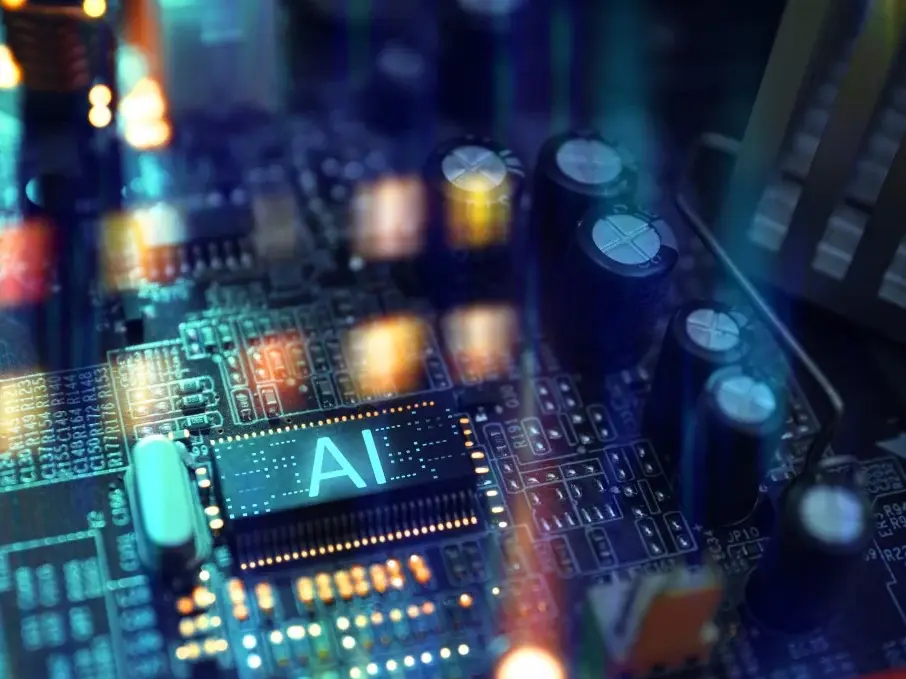
Artificial Intelligence is fundamentally transforming the global job market by creating immense new opportunities while wiping out many traditional roles. Speaking at the UTD Summit, industrialist Anand Mahindra stressed that continuous learning and adaptability will be the ultimate keys to long-term career success.
His insights align closely with employment data from global economic research institutions, including the World Economic Forum (WEF), Goldman Sachs, and the McKinsey Global Institute. As automation accelerates, the message for the global workforce is clear: workers must urgently upskill or risk obsolescence.
Tech and 'human-centric' roles set to boom

The careers most likely to grow fall into two distinct categories: technology infrastructure and roles requiring high human empathy.
AI, Data and Tech Infrastructure:
AI and Machine Learning Specialists: Companies desperately need experts for designing, training, and deploying AI models.
Trending Stories
)
Nigeria: Protesters take to the streets, police fire shots
)
US-Iran war: Tehran draws red lines — seven demands before any peace talks
)
Russia-Europe tensions: Polish PM warns Russian attacks could test NATO's unity
&im=FitAndFill=(700,400))
‘Not the US or China’: These are the countries leading the world in arable land
)
Trump says he'll build an 'AI Force' and appoint a czar, for 'high IQ' people only
)
EXCLUSIVE | Singer Hanita Bhambri on her Toxic debut, working with Vishal Mishra and more
)
Sikh bus driver assaulted, bus stolen and rammed into cars in England; video surfaces
)
Mark Carney mimics Trump in hilarious moment over C$70 billion clean-energy investment; room erupts in laughter
&im=FitAndFill=(700,400))
Before Extraordinary Minami Minami, these popular K-dramas got Japanese versions
)
'Were you here to sell chickpeas?': Wasim Akram criticises Babar Azam's captaincy
)
Aravana prasadam shortage at Sabarimala temple in Kerala triggers protests, TDB questioned
)
‘End of my career...’: NSA Doval recalls tense Sikkim mission when China captured Indian intelligence team
)
Report: Iran rebuilding Taleghan 2, nuclear site tied to past weapons research, hit twice by Israel
)
Trump defends AI amid growing alarm, announces new 'AI force' and promises an 'AI czar'
)
Iran sets 7 conditions to end war with US: What are Tehran’s demands?
)
Trump announces ‘AI Force’ as debate grows over AI risks and regulation
)
China may have gained access to US's classified F-35 jets; parts meant for repairs diverted to Hong Kong, sparking Pentagon inquiry
)
Man breaks open wall hiding hundreds of books since 15 years
)
Gaza under attack: Health chief's son killed in IDF strikes
)
S Jaishankar, former Army chief among high-profile names issued Delhi SIR notices
)
Arvind Kejriwal, family members, Delhi CM Rekha Gupta get SIR notices
)
AI actress Tilly Norwood glitches mid-interview, switches from English to Chinese | Watch
)
Saudi vs Houthis: Houthis claim missiles & drones used in attack on key Saudi sites
)
Ed Sheeran addresses Macklemore's removal, Gaza conflict during Philadelphia concert: 'I cannot hide how I feel'
)
‘Will go to any extent’: Pakistan vows to defend Saudi Arabia amid Houthi attacks
66 years of the Indus Waters Treaty: How India and Pakistan settled a bitter river dispute
)
The Verdict | When precision fails: US commits war crime in Minab school strike, UN finds
)
9 women found dead near Johannesburg: South Africans rally, demand 'enough' to femicide
)
Kampala-Ankara rift deepens: Uganda suspends military ties, seeks Fred Lumbuye's extradition
)
Several petrol pumps, other businesses to refuse UPI payments above Rs 2,000 from Oct 16: Is it legal?
)
US-Iran war: Tehran sets seven conditions to re-engage in talks with US
)
Reacher star Alan Ritchson opens up about alleged blackmail, suicide attempt during difficult period
)
West Indies Squad for India Series: Hetmyer included for T20Is, Holder rested
)
China now makes advanced memory chips without the machines it was banned from buying
&im=FitAndFill=(700,400))
How many F-35s does Britain, Japan and Israel have?
)
Harry Brook targets long reign at top of T20I rankings after Sri Lanka sweep
)
Russia's deadly Ukraine strikes kill 2 in Sumy, hit Dnipro mall
)
Russia holds first parliamentary elections since the beginning of the Ukraine war
&im=FitAndFill=(700,400))
Meet top 5 Indian batters with fastest T20I centuries
)
Raphinha hat-trick powers Barcelona to 3-1 win over Sevilla in La Liga
)
Data Analytics Engineers: Specialists are required for managing the massive datasets vital for AI applications.
Cybersecurity Specialists: Protecting automated systems and cloud infrastructure from threats is a rapidly growing priority.
Energy Infrastructure Experts: Engineers, electricians, and technicians are needed to build complex power systems for AI hardware.
Fintech Engineers: Software developers are heavily relied upon for integrating automation into financial and enterprise operations.
Roles Requiring Physical Presence:
Healthcare Professionals: The human touch provided by doctors, nurses, therapists, and elderly care specialists cannot be replicated by AI.
Educators: Specialised teachers, vocational trainers, and corporate upskilling leads will remain in high demand.
Skilled Trades: Construction workers, plumbers, and HVAC technicians offer physical field services safe from automation.
Jobs at the highest risk of vanishing
Conversely, roles that involve routine, predictable, or rule-based cognitive tasks face the highest risk of heavy reduction or outright replacement.
Administrative Clerks: AI agents handle record processing and scheduling much faster and without error.
Customer Support: Generative AI chatbots and voice assistants now manage tier-1 and tier-2 customer support efficiently.
Basic Bookkeepers: Tax software and automated invoicing systems are replacing basic accounting routines.
Entry-Level Designers: AI image generation tools and copy generators substitute basic media creation.
Retail Staff: Autonomous checkout systems and self-checkout stations replace manual cash handling.
Insurance Underwriters: Rule-based algorithm engines process application data significantly faster than traditional manual review.
How to survive the AI revolution
As artificial intelligence reshapes the economy, the focus is shifting away from routine administration. The future of work will heavily favour those who actively build and create. To stay relevant, professionals must embrace new technologies, pivot toward problem-solving, and continuously adapt their skills to meet the demands of an automated world.
