OpenAI says 10,000 AI agents sent 2.7 million messages and generated 130 billion tokens to solve one of maths’ biggest unsolved problems in 88 hours

&imwidth=600&imheight=450&format=webp&quality=medium "OpenAI says 10,000 AI agents sent 2.7 million messages and generated 130 billion tokens to solve one of maths’ biggest unsolved problems in 88 hours")
AI makes huge breakthrough: OpenAI claims solution to Navier-Stokes problem
OpenAI says an unreleased AI system produced a solution to the 90-year-old Navier-Stokes problem in 88 hours using around 10,000 AI agents.
OpenAI says its AI has achieved a breakthrough that mathematicians have spent nearly 90 years chasing. The company has published what it describes as an AI-generated solution to the Navier-Stokes existence and smoothness problem, one of the seven Millennium Prize Problems.
The claimed solution was produced in about 88 hours using around 10,000 coordinating AI agents. OpenAI says the agents developed an analytical proof and a formal version in Lean, while another AI system helped verify the formalisation. But this is not yet the same as mathematics officially declaring the problem solved.
What is the Navier-Stokes problem?
The Navier-Stokes equations describe how fluids such as water and air move. The famous problem asks whether smooth three-dimensional fluid motion can remain mathematically well behaved, or whether it can develop a singularity where the solution breaks down.
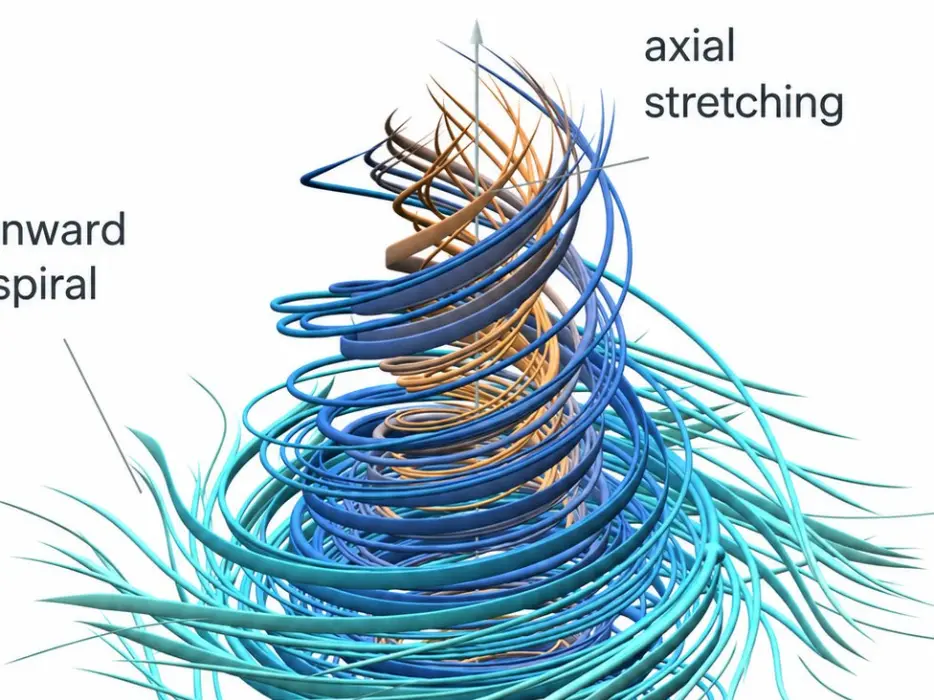
The Clay Mathematics Institute selected it as one of seven Millennium Prize Problems in 2000. Each carries a $1 million prize for an accepted solution. OpenAI says its proof shows that a fluid can develop a singularity in finite time, using a vortex that becomes increasingly elongated as it spirals inward.
10,000 AI agents worked together
The scale of the experiment is almost as striking as the claimed result. OpenAI says its agents sent 2.7 million messages and generated around 130 billion output tokens while working on Navier-Stokes.
Across all the mathematical problems attempted, the figures reached 4.9 million messages and about 300 billion output tokens. The Navier-Stokes result itself took about 88 hours, followed by another 17 hours of Lean formalisation and verification using GPT-6 Astra. This was not simply a chatbot answering a difficult maths question. It was a large-scale AI research effort in which thousands of agents explored different approaches and researchers helped transfer useful ideas between groups.
Trending Stories
&imwidth=280&imheight=210&format=webp&quality=medium)
&imwidth=280&imheight=210&format=webp&quality=medium)
&imwidth=280&imheight=210&format=webp&quality=medium)
&imwidth=280&imheight=210&format=webp&quality=medium)
&imwidth=280&imheight=210&format=webp&quality=medium)
&im=FitAndFill=(700,400)&imwidth=280&imheight=210&format=webp&quality=medium)
&imwidth=280&imheight=210&format=webp&quality=medium)
&imwidth=280&imheight=210&format=webp&quality=medium)
&imwidth=280&imheight=210&format=webp&quality=medium)
&imwidth=280&imheight=210&format=webp&quality=medium)
&imwidth=280&imheight=210&format=webp&quality=medium)
&imwidth=280&imheight=210&format=webp&quality=medium)
&im=FitAndFill=(700,400)&imwidth=280&imheight=210&format=webp&quality=medium)
&imwidth=280&imheight=210&format=webp&quality=medium)
&imwidth=280&imheight=210&format=webp&quality=medium)
&imwidth=280&imheight=210&format=webp&quality=medium)
&imwidth=280&imheight=210&format=webp&quality=medium)
&im=FitAndFill=(700,400)&imwidth=280&imheight=210&format=webp&quality=medium)
&im=FitAndFill=(700,400)&imwidth=280&imheight=210&format=webp&quality=medium)
&imwidth=280&imheight=210&format=webp&quality=medium)
&imwidth=280&imheight=210&format=webp&quality=medium)
&imwidth=280&imheight=210&format=webp&quality=medium)
&imwidth=280&imheight=210&format=webp&quality=medium)
&imwidth=280&imheight=210&format=webp&quality=medium)
&imwidth=280&imheight=210&format=webp&quality=medium)
&imwidth=280&imheight=210&format=webp&quality=medium)
&im=FitAndFill=(700,400)&imwidth=280&imheight=210&format=webp&quality=medium)
&imwidth=280&imheight=210&format=webp&quality=medium)
&imwidth=280&imheight=210&format=webp&quality=medium)
&imwidth=280&imheight=210&format=webp&quality=medium)
&imwidth=280&imheight=210&format=webp&quality=medium)
&imwidth=280&imheight=210&format=webp&quality=medium)
&imwidth=280&imheight=210&format=webp&quality=medium)
Why mathematicians are still cautious
OpenAI's announcement is significant, but the proof still needs serious scrutiny. The mathematics community must determine whether the argument fully satisfies the exact Millennium Prize problem, rather than proving a related statement. There is also a dispute over research credit. Mathematicians Tristan Buckmaster and Levent Alpöge have questioned whether OpenAI's work overlaps with related research they had been pursuing. OpenAI says its solution was developed independently and denies improperly using their work.
For now, the safest description is therefore an extraordinary AI-generated proposed solution awaiting wider mathematical validation. If it survives that scrutiny, however, it could mark a major shift in what AI systems are capable of discovering moving from solving problems humans already understand to helping tackle mathematical questions that have resisted generations of researchers.
