Nvidia faces a new challenge as OpenAI reveals its first AI chip

&imwidth=600&imheight=450&format=webp&quality=medium "Nvidia faces a new challenge as OpenAI reveals its first AI chip")
Nvidia faces a new challenge as OpenAI reveals its first AI chip
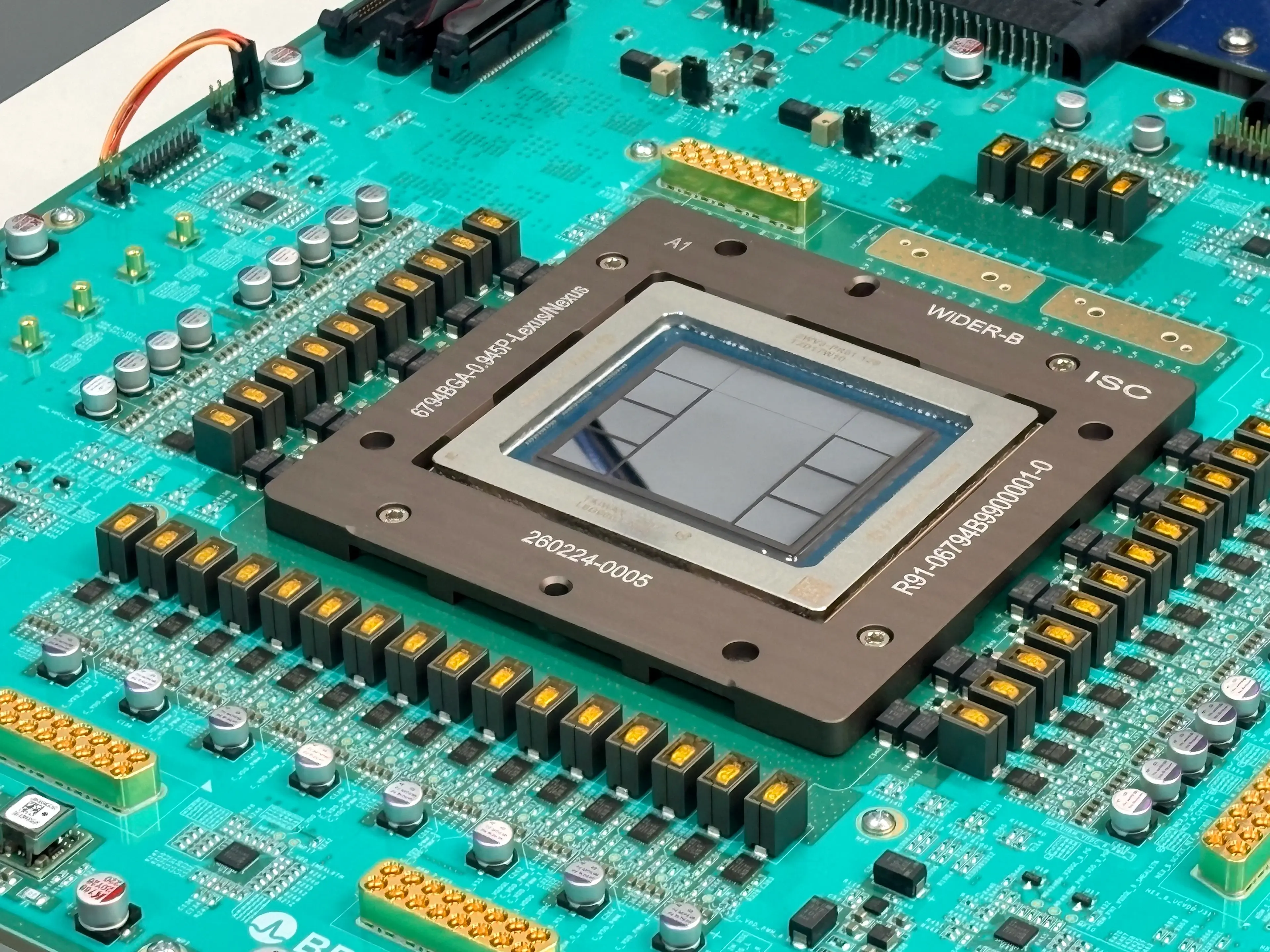
OpenAI has revealed Jalapeño, its first custom AI inference chip, developed with Broadcom. The company says it delivers up to 1.9x more AI work per watt and up to 3.6x lower latency than comparison systems, while Nvidia remains part of its broader hardware strategy.
OpenAI has revealed the first performance results from Jalapeño, its custom AI chip designed specifically to run AI models. CEO Sam Altman summed up the development in a short post: “we made a chip and it is fast.”
The announcement marks an important shift for OpenAI. The company is no longer only building AI models such as ChatGPT. It is also designing the hardware that runs them. OpenAI says Jalapeño delivered 1.5 to 1.9 times more AI work per watt than the comparison systems across GPT-OSS 120B, DeepSeek R1 and Kimi K2.5 1T. It also recorded 1.7 to 3.6 times lower end-to-end latency in the company's tests.
Why OpenAI built its own chip
Jalapeño is an inference chip. In simple terms, inference is the stage when an AI model actually answers a user's request. Every ChatGPT question requires inference. So do coding agents, AI assistants and API requests. OpenAI designed Jalapeño around these workloads rather than trying to make a general-purpose processor. The company worked with Broadcom on the chip and Celestica on boards, racks and production systems. The idea is to optimise the entire system together including the chip, memory, networking and software. That matters because AI companies are facing two major problems: huge computing demand and enormous electricity costs.
Jalapeño vs Nvidia: what the numbers show
OpenAI compared Jalapeño with commercial systems built around Nvidia accelerators using the InferenceX benchmark. The chip is rated at 700 watts, while the Nvidia systems used in the comparison were rated at 1,200W or 1,400W, depending on the test. OpenAI says Jalapeño delivered stronger performance per unit of power while also reducing latency. For highly interactive AI workloads, OpenAI reported up to 4.1 times higher performance. However, these are OpenAI-reported benchmark results on selected workloads. They do not mean Jalapeño has replaced Nvidia across AI computing.
Trending Stories
&imwidth=280&imheight=210&format=webp&quality=medium)
&imwidth=280&imheight=210&format=webp&quality=medium)
&imwidth=280&imheight=210&format=webp&quality=medium)
&imwidth=280&imheight=210&format=webp&quality=medium)
&imwidth=280&imheight=210&format=webp&quality=medium)
&imwidth=280&imheight=210&format=webp&quality=medium)
&imwidth=280&imheight=210&format=webp&quality=medium)
&imwidth=280&imheight=210&format=webp&quality=medium)
&imwidth=280&imheight=210&format=webp&quality=medium)
&imwidth=280&imheight=210&format=webp&quality=medium)
&imwidth=280&imheight=210&format=webp&quality=medium)
&imwidth=280&imheight=210&format=webp&quality=medium)
&imwidth=280&imheight=210&format=webp&quality=medium)
&imwidth=280&imheight=210&format=webp&quality=medium)
&imwidth=280&imheight=210&format=webp&quality=medium)
&imwidth=280&imheight=210&format=webp&quality=medium)
&imwidth=280&imheight=210&format=webp&quality=medium)
&imwidth=280&imheight=210&format=webp&quality=medium)
&imwidth=280&imheight=210&format=webp&quality=medium)
&imwidth=280&imheight=210&format=webp&quality=medium)
&imwidth=280&imheight=210&format=webp&quality=medium)
&imwidth=280&imheight=210&format=webp&quality=medium)
&im=FitAndFill=(700,400)&imwidth=280&imheight=210&format=webp&quality=medium)
&imwidth=280&imheight=210&format=webp&quality=medium)
&imwidth=280&imheight=210&format=webp&quality=medium)
&imwidth=280&imheight=210&format=webp&quality=medium)
&im=FitAndFill=(700,400)&imwidth=280&imheight=210&format=webp&quality=medium)
&imwidth=280&imheight=210&format=webp&quality=medium)
&imwidth=280&imheight=210&format=webp&quality=medium)
&imwidth=280&imheight=210&format=webp&quality=medium)
&imwidth=280&imheight=210&format=webp&quality=medium)
&imwidth=280&imheight=210&format=webp&quality=medium)
&imwidth=280&imheight=210&format=webp&quality=medium)

&imwidth=280&imheight=210&format=webp&quality=medium)
OpenAI is not ditching Nvidia
This is perhaps the most important detail. OpenAI plans to begin deploying Jalapeño in its own computing infrastructure by the end of 2026. But the company says it will continue deploying Nvidia and other accelerators widely for both training and inference.
Jalapeño is instead the beginning of a multi-generation chip programme. OpenAI says its second generation is already deep in development, while a third generation is taking shape. The company also says AI itself helped build Jalapeño. OpenAI moved from initial design to tape-out in nine months, using AI to explore implementations, optimise circuits and speed up engineering and testing. The bigger goal is straightforward: more AI work from the same power and hardware. If OpenAI can make that happen at scale, the result could be faster ChatGPT responses, more capable AI agents and lower costs as demand continues to surge.
