
&imwidth=800&imheight=600&format=webp&quality=medium "By the end of 2026, AI may reshape office work: List of jobs most at risk")
As Artificial intelligence is moving faster than many expected, and its impact on office jobs is already visible. Many top leaders believe that a large share of screen-based work could change sharply by the end of 2026.
Among them is Mustafa Suleyman, head of AI at Microsoft, who has said that many white-collar tasks can be automated within 12 to 18 months. As per the industry assessments, the effects of this shift may be clearly felt across offices, media houses, customer support centres and research teams before 2026 ends.
White-collar work is at risk

Today AI can write well, analyse data, answer customer queries and even generate code. These tools work at speed, cost less over time and can handle large volumes of routine tasks.
According to industry analysis cited by Microsoft and other tech firms, jobs that rely heavily on repetitive digital work, standard analysis or predictable communication face higher exposure. This does not mean all these roles will disappear, but the way they are done may change sharply.
Sectors such as media, customer service, administration and basic research are already seeing AI support or partial replacement.
Trending Stories
&im=FitAndFill=(700,400))
National Handloom Day 2026: From Alia Bhatt to Samantha Ruth Prabhu; Actresses who celebrated India's textile heritage as brides
)
The Royals enter the Doctor Who universe: King Charles and Queen Camilla beam into Commonwealth Games in TARDIS
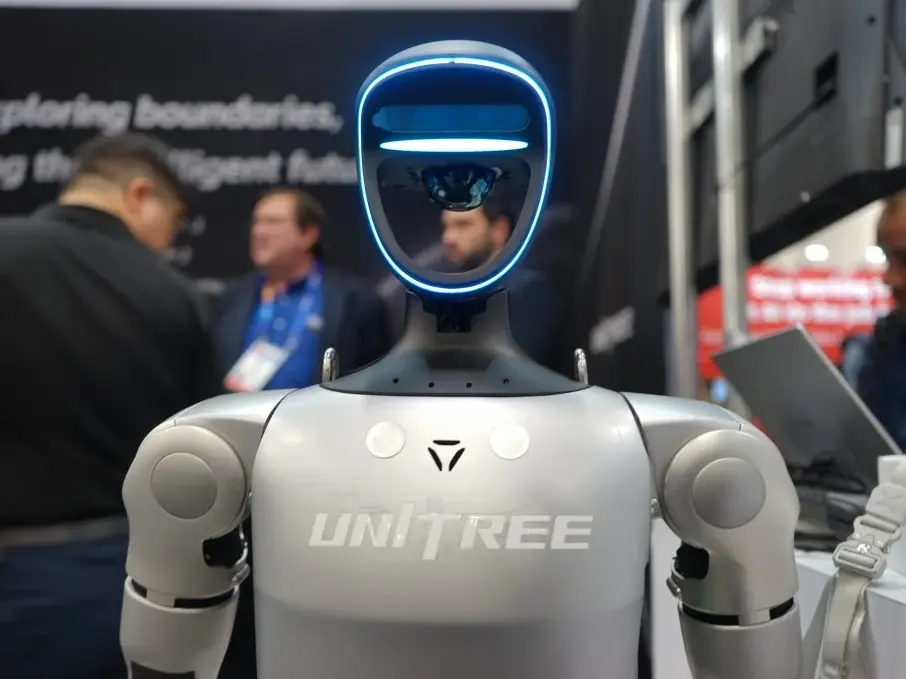)
Unitree Robotics targets $9 billion valuation in landmark IPO backed by DeepSeek and Tencent
)
India names 27 sites in Arunachal Pradesh
)
Bharat Bhhagya Viddhaata OTT: When will Kangana Ranaut's film stream online?
)
Major relief for TN CM Vijay as wife Sangeetha withdraws infidelity and divorce petition
&im=FitAndFill=(700,400))
How many soldiers operate one S-400 battery?
)
Rockstar to unveil GTA 6 extended look ahead of November launch
)
‘Fake news’: MEA rejects report claiming India sought defence pact with Israel after Pakistan, Saudi Arabia, Turkey deal
)
Shakib Al Hasan ready to return to Bangladesh—under one condition
)
Russia forms Ukrainian Volunteer Spetsnaz Brigade to fight Ukraine
)
Drug-resistant fungus that hides in hair and enters bloodstream reported in 23 US states
)
India avoids higher US tariff, secures lower 10% rate. Here's how
)
Technology transfer deal boosts India's defence manufacturing ambitions
)
Border row erupts in Europe after Ceuta crossings, Spain imposes border controls on Italy
)
Morale plummets on USS Abraham Lincoln: Are US sailors reaching a breaking point? | GRAVITAS
)
'Security can't be bought with Pakistan, Turkey deal': Iran tells Saudi Arabia
)
Baba Vanga's 2026 prophecy: 2 predictions 'already came true', 3 terrifying ones remain. Details inside
)
Lightning bolt strikes football field in Thailand, killing a player during a match
)
Colombia’s new president Abelardo de la Espriella vows to ‘defeat narco-terrorists’, signals hardline shift
&im=FitAndFill=(700,400))
New Friday OTT releases (August 7, 2026): Operation Safed Sagar, Vadhandhi, Main Vaapis Aaunga- 6 movies and TV shows on Netflix, Prime Video and more
)
Thailand: 14-year-old goes on rampage, kills grandparents, teachers & self | Gravitas
)
Squadron Leader Bhawana Kanth scripts history as Indian Air Force gets its first woman ‘Top Gun’ pilot
)
Trump says Iranian school bombing photos could be AI-generated - 'I don’t think...'
)
RSS says Gen Z protests reflect genuine distress
)
IAF officer held for sharing sensitive information in 'honey trap' case, booked under Official Secrets Act
&im=FitAndFill=(700,400))
Why the Su-30MKI doesn't need external fuel tanks to fly vast distances
)
India officially names 27 places in Arunachal to counter China's renaming claims
)
Trump calls White House ballroom ruling a 'national disgrace' as court says Congress approval needed
)
US sanctions Iran’s crypto network after Strait of Hormuz attacks, offers $15m bounty for intel on IRGC finance
&im=FitAndFill=(700,400))
Why the Su-30MKI is one of the heaviest fighters ever built
)
Uttarakhand young innovator builds India's own flying vehicle, conducts first test flight: WATCH
)
Chilling video shows students take cover as teen opens fire at Thai school
)
Reese Witherspoon's father hospitalised after poolside incident in Nashville: Report
List of white-collar roles most exposed to AI
Based on risk assessments shared by Microsoft and referenced in industry reports, the following roles face higher automation pressure:
Customer service representatives
Telephone operators
Ticket agents and travel clerks
Telemarketers
Broadcast announcers and radio DJs
Brokerage clerks
News analysts, reporters and journalists
Proofreaders and copy markers
Editors
Public relations specialists
Advertising sales agents
Market research analysts
Data scientists
Personal financial advisors
Web developers
Management analysts
Interpreters and translators
Historians
Sales representatives of services
These roles often involve tasks that AI models can already perform, such as drafting content, summarising information, analysing patterns or handling scripted communication.
Is this prediction accurate?
No. Many experts also say that these are risk indicators, not guarantees. AI is more likely to change jobs than erase them completely.
People with strong domain knowledge, creative judgement, leadership skills or client-facing responsibilities remain at lower risk. Jobs that involve complex decision-making, emotional intelligence, negotiation or high-value relationships are harder to automate.
However, roles focused mainly on rewriting content, basic analysis or routine digital tasks may face faster disruption.
What workers can do next
Most experts agree that the safest path forward is upskilling. Learning how to work with AI, rather than against it, is becoming essential. Skills such as critical thinking, problem-solving, strategy and human communication are expected to grow in value.
AI is not replacing all white-collar work by 2026, but it is clearly reshaping it. For many professionals, adaptation not avoidance may decide who stays relevant in the years ahead.
