
&imwidth=800&imheight=600&format=webp&quality=medium "A massive shift is happening online, and most people haven't noticed")
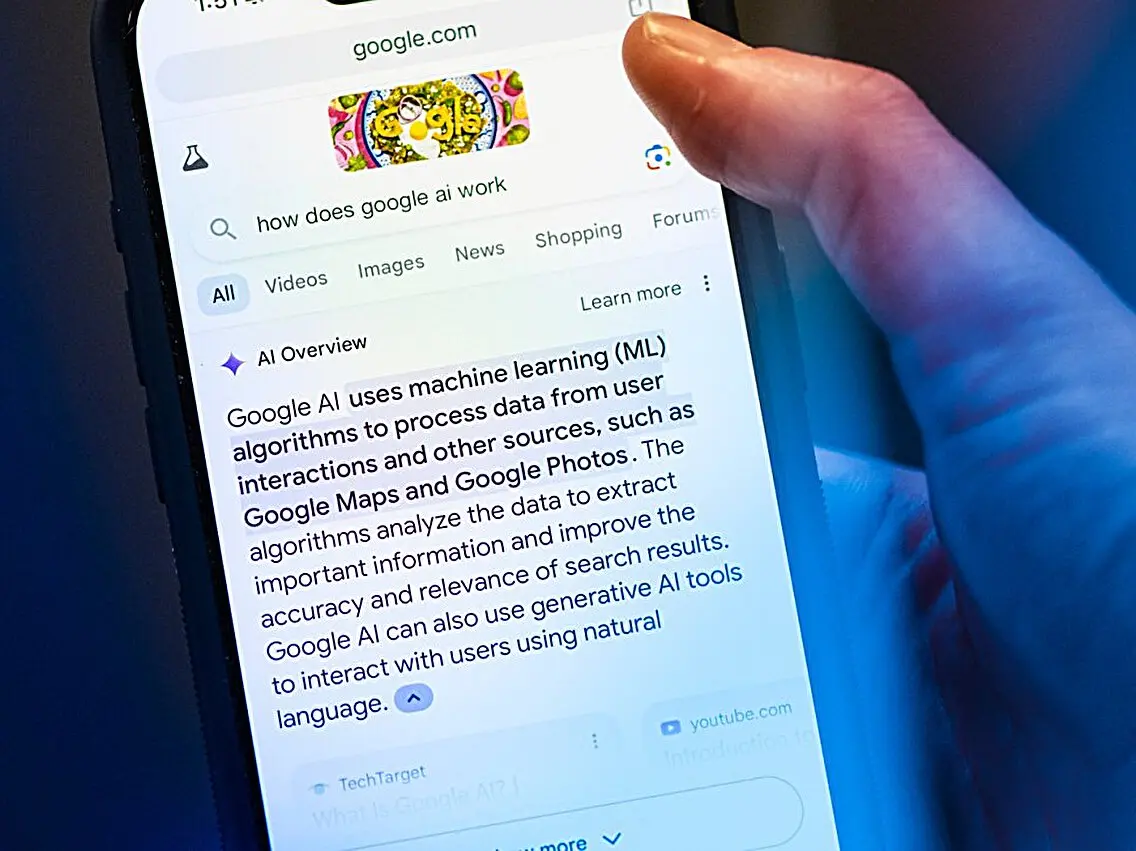
A major shift is quietly taking place online. For years, finding information on the internet followed a familiar pattern. People opened a search engine, typed a few keywords and clicked through a list of links.
That model is now changing
Increasingly, users are turning to AI assistants such as ChatGPT, Gemini, Claude and Perplexity to get answers directly rather than browsing multiple websites. The change may seem subtle today, but it could become one of the most significant transformations in the history of the internet.

From searching for links to receiving answers
Traditional search engines were built around keywords. A user searching for "best laptop for students" or "how to invest money" would receive pages of links and decide which websites to visit.
AI systems work differently.
Trending Stories
)
Emmys 2026: Matthew Rhys wins Best Actor twice, sets historic 78-year record
)
3 Italians fly from Delhi to Munich without immigration clearance; Air India gets notice on major security lapse
)
Ex-CIA official David Rush nears plea deal in $40 million gold bar theft case
)
Pakistan puts Pak Rs 70 lakh bounty on UN terrorist Masood Azhar; move draws skepticism in Delhi
)
‘US ensuring global energy supplies’: Trump demands reimbursement for securing Strait of Hormuz
)
'She married her brother': Ilhan Omar faces criminal probe over immigration fraud claims
)
Ukraine strikes Syzran Oil Refinery deep inside Russia, fires erupt
)
Emmy Awards 2026: Widow's Bay and The Pitt win in lead categories- check out the complete list of winners
)
Indian-origin woman, Nepali-American friend crushed to death by subway train in New York
)
Emmys 2026: Michael J Fox honoured with Bob Hope Humanitarian Award for Parkinson’s advocacy
)
Emmys 2026 In Memoriam: Catherine O’Hara honoured by on-screen children Macaulay Culkin, Annie Murphy, Dan Levy; Dolly Parton, Rob Reiner remembered
)
Iran, India agree to deepen humanitarian and political ties, President Pezeshkian says
)
'Definitely feel bad for yourself': Kuldeep Yadav opens up on India Test snubs
&im=FitAndFill=(700,400))
Emmys 2026 Red Carpet: Zendaya, Nicole Kidman and Julia Garner lead the glamour peak
)
Turkish Airlines plane flies through a storm three times, triggering severe turbulence
)
China's property crisis deepens as investment plunges nearly 20%
)
What is Hyrox, in news for athlete who soiled herself, but kept running and using common equipment?
)
Russia proposes to build 360 kmph Ivolga FG trains in India: What happened on sidelines of BRICS
)
800 million years old - Scientists discover 'fingerprints' of supercontinent Gondwana in ancient rocks
)
Former Pak PM Imran Khan's ex-wife Jemima Goldsmith marries Australian financier: Who is Cameron O'Reilly
)
UPI payments up to Rs 2,000 to stays free, but bigger transactions may soon cost you: Govt
)
Gurugram hit and run case: Police arrest car driver Kalyan Bainsla, book him for attempt to murder
&im=FitAndFill=(700,400))
New OTT releases this week (September 14-20, 2026): Lust Stories 3, Waiting Hai, Irumudi- 5 new titles coming on Netflix, Prime Video and more
)
Sent home midway from UK tour, Pakistan's Salman Agha hits 300* in domestic return
)
Who is Kalyan Bainsla, accused in the Gurugram hit-and-run case involving woman biker?
)
Nigerian Navy seizes 10,000 litres of suspected illegal fuel in Rivers State crackdown
)
Saudi Arabia discovers 110 million tonnes of Uranium-rich ore in Madinah region
)
Dodgers beat Reds for playoff berth in bid for third consecutive World Series
)
Ecstasy tablets are rage in 'drug haven' Libya | Gravitas
)
'Now Trump is copying us': Shivakumar links US $5,000 plan to Congress guarantees
)
Video of Pakistani lawmaker struggling to read English tribute to Jinnah goes viral - WATCH
)
Trump downplays China's alleged 'help' to Iran in strike on Jordan base | Gravitas
)
Trump loses Supreme Court battle over mail ballots ahead of US midterms: What happened?
)
BCCI VP Rajeev Shukla says Mohsin Naqvi 'did not object' India refusing trophy from ACC chief
)
Legendary costume designer Bob Mackie dies at 87: A look back at his iconic legacy
)
Delhi govt to roll out ₹13,820 crore development projects under Seva Sankalp Abhiyan: CM Rekha Gupta
)
UK man admits drugging, raping wife for 20 years in shocking abuse case
)
Extreme warming in Indian Ocean added 695 billion tons of ice to Antarctica ice sheet
)
Shah Rukh Khan confirms release date of his next KING, reveals makers working on the asset
)
China thinned Himalayan troop presence in 2025, India defence report says; terms border situation 'stable'
Instead of presenting a list of results, they often generate a direct response by analysing information from multiple sources. For users, this can save time.
Instead of opening five or ten websites, many people now receive a summary in seconds. This shift is becoming increasingly visible through products such as Google's AI Overviews and AI-powered search tools.
Why this matters for websites and publishers
The consequences extend beyond how people search. For years, websites focused heavily on ranking highly in search results. Businesses invested in search engine optimisation, while publishers competed for clicks from search traffic. Now, visibility increasingly depends on whether AI systems choose to reference, summarise or recommend content. In simple terms, the challenge is no longer just appearing in search results. It is becoming about being recognised as a trusted source that AI systems can understand and cite. This is encouraging publishers and businesses to focus more on expertise, original reporting, strong branding and clear information.
AI is becoming a new discovery layer
Many technology experts describe the current transition as a move from keyword-driven search to AI-mediated discovery. In the past, people actively searched for information. Now information is increasingly being surfaced, recommended or summarised by algorithms and AI assistants. This trend can already be seen across social media, recommendation systems and AI chat platforms.
The result is a new discovery layer sitting between users and the wider internet. Instead of directly navigating the web, many people are beginning to rely on AI systems to guide them.
The shift does not mean traditional search engines will disappear. Search remains one of the most important services on the internet and continues to process billions of queries every day. However, the balance is changing. Future online experiences may involve conversations rather than keyword searches. Users may increasingly ask questions, request recommendations or seek explanations from AI systems that understand context and intent. For businesses, creators and publishers, this could require a new approach to visibility. Success may depend less on ranking for individual keywords and more on producing useful, trustworthy and authoritative information that both humans and AI systems can understand.
The internet's next chapter
Every era of the internet has been defined by a dominant way of finding information. First came directories. Then search engines. Later, social media feeds became powerful discovery tools. Now AI appears to be creating another shift. Most people still think of the internet as a place where they search for information. Increasingly, however, information is being selected, summarised and presented by AI systems before users ever reach a website. The transition is still unfolding, but its impact is already being felt across technology, media, business and everyday online life.
