Watch | First-ever evidence of jumping leeches found in Madagascar

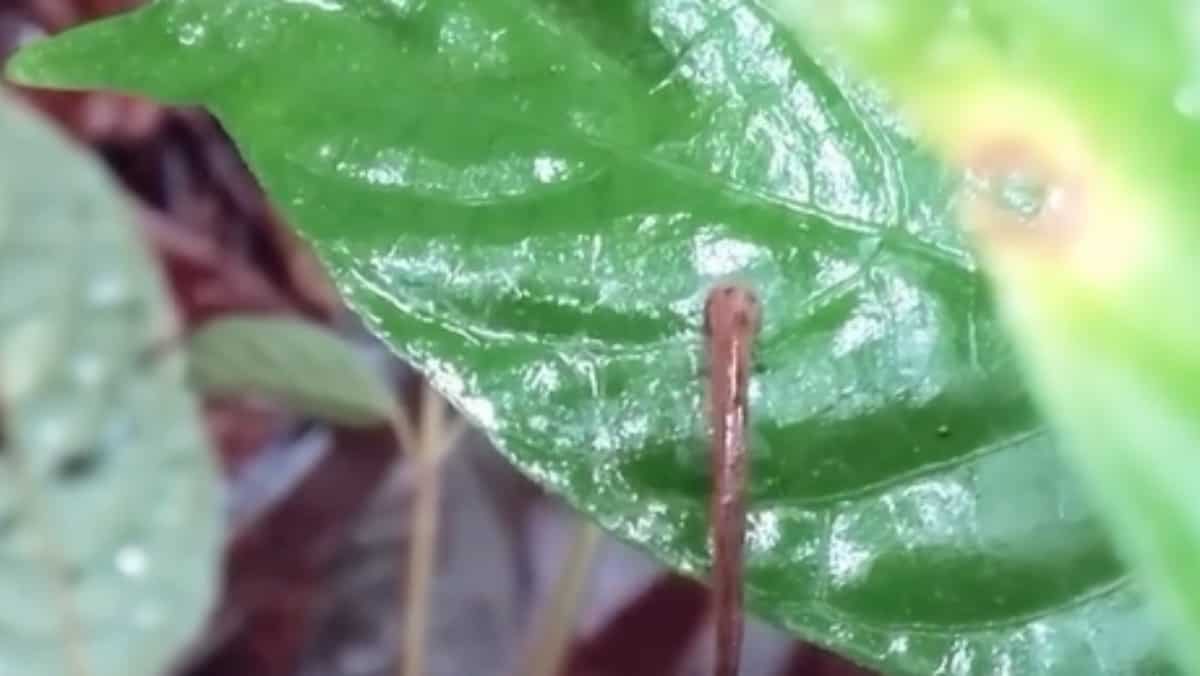
Flying leech
Researchers have captured the first video evidence of a terrestrial leech species jumping, settling a long-standing debate in the scientific community.
The footage, recorded by Mai Fahmy, a postdoctoral researcher at Fordham University, in Madagascar in 2017, shows leeches which are a type of Chtonobdella coiling their bodies back and then launching themselves into the air.
"What we have here is the first-ever recorded evidence to our knowledge of a terrestrial leech taking a jump," said Fahmy, the lead author of the study published in the journal Biotropica.
The phenomenon of jumping leeches has been debated for centuries. In the 14th century, explorer Ibn Battuta wrote of "the flying leech," and in the 19th century, naturalist Ernst Haeckel claimed that leeches can even spring to reach their victim. However, some remained skeptical in the past, with an earlier study stating, "In spite of folk tales to the contrary, land leeches do not jump from vegetation onto their prey."
An assistant professor at CUNY's Medgar Evans College Michael Tessleris the co-author of the study.
"In terms of evolution, anything that makes a terrestrial leech get blood faster or more stealthily is of great selective advantage," Tessler explained.
"The evidence that the leeches in the study are jumping is 'solid enough,'" said Joachim Langeneck, a zoologist at Italy's National Interuniversity Consortium for Marine Sciences, who was not involved in the study.
Trending Stories
&imwidth=280&imheight=210&format=webp&quality=medium)
&imwidth=280&imheight=210&format=webp&quality=medium)
&imwidth=280&imheight=210&format=webp&quality=medium)
&imwidth=280&imheight=210&format=webp&quality=medium)
&imwidth=280&imheight=210&format=webp&quality=medium)
&imwidth=280&imheight=210&format=webp&quality=medium)
&imwidth=280&imheight=210&format=webp&quality=medium)

&imwidth=280&imheight=210&format=webp&quality=medium)
&im=FitAndFill=(700,400)&imwidth=280&imheight=210&format=webp&quality=medium)
&imwidth=280&imheight=210&format=webp&quality=medium)
&imwidth=280&imheight=210&format=webp&quality=medium)
&imwidth=280&imheight=210&format=webp&quality=medium)
&imwidth=280&imheight=210&format=webp&quality=medium)
&imwidth=280&imheight=210&format=webp&quality=medium)
&imwidth=280&imheight=210&format=webp&quality=medium)
&imwidth=280&imheight=210&format=webp&quality=medium)
&imwidth=280&imheight=210&format=webp&quality=medium)
&imwidth=280&imheight=210&format=webp&quality=medium)
&imwidth=280&imheight=210&format=webp&quality=medium)
&imwidth=280&imheight=210&format=webp&quality=medium)
&im=FitAndFill=(700,400)&imwidth=280&imheight=210&format=webp&quality=medium)
&imwidth=280&imheight=210&format=webp&quality=medium)
&imwidth=280&imheight=210&format=webp&quality=medium)
&imwidth=280&imheight=210&format=webp&quality=medium)
&imwidth=280&imheight=210&format=webp&quality=medium)
&imwidth=280&imheight=210&format=webp&quality=medium)
&imwidth=280&imheight=210&format=webp&quality=medium)
&imwidth=280&imheight=210&format=webp&quality=medium)
&imwidth=280&imheight=210&format=webp&quality=medium)
&imwidth=280&imheight=210&format=webp&quality=medium)
&imwidth=280&imheight=210&format=webp&quality=medium)
&im=FitAndFill=(700,400)&imwidth=280&imheight=210&format=webp&quality=medium)
&imwidth=280&imheight=210&format=webp&quality=medium)
&imwidth=280&imheight=210&format=webp&quality=medium)
&imwidth=280&imheight=210&format=webp&quality=medium)
&imwidth=280&imheight=210&format=webp&quality=medium)
&im=FitAndFill=(700,400)&imwidth=280&imheight=210&format=webp&quality=medium)
"This answer [to the debate] opens up to further, more interesting questions, such as why leeches jump and how are they able to."
Watch | Study finds AI can detect Parkinson's seven years before onset
Impact on conservation efforts
The discovery of jumping leeches not only settles a long-standing scientific debate but also has important implications for understanding leech behaviour and its impact on conservation efforts.
As Fahmy explained, "If we can identify how leeches find and attach to hosts, we can better understand the results of their gut content analyses. Leeches are often overlooked and understudied, and, as a natural part of the ecosystem, leeches themselves may be in need of conservation protection."
(With inputs from agencies)