Unveiling the depth: Third active octopus nursery found in deep-sea habitat off Costa Rican coast. Watch!


Octopus nursery
A team of international scientists have made a remarkable discovery of a new deep-sea octopus nursery at a low-temperature hydrothermal vent off the coast of Costa Rica. With this amazing find, the number of the world's known octopus nurseries now stands at three.
The researchers, as per the Schmidt Ocean Institute website, have also confirmed that the Dorado Outcrop, previously identified as a gathering site for deep-sea octopuses, is indeed an active nursery.
Other important discoveries

As per the scientists, the octopus species found in the nursery may be a new species of Muusoctopus, a genus of small to medium-sized octopuses that lack an ink sac.
Also read |Scientists find why there is giant ‘hole' in Indian Ocean, where Earth’s gravity is at weakest
Furthermore, the expedition has provided evidence supporting the idea that certain deep-sea octopus species specifically seek out low-temperature hydrothermal vents for brooding their eggs. The site featured low-temperature hydrothermal venting at around sevendegreeCelsius.
)
IND vs JPN one-off T20I: India survive scare from Japan to win five-over a side match by 2 runs
)
Putin's United Russia party wins 355 seats in Duma election; 4 other parties cross threshold to enter parliament
)
AI models chose to harm humans to stop ‘pain,’ alarming study raises fresh safety questions
)
‘0% chance’: Nvidia CEO Jensen Huang dismisses AI extinction fears by 2030
)
Samay Raina-Mukesh Chhabra controversy explained: What happened over girlfriend joke on India's Got Latent?
)
Trump's helipad event overshadowed by audio failure as major TV networks suspend pool coverage
)
'Needs time away from the international scene': England white-ball captain Brook on pacer Brydon Carse's future
)
New Zealand farms shift to carbon forests: Carbon credits fuel a land rush reshaping rural life
)
Anti-AI activists storm summit, say 'incompetent' leaders are leading us into a disaster - 'We need a vote'
)
J&K Assembly Session begins amid chaos: BJP, ruling alliance clash as statehood demand dominates
)
Asian Games 2026: India women's cricket team beats Sri Lanka by 147 runs for first gold
)
Key accused in Bihar's Jamui molestation case, arrested after police shoot him in leg
)
Randeep Hooda arrives in Gujarat for his first National Film Award: ‘Very grateful’
)
US and China vie for AI dominance as calls grow for regulation | Gravitas
&im=FitAndFill=(700,400))
Anant Nag to recieve Dadasaheb Phalke Award: From Ankur to Nishant- Revisit his best films and iconic performances on OTT
)
UK banks are rethinking financial crime detection because of algorithm
)
FIFA chief Infantino wants to reform governing body with consultation from federations
)
India at UNGA81: Jaishankar warns global order under 'growing stress', pushes for ‘reformed multilateralism’
)
IND vs JPN, one-off T20I: Japan captain Kendel on pushing India to the brink - ‘It was special’
)
Raaka creates history! Allu Arjun’s film secures Guinness World Record ahead of release
)
Saudi Arabia exits China-led mBridge digital currency platform amid Saudi-Houthi conflict
)
Indonesian groups sue govt over wildfires as haze crosses borders, nearly 900,000 hectares burned
)
'Lot of things to learn from experienced players': Jayasuriya backs Rohit, Virat for 2027 ODI World Cup
)
$110 billion Warner Bros merger: Paramount reaches settlement with 12 US states
&im=FitAndFill=(700,400))
New OTT releases this week (September 21-27, 2026): Shaque: Trust No One, Hunkkaar, Don’t Be Shy- 5 new titles coming to Netflix, Prime Video and more
)
From ‘communist’ to ‘great mayor’: Trump praises Mamdani after New York meeting, discusses immigration and housing
)
Report: Zelensky meets CIA chief Ratcliffe at Shannon airport, weeks after his secret Moscow trip
)
How Zaheer Khan came to be CSK's head coach of IPL 2027
)
Who is Clavicular? The 20-year-old controversial 'Looksmaxxing' influencer charged with rape allegations
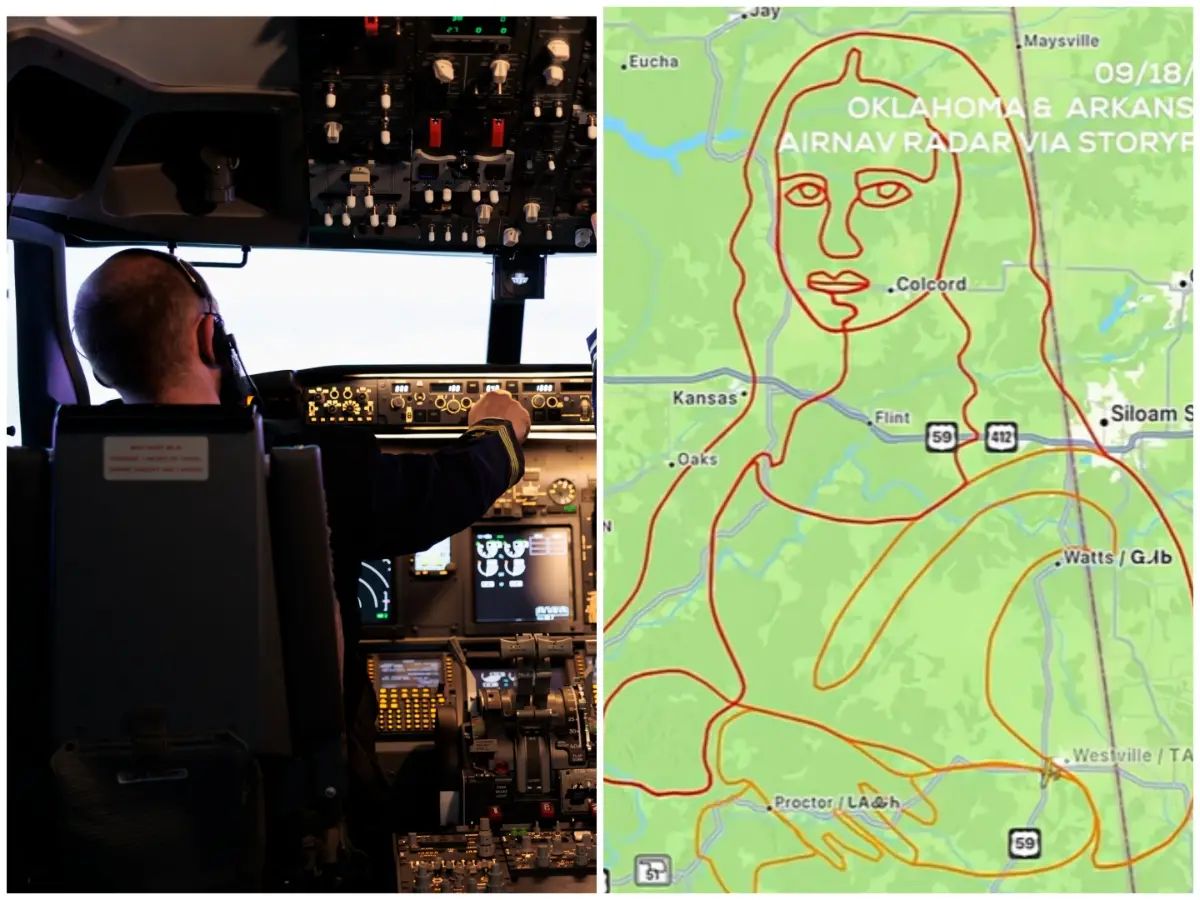)
Pilot recreates Mona Lisa in sky over Oklahoma and Arkansas in four-hour flight: VIDEO
)
UK PM Burnham agrees to 'defensive' military support for Saudi Arabia against Houthis
)
Jailer 2: Vidya Balan joins Rajinikanth's upcoming film as Kantha | Watch
&im=FitAndFill=(700,400))
National Film Awards 2026: Kartik Aaryan, Mammootty, Yami Gautam, Randeep Hooda and other key winners
)
Microsoft executive called AI training the ‘largest theft of labour in human history’
)
40-foot waves crash into cruise ship in dangerous stretch near Antarctica. Watch
)
US-Iran war, peace deals and more: What to expect from Trump's UNGA 2026 speech
)
Explainer: Why rare-earth export licences and Board of Trade are US priorities ahead of Trump-Xi summit
)
Two infants die after fire breaks out at RIMS newborn care unit in Telangana's Adilabad
)
Oil slips to $98 as Saudi Arabia restarts East-West oil pipeline
Octopus Odyssey
The 19-day Octopus Odyssey expedition was led by Dr Beth Orcutt of the Bigelow Laboratory for Ocean Sciences and Dr Jorge Cortes of the University of Costa Rica. The team of 18 researchers from various countries conducted their research aboard the research vessel Falkor.
Researchers discovered a previously unexplored unnamed outcrop where brooding octopuses were observed.They also witnessed the hatching of Muusoctopus octopuses, which helped dispel the notion that the Dorado Outcrop is unsuitable for octopus development.
When the nursery was initially discovered in 2013, it astounded scientists as it marked the first observation of female octopuses congregating to brood their eggs. However, no developing embryos were detected at the time, leading to doubts about the suitability of the conditions at the Dorado Outcrop for octopus growth.
The researchers used the ROV SuBastian, an underwater robot, to observe the seamounts and baby octopuses. The live dives were made available to the public in real-time through the live stream provided by the Schmidt Ocean Institute.
You can watch the fascinating underwater video here:
New seamounts with new animal species discovered
The expedition also explored five previously unknown seamounts in the northwestern region of Costa Rica's waters. These seamounts displayed thriving biodiversity, and the researchers suspect that many of the hundreds of animal species observed there may be new to science.
Dr Jyotika Virmani, Executive Director of the Schmidt Ocean Institute, emphasised the significance of the discovery and said, "The discovery of a new active octopus nursery over 2,800 metres beneath the sea surface in Costa Rican waters proves there is still so much to learn about our oceans."
"The deep-sea off Costa Rica rides the edge of human imagination, with spectacular footage collected by ROV SuBastian of tripod fish, octopus hatchlings, and coral gardens. We look forward to continuing to help the world witness and study the wonders of our incredible ocean," she added.
Protection needed?
The seamounts, including the Dorado Outcrop, currently lack protection from human activities like fishing.
Half of the team involved in the expedition consisted of Costa Rican scientists, some of whom are reportedly working to assess the need for protection measures and the potential designation of marine protected areas for these seamounts.
In the laboratory, scientists will conduct examinations on sediment push cores, which hold immense value in terms of providing stratigraphic data about the seafloor and offering insights into microbial life.
As per Cortes, the expedition has not only provided valuable scientific data and samples but also serves as an opportunity to raise awareness about the richness of the deep-sea ecosystems in Costa Rica and the importance of their protection.
"This expedition to the Pacific deep waters of Costa Rica has been a superb opportunity for us to get to know our own country."
"The information, samples, and images are important to Costa Rica to show its richness and will be used for scientific studies, and outreach to raise awareness of what we have and why we should protect it."
WATCH WION LIVE HERE
You can now write for wionews.com and be a part of the community. Share your stories and opinions with us here.

