

&imwidth=800&imheight=600&format=webp&quality=medium "Three comets are coming near Earth this year. Visibility, dates of arrival and other details")
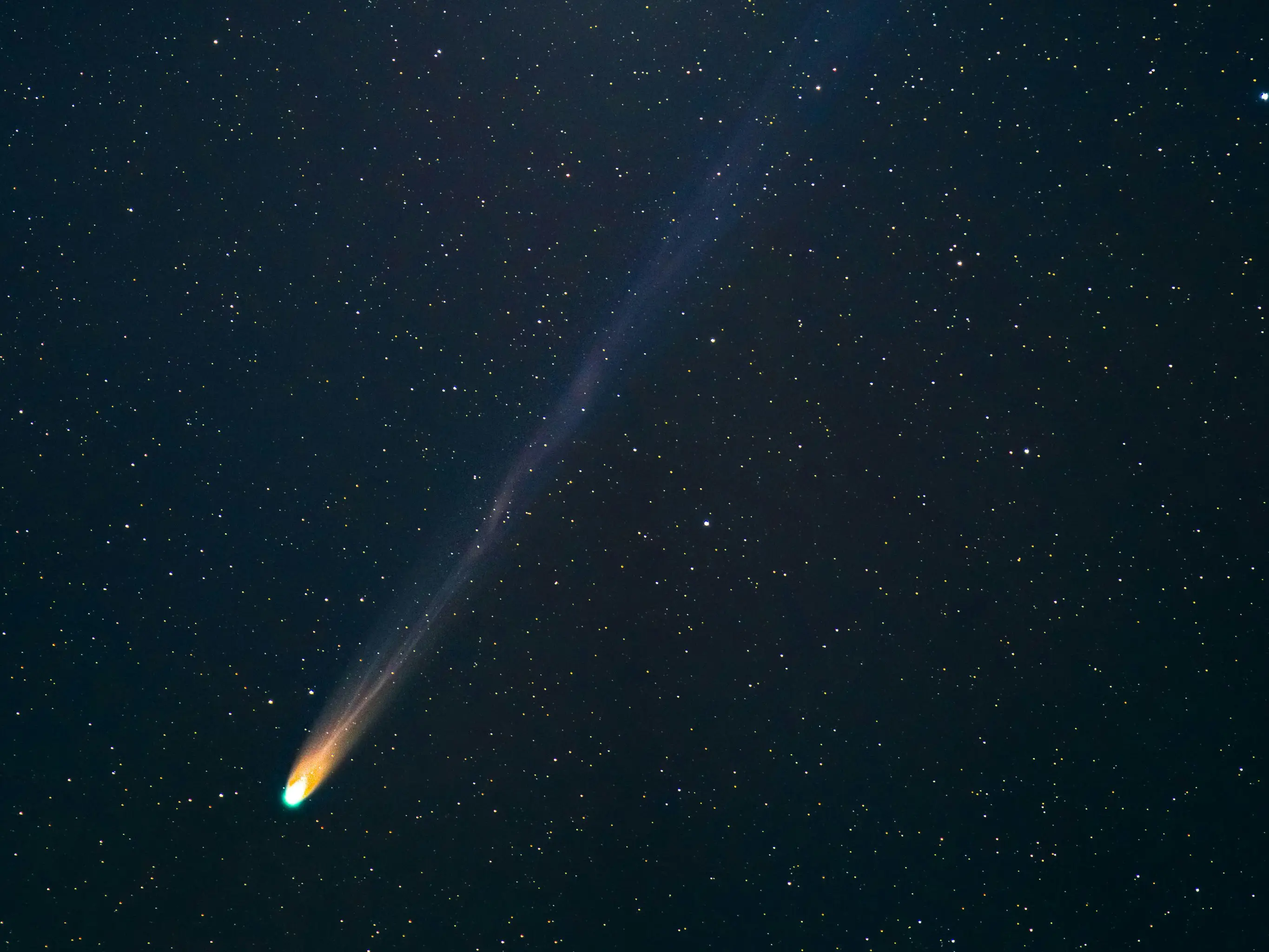
Three comets are currently in the sky - C/2025 K1 (ATLAS), C/2025 R2 (SWAN), and C/2025 A6 (Lemmon). However, not all of them will be visible to the naked eye. You'll need a powerful telescope to watch at least two of these comets. There is a high chance that the third comet will become a Halloween comet and be visible to the naked eye. It is comet season since, besides these three, 3I/Atlas is also making noise for several reasons, one of them being the suspicion that it isn't a natural object. In short, there is a lot astronomy and stargazing enthusiasts can look forward to in the next few weeks. Meanwhile, here is a lowdown on the three comets and when and how to see them.
C/2025 K1 (ATLAS)
The comet was first seen in May 2025. It will make its closest approach to Earth on November 24-25, 2025. However, right now it is lost in the glare of the Sun. If it manages to survive perihelion, its closest point to the Sun, on October 8, then it is expected to put on a spectacular show. It is getting brighter as it nears the Sun. But, even if it manages to survive, its position in the sky would only let a few people see it. Comet C/2025 K1 (ATLAS) will remain below the horizon until late November. It will be about 40 million miles from Earth and will be too dim. Also Read: Interstellar comet 3I/Atlas: Threat to Earth, speed, age and other questions answered
Comet C/2025 R2 (SWAN)
This comet was discovered by amateur astronomer Vladimir Bezugly. He was scanning through images from NASA's Solar and Heliospheric Observatory (SOHO) when he spotted the comet on September 11. The comet is currently about 50 million miles from Earth. It has already survived perihelion and is peaking over the western horizon. It is getting brighter and will reach its closest point to Earth on October 19, when it will be only 24 million miles from us. But you will still need a telescope to see Comet C/2025 R2 (SWAN). Also Read: NASA's asteroid-bound spacecraft sends its last laser message from deep space. Here's why that matters
C/2025 A6 (Lemmon)
Trending Stories
&imwidth=180&imheight=135&format=webp&quality=medium)
16-foot doomsday fish in Chile triggers fears that the next earthquake is coming
&imwidth=180&imheight=135&format=webp&quality=medium)
Australia police arrest former national 100m champ Jake Doran for alleged child abuse
&imwidth=180&imheight=135&format=webp&quality=medium)
'Father of all bombs' vs 'mother of all bombs': Iran threatens US with new weapon as Trump hints at MOAB strike
&imwidth=180&imheight=135&format=webp&quality=medium)
Kim Jong Un death rumors explode | China accused of secretly sending troops to Pyongyang
&imwidth=180&imheight=135&format=webp&quality=medium)
‘I caution the president...’: Trump’s ex-press secretary warns after Zacharia’s exit
&imwidth=180&imheight=135&format=webp&quality=medium)
Will Rohit and Kohli play ODI World Cup 2027? BCCI president Manhas says board 'not in a position to comment'
&imwidth=180&imheight=135&format=webp&quality=medium)
Pakistan signs another defence pact even as Makkah Alliance shows no teeth. This time, it's with Qatar, Indonesia, Turkey
&imwidth=180&imheight=135&format=webp&quality=medium)
Why websites around the world are suddenly going offline? What you need to know about PHP
&imwidth=180&imheight=135&format=webp&quality=medium)
Ranbir Kapoor apologises for Dussehra speech slip, clarifies remark at Ramayana event
&imwidth=180&imheight=135&format=webp&quality=medium)
US midterms 2026: What polls and prediction markets indicate about Congress
&imwidth=180&imheight=135&format=webp&quality=medium)
Feds obtain DNA evidence that could prove Ilhan Omar married her brother: Report
&imwidth=180&imheight=135&format=webp&quality=medium)
WATCH | Mysterious haze grips Ohio city as toxic chemical leak forces mass evacuation – What is happening?
&imwidth=180&imheight=135&format=webp&quality=medium)
WATCH: Woman IPS officer fires several rounds of AK-47, ignites debate online
&imwidth=180&imheight=135&format=webp&quality=medium)
Rafale Marine fighter begins flight trials in Goa ahead of Indian Navy induction
&imwidth=180&imheight=135&format=webp&quality=medium)
Diljit Dosanjh's Oct 30 Delhi show hits roadblock, Delhi Police denies permission
&im=FitAndFill=(700,400)&imwidth=180&imheight=135&format=webp&quality=medium)
New OTT releases this week (October 19-25, 2026): Gajab Raat to Chaar Yaar-8 titles to watch during Dussehra week on Netflix, Prime Video and more
&imwidth=180&imheight=135&format=webp&quality=medium)
'You are a dummy, you are a stupid person': Trump loses temper with CNN, ABC reporters after questions about Russia sanctions
&imwidth=180&imheight=135&format=webp&quality=medium)
Ilhan Omar breaks silence over alleged marriage to her brother; Trump thinks it's 'really good answer'
&imwidth=180&imheight=135&format=webp&quality=medium)
Kolkata airport: CISF detects ₹1.13 crore in US dollars hidden in bags of 2 Bangkok-bound passengers
&imwidth=180&imheight=135&format=webp&quality=medium)
Meta slapped with $25 billion fine in New Mexico over Facebook data practices, company plans appeal
&imwidth=180&imheight=135&format=webp&quality=medium)
1 killed, several injured in attack on Saudi Arabia's King Fahd airport
&imwidth=180&imheight=135&format=webp&quality=medium)
Viral video shows cross falling on Colombia priest, no official confirmation | WATCH
&imwidth=180&imheight=135&format=webp&quality=medium)
US midterms 2026: Trump's approval rating hits record low as Democrats gain ground
&imwidth=180&imheight=135&format=webp&quality=medium)
US-Iran war: Bibi, Trump gamble on new Iran war to save themselves in polls
&imwidth=180&imheight=135&format=webp&quality=medium)
'Gyanu must go': CJP's Saurav Das, Ashutosh Ranka after release, despite Jantar Mantar protest undertaking
&imwidth=180&imheight=135&format=webp&quality=medium)
EU probes Booking.com under Digital Services Act
&imwidth=180&imheight=135&format=webp&quality=medium)
China's dancing robot turns violent bodyguard, lifts cars and fights intruders - Watch
&imwidth=180&imheight=135&format=webp&quality=medium)
Are the US and Israel preparing for another major attack on Iran? Here's what report claims
&imwidth=180&imheight=135&format=webp&quality=medium)
From Agni-V to Project Kusha: How are India’s indigenous missile systems and defence shield reshaping modern warfare
&imwidth=180&imheight=135&format=webp&quality=medium)
Priyanka Chopra celebrates Dussehra 2026 with Nick Jonas and daughter Malti Marie | See pics
This is the only comet this year that you might get a chance to see with the naked eye this year. It was discovered on January 3 by telescopes on Mount Lemmon in Arizona. Hundreds of observations have been made of the comet, and the trajectory of C/2025 A6 (Lemmon) confirms that it orbits the Sun in 1,396 years. It last visited Earth in the year 629. It will next zoom past us in the year 3421. It is steadily brightening, and you might get to see it in late October before reaching perihelion on November 8.
Two other comets are also coming closer, but will reach the skies above Earth next year. Comet 24P/Schanmasse will reach its closest point to the Sun on 8 January 2026, and to Earth on January 4. Comet C/2024 E1 (Wierzchos) is travelling from the Oort cloud and was discovered on 3 March 2024. It will make its closest approach to Earth on February 17, 2026 and reach perihelion on January 20.

