Comet parade: 5 comets are racing towards Earth. When to see them, perihelion, distance and other details

Comet alert: Over the next few months, several comets will visit Earth and some of them are expected to be visible to the naked eye. One of them is visiting us after the year 629. It will be a great time for stargazers and astronomy enthusiasts to catch a glimpse of these comets.

Five comets are racing through the solar system
Five comets are racing towards Earth and can be observed in the coming months, well into next year. The cosmic icy rocks are racing towards the inner solar system and will reach their closest point to Earth at different times. This will be a wonderful opportunity for stargazers as they have a full window running from October to January next year to witness the comets. One of them has already earned quite some fame, with one scientist claiming that it is not a comet, but an alien spaceship coming to either attack Earth or seed several planets with probes.

Comet C/2025 A6 (Lemmon)
The first comet to brush past Earth is C/2025 A6 (Lemmon). It was discovered on January 3, 2025, and over 115 observations have confirmed that it is a 'once-in-a-lifetime' comet. Its trajectory shows that C/2025 A6 (Lemmon) orbits the Sun in 1,396 years. It last visited Earth in the year 629. It will next zoom past us in the year 3421. Right now, it is in the constellation Gemini. According to Japanese comet expert Seiichi Yoshida, it might reach a magnitude of 5 or 4, which could make it visible to the naked eye from the darkest regions on Earth. Its closest approach to Earth will happen on October 21, 2025.
C/2025 K1 (Atlas)
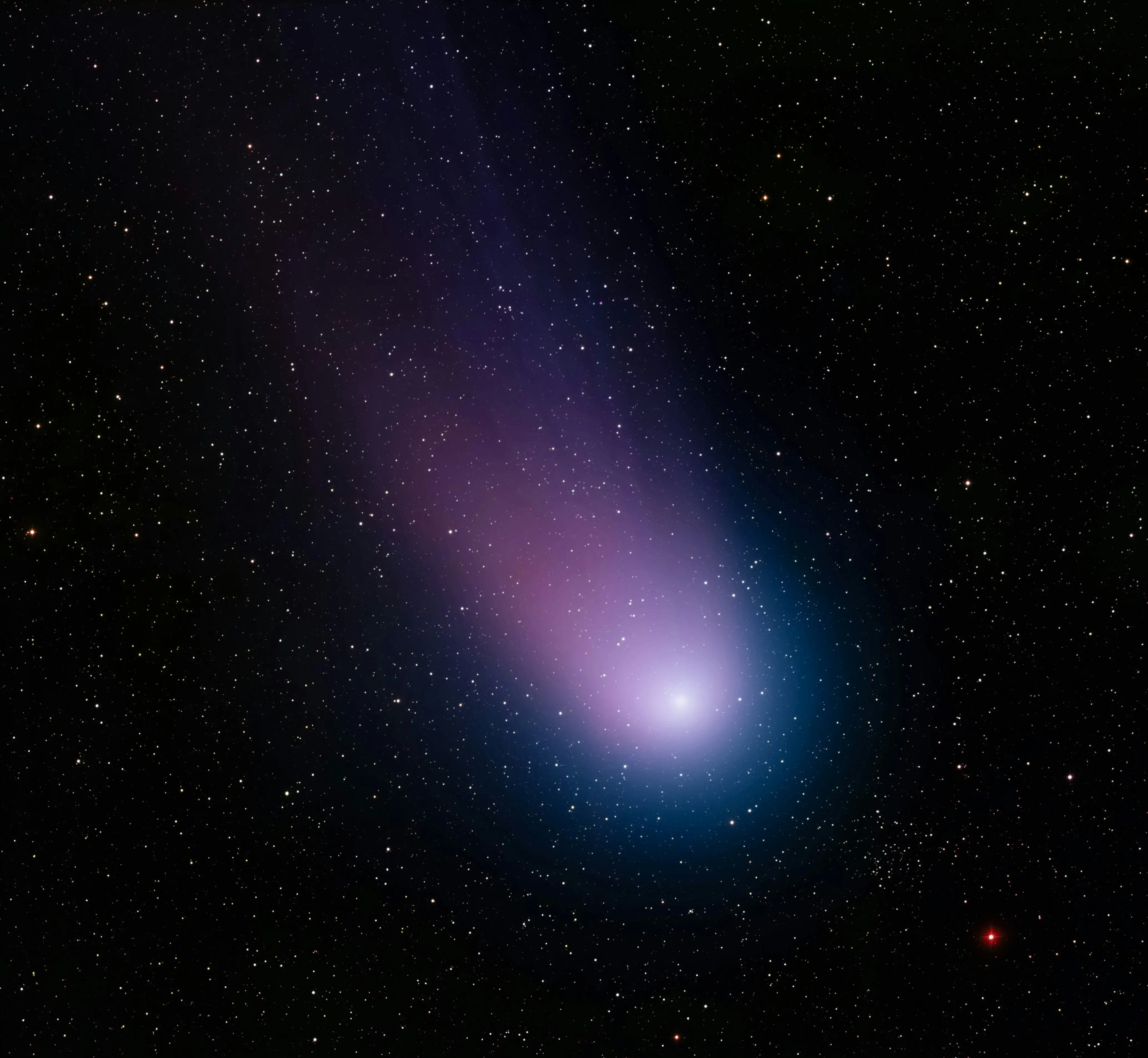
This comet was discovered in May 2025. It will make its closest approach to Earth on November 24-25, 2025. It is continuously increasing in brightness ahead of its meeting with the Sun in early October. However, astronomers believe that the comet won't survive the trip to our star. Right now, it is in the constellation of Serpens, 95,495,512.4 kilometres from Earth.

3I/Atlas, the interstellar object making headlines
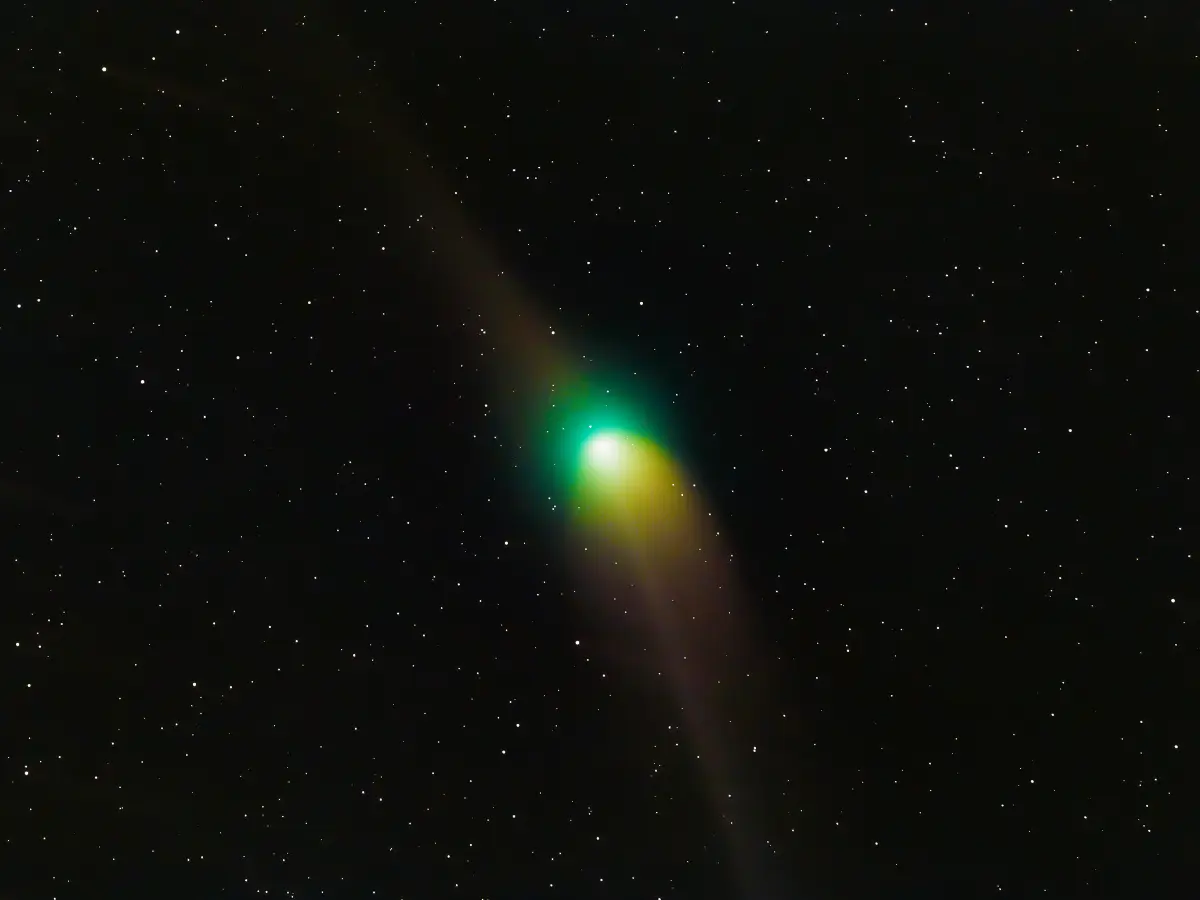
Only the third interstellar object ever observed, 3I/Atlas, is travelling at a speed of 200,000km/hr. It will come closest to Earth sometime around December 18 and 19, 2025. In October, it will move behind the Sun. The James Webb Space Telescope observed the object and determined that it is 5.6 km in diameter. Right now, it is between the orbits of Mars and Jupiter. Almost all astronomers agree that 3I/Atlas is a comet.
Is 3I/Atlas an alien spacecraft?
Harvard scientist Avi Loeb has made this object quite popular by claiming that there is a high probability that 3I/Atlas is an alien probe. He cites its trajectory and brightness to state that it cannot be a natural object. Loeb even claimed that it seems to be producing its own light, likely from a nuclear-powered centre.

24P/Schanmasse
This comet was discovered in 1911 and will reach perihelion, or its closest point tothe Sun, on 8 January 2026. It will make its closest approach to Earth on January 4, 2026. Right now, it is in the constellation of Taurus, at a distance of 310,764,130.1 kilometres from Earth. It will make its closest approach of this century on 27 January 2059.

C/2024 E1 (Wierzchos)
This comet originated in the Oort cloud and was discovered on 3 March 2024. It will make its closest approach to Earth on February 17, 2026 and will reach perihelion on January 20. It is expected to brighten as it makes its way towards the inner solar system. Right now, C/2024 E1 (Wierzchos) is in the constellation of Hercules, 396,664,067.8 kilometres away from Earth.
)
)
)
)
)