Deep sea mining might stress out jellyfish, starve them to death, warn scientists

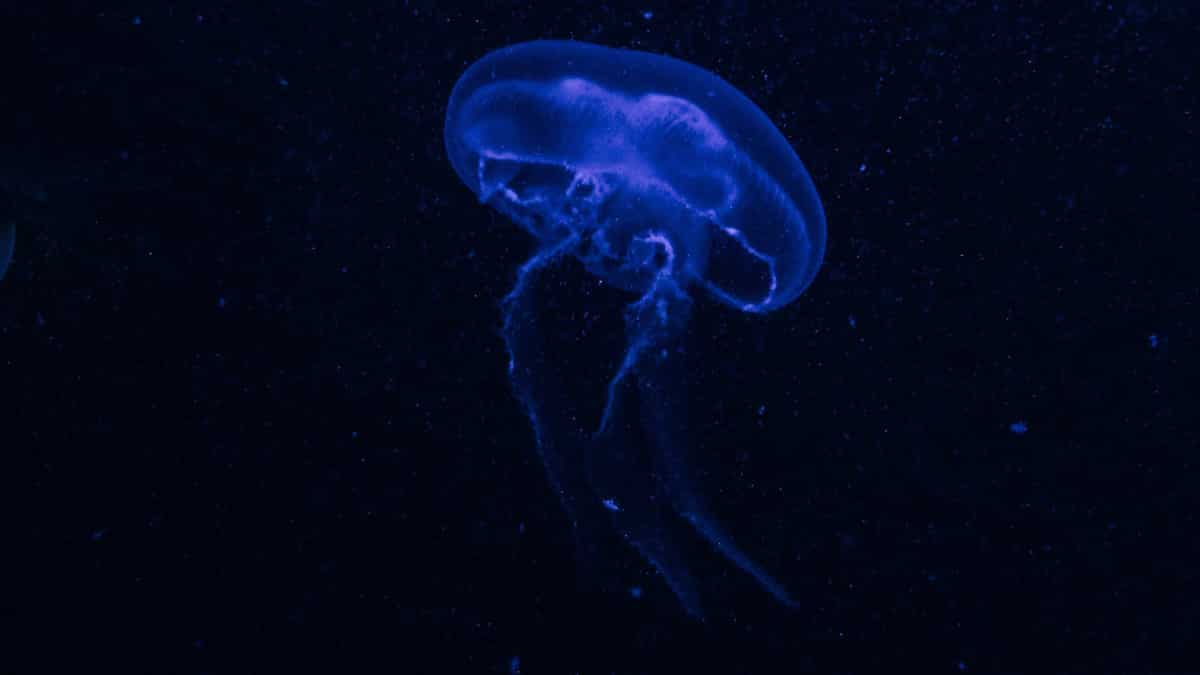
A representative image of a jellyfish/Pexels
The vast expanse of word's underwater communities remains incredibly unexplored and remarkably understudies. But a recent study published in the Nature Communications gives first insights into the stress response of a deep pelagic jellyfish to global warming and deep-sea mining induced mounds of sediments.
The study was conducted by GEOMAR Helmholtz Centre for Ocean Research Kiel.
Commercial mining remains top concern

The study says that the biggest environmental stressor for deep sea organisms is the disturbance associated with the commercial mining for resources on the seafloor.
Also watch |WION Climate Tracker: U.S. storm brings jellyfish ashore
)
Nigeria: Protesters take to the streets, police fire shots
)
US-Iran war: Tehran draws red lines — seven demands before any peace talks
)
Russia-Europe tensions: Polish PM warns Russian attacks could test NATO's unity
&im=FitAndFill=(700,400))
‘Not the US or China’: These are the countries leading the world in arable land
)
EXCLUSIVE | Singer Hanita Bhambri on her Toxic debut, working with Vishal Mishra and more
)
Sikh bus driver assaulted, bus stolen and rammed into cars in England; video surfaces
)
Mark Carney mimics Trump in hilarious moment over C$70 billion clean-energy investment; room erupts in laughter
&im=FitAndFill=(700,400))
Before Extraordinary Minami Minami, these popular K-dramas got Japanese versions
)
'Were you here to sell chickpeas?': Wasim Akram criticises Babar Azam's captaincy
)
Aravana prasadam shortage at Sabarimala temple in Kerala triggers protests, TDB questioned
)
‘End of my career...’: NSA Doval recalls tense Sikkim mission when China captured Indian intelligence team
)
Report: Iran rebuilding Taleghan 2, nuclear site tied to past weapons research, hit twice by Israel
)
Trump defends AI amid growing alarm, announces new 'AI force' and promises an 'AI czar'
)
Iran sets 7 conditions to end war with US: What are Tehran’s demands?
)
Trump announces ‘AI Force’ as debate grows over AI risks and regulation
)
China may have gained access to US's classified F-35 jets; parts meant for repairs diverted to Hong Kong, sparking Pentagon inquiry
)
Man breaks open wall hiding hundreds of books since 15 years
)
Gaza under attack: Health chief's son killed in IDF strikes
)
S Jaishankar, former Army chief among high-profile names issued Delhi SIR notices
)
Arvind Kejriwal, family members, Delhi CM Rekha Gupta get SIR notices
)
AI actress Tilly Norwood glitches mid-interview, switches from English to Chinese | Watch
)
Saudi vs Houthis: Houthis claim missiles & drones used in attack on key Saudi sites
)
Ed Sheeran addresses Macklemore's removal, Gaza conflict during Philadelphia concert: 'I cannot hide how I feel'
)
‘Will go to any extent’: Pakistan vows to defend Saudi Arabia amid Houthi attacks
66 years of the Indus Waters Treaty: How India and Pakistan settled a bitter river dispute
)
The Verdict | When precision fails: US commits war crime in Minab school strike, UN finds
)
9 women found dead near Johannesburg: South Africans rally, demand 'enough' to femicide
)
Kampala-Ankara rift deepens: Uganda suspends military ties, seeks Fred Lumbuye's extradition
)
Several petrol pumps, other businesses to refuse UPI payments above Rs 2,000 from Oct 16: Is it legal?
)
US-Iran war: Tehran sets seven conditions to re-engage in talks with US
)
Reacher star Alan Ritchson opens up about alleged blackmail, suicide attempt during difficult period
)
Africa is splitting, and a lot sooner than estimated, giving way to a new ocean
)
West Indies Squad for India Series: Hetmyer included for T20Is, Holder rested
)
Trump bans CNN, MS NOW and Politico from White House over ‘FAKE NEWS’
&im=FitAndFill=(700,400))
How many F-35s does Britain, Japan and Israel have?
)
Harry Brook targets long reign at top of T20I rankings after Sri Lanka sweep
)
Russia's deadly Ukraine strikes kill 2 in Sumy, hit Dnipro mall
)
Russia holds first parliamentary elections since the beginning of the Ukraine war
&im=FitAndFill=(700,400))
Meet top 5 Indian batters with fastest T20I centuries
)
Raphinha hat-trick powers Barcelona to 3-1 win over Sevilla in La Liga
)
This is because mining operations pump up fine sediment off the seafloor, and thus generate suspended sediment 'clouds' along the seafloor.
Once on the ship, the collected sediment is discharged back into the water column. The sediment clouds can extend for tens to hundreds of kilometres throughout the water column.
Also read |Scientists confirm jellyfish who existed about 500 million years before early human beings
"The midwater is crucial for the global ocean's capacity to store carbon, but also its inhabitants are the main food source for many fish, squid, and marine mammal species and therefore resemble a critical link in the marine food web. They have evolved under much more stable conditions compared to surface-dwelling animals, under a constant scarcity of food, and are therefore potentially more susceptible to changing conditions in their environment," Dr. Helena Hauss, co-first author of the study and Research Director of Marine Ecology at Norwegian Research Centre (NORCE), said in an official statement.
"Since determining 'stress' in a jellyfish is not a straightforward process, we investigated their response from multiple angles and combined insights gained from their physiology, gene expression and the microbial symbionts on the jellyfish's exterior," Vanessa Stenvers, co-first author of the study and doctoral candidate at GEOMAR and the Smithsonian Institution sad in an official statement.
Additionally, during the study, jellyfish showed expression of genes related to respiration, innate immunity, and wound repair in the highest sediment treatments, further indicating stress.
Sea temperatures will rise by one degree in the next 84 years, according to climate projections.
The authors of the study fear that jellyfish may suffer starvation since increased stresses due to human activity such as deep sea mining would result in increased energy expenditure, as they observed for the helmet jellyfish. This, they said, will have to be met with increased food intake. Since food in the deep sea is generally scarce, this could ultimately lead to starvation.
(With inputs from agencies)