NASA warns humans have underestimated the strongest solar storms - 'There could be no upper limit'

&imwidth=600&imheight=450&format=webp&quality=medium "NASA warns humans have underestimated the strongest solar storms - 'There could be no upper limit'")
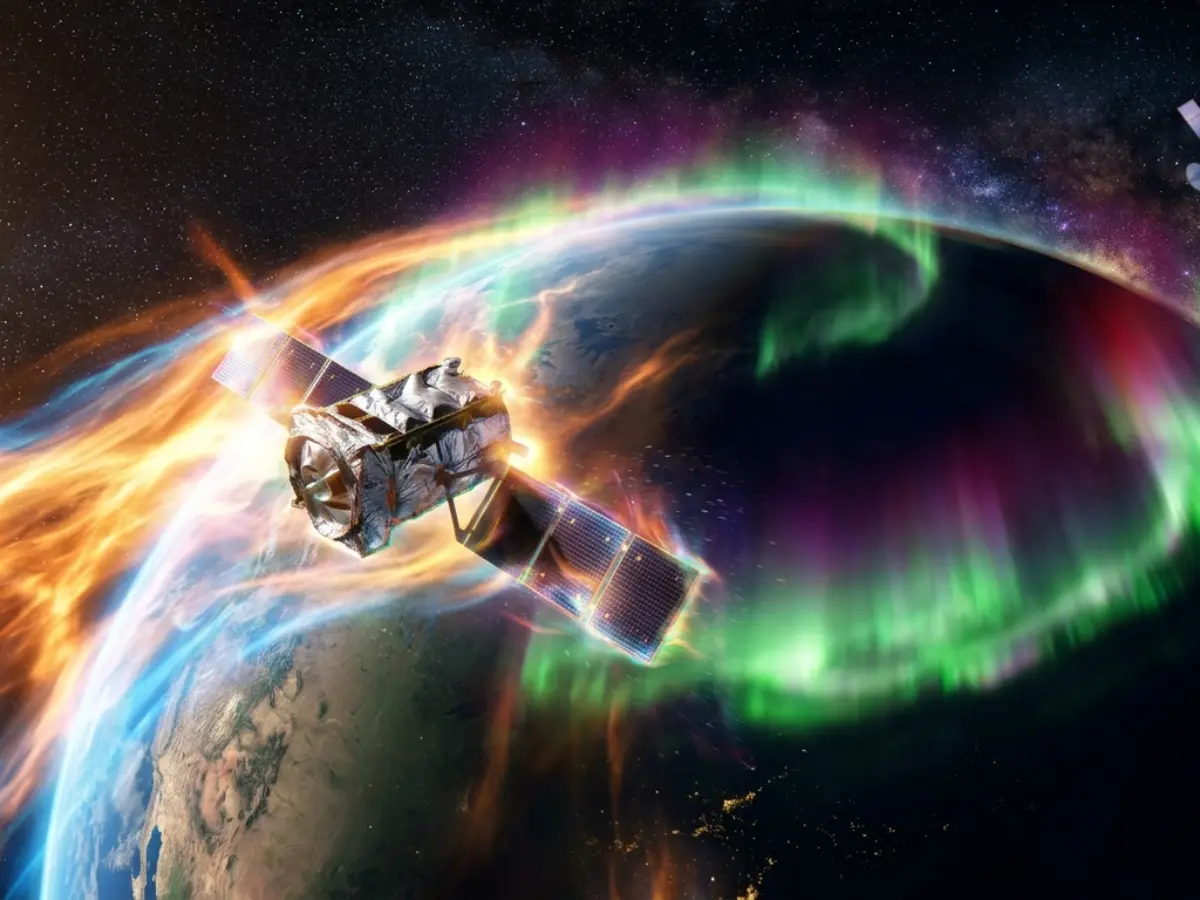
Solar storms could get stronger than current estimates, NASA has warned
The most intense forms of solar storms are rare, and so we do not know exactly how Earth's magnetic field will behave when one arrives. It is highly likely that we still do not know how strong solar winds and energy can get, meaning we have been underestimating them.
Space scientists at NASA’s Goddard Space Flight Center in Maryland have warned that we have been underestimating the worst-case scenarios for solar storms and their impact on Earth. According to a study published in the journal Nature, "erroneous measurements" of solar storms have likely distorted estimates about how much energy can be transferred into Earth’s polar ionosphere. While we think there is some kind of upper limit to it, the researchers say there may not be one.
Study coauthor Maria Walach said in a statement that "fortunately, very extreme cases are rare, but this also means we have limited data to work with and only time will tell what happens at the very extreme one-in-a-thousand-year kind of event." She added, "If there is no upper limit to our planet’s response to the solar wind, modelling for extreme cases needs to take this into account, and we should be vigilant for space weather effects."
The problem does not arise from faulty equipment, but from how scientists measure their space weather measurements, Walach says. Instruments in space that detect solar storms long before they reach Earth are located at a point where they fail to gauge the dissipating effects of solar storms.
NASA’s IMAP sits at the Lagrange point one (L1) and provides consistent early warning data on solar particles and CMEs released by the Sun. It is stationary and locked in an orbit, where it relies on measurements taken before these particles hit the Earth's magnetosheath. It basically overestimates the actual solar wind, which is later “influenced by local plasma and field conditions,” the researchers wrote.
Instruments measuring solar winds
Trending Stories
)
)
)
)
)
)
)
)
)
)
)
)
)
)
)
)
)
&im=FitAndFill=(700,400))
)
&im=FitAndFill=(700,400))
)
)
)
)
)
&im=FitAndFill=(700,400))
)
)
)
)
)
)
)
)
The researchers compared over a million solar wind measurements taken by NASA’s THEMIS all-sky imager, MMS, and DoubleStar. They were seen in contrast to ordinary readings of the magnetosheath and magnetosphere. The team concluded that "there is currently no statistical evidence to suggest an upper limit to the energy transferred from the solar wind to the polar ionosphere."
Extreme solar storms can cause satellites to tumble down on Earth, and GPS signals are affected, which is rare. “Our planet’s magnetic field does a really great job of protecting us against many space weather effects,” Walach noted. So until we have an actual major storm, it is hard to say to what extent the magnetosphere can withstand the impact from the sun's energy.

