NASA sent four people to a Mars simulation for a year. They are now back

NASA Mars simulation crew
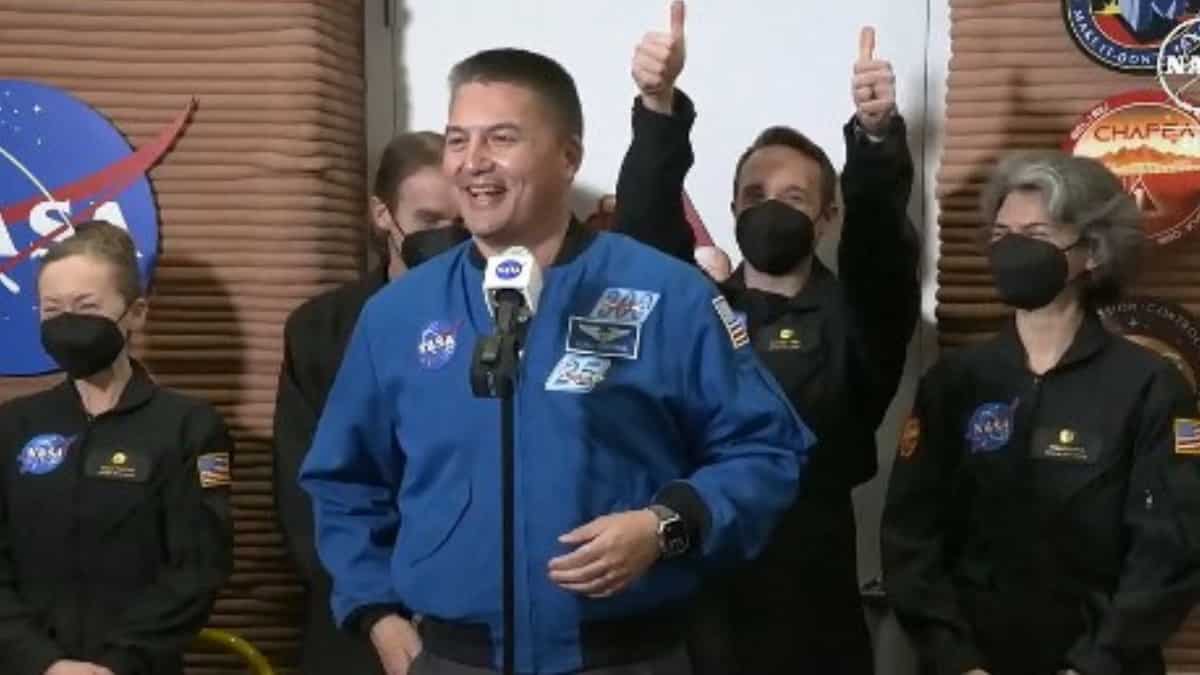
NASA scientists who spent over a year in a Mars simulation left the red-planet-like atmosphere on Sunday. As part of NASA's Crew Health and Performance Exploration Analog program (CHAPEA), the crew spent over a year experiencing a Mars-like habitat. The CHAPEA mission aims to understand the effects of the Mars atmosphere on the health of humans and the other challenges that they might face. The mission comprised 1,700 square feet (157 square meters)of 3D-printed habitat space that was set up at the Johnson Space Center in Houston. Kelly Haston, Anca Selariu, Ross Brockwell and Nathan Jones entered the Mars simulation on June 25, 2023.
"It's actually just so wonderful to be able to say 'hello' to you all," Kelly Haston, mission commander said.

Also Read:Watch: ISS captures fireworks in space, shares footage of mesmerising Northern Lights
First Mars simulation experience
In the first CHAPEA mission, the crew practised several scenarios that astronauts in future might witness on Mars. They worked to establish conditions for future Mars operations by conducting spacewalks within the space, dubbed “Marswalks". They also grew and harvested vegetables to add to their food provisions and maintain the habitat and their equipment.
&im=FitAndFill=(700,400)&imwidth=180&imheight=135&format=webp&quality=medium)
Navratri 2026: 9 days, 9 forms of Goddess Durga and 9 colours- Check the complete list
&imwidth=180&imheight=135&format=webp&quality=medium)
Russian woman and Bihar boy's love story goes viral after she reaches India to marry him
&imwidth=180&imheight=135&format=webp&quality=medium)
Arijit Singh 9-city India stadium tour to start from January: Check venue and ticket prices
&imwidth=180&imheight=135&format=webp&quality=medium)
F1 set to return to Africa for first time since 1993
&imwidth=180&imheight=135&format=webp&quality=medium)
'Don't ever mess with nature!': Trump’s tiger attack post triggers social media backlash as victim's family issues heartbreaking tribute
&imwidth=180&imheight=135&format=webp&quality=medium)
US judge blocks Trump administration sanctions on human rights groups supporting Gaza war crimes investigation
&imwidth=180&imheight=135&format=webp&quality=medium)
Trump's $100,000 H-1B fee: Why neither Republicans nor Democrats want to make it a 2026 US Midterm issue
&imwidth=180&imheight=135&format=webp&quality=medium)
Washington calls for 'de-escalation' as Ethiopia-Eritrea tensions fuel war fears
&im=FitAndFill=(700,400)&imwidth=180&imheight=135&format=webp&quality=medium)
Which jobs are safest from humanoid robots?
&imwidth=180&imheight=135&format=webp&quality=medium)
US midterms: Trump rallies behind Husted as Brown mounts challenge in crucial Ohio race
&imwidth=180&imheight=135&format=webp&quality=medium)
‘Rise up, young patriots!’: American singer Mary Millben says US donors funding CJP, backs Modi govt
&imwidth=180&imheight=135&format=webp&quality=medium)
Nobel Peace Prize winner Navi Pillay calls on US to 'get back to' being defender of human rights
&imwidth=180&imheight=135&format=webp&quality=medium)
'People are angry. I understand that anger': Cornell President Michael Kotlikoff admits he failed to follow up on sexual assault report
&imwidth=180&imheight=135&format=webp&quality=medium)
Iranian woman, 23, handed death sentence for ‘blasphemy’ in social media post; appeals for help
&imwidth=180&imheight=135&format=webp&quality=medium)
'Turn approver, resign, we'll forgive you': Rahul Gandhi claims receiving messages from CEC Gyanesh Kumar
&imwidth=180&imheight=135&format=webp&quality=medium)
'Leakers should be shot': Trump rages over leak of US military plans to attack Iran, slams media
&imwidth=180&imheight=135&format=webp&quality=medium)
Somaliland celebrates after Trump calls it 'a totally different country', raise hopes of US recognition
&imwidth=180&imheight=135&format=webp&quality=medium)
Afghan FM Muttaqi to CdA Yatin Patel: We attach importance to relations with India
&imwidth=180&imheight=135&format=webp&quality=medium)
‘My president, I mean my husband’: Trump's new press secretary Katie Zacharia's first briefing goes off the rails in 14 minutes
&imwidth=180&imheight=135&format=webp&quality=medium)
Mars is not for man: Human heart is too weak to survive the trip, study shows
&imwidth=180&imheight=135&format=webp&quality=medium)
‘600,000 people without electricity’: Zelensky calls for ‘strong’ US sanctions on Russia, accuses Moscow of violating Trump’s energy ceasefire
&imwidth=180&imheight=135&format=webp&quality=medium)
Sheikh Hasina warns of 'deep sense of insecurity' among Bangladesh's minorities in Durga Puja message
&imwidth=180&imheight=135&format=webp&quality=medium)
FBI refutes media report claiming Kash Patel is in Russia for talks, says he is in Virginia
&imwidth=180&imheight=135&format=webp&quality=medium)
'Ouch!!! That must hurt': Kangana Ranaut hails Kamal Haasan's sharp reply to Elon Musk over Starlink row
&imwidth=180&imheight=135&format=webp&quality=medium)
Girl 'dead' for 8 hours wakes up at her own funeral, dad insists she wasn't breathing
&imwidth=180&imheight=135&format=webp&quality=medium)
Three Indians killed in suspected arson attack in Germany, Romanian resident arrested
&imwidth=180&imheight=135&format=webp&quality=medium)
Durga Puja 2026: Kolkata roads get a splash of colours
&im=FitAndFill=(700,400)&imwidth=180&imheight=135&format=webp&quality=medium)
New OTT releases this week (October 12-18, 2026): Sacrifice, Koffee with Karan S9, Roadies Rebirth- 6 titles coming on Netflix, JioHotstar and more
&imwidth=180&imheight=135&format=webp&quality=medium)
Did the US withhold missile warnings? Ukraine questions Washington's 'bad weather' explanation after Russian strikes kill six, cut power to 600,000
&imwidth=180&imheight=135&format=webp&quality=medium)
US Singer Mary Millben alleges foreign funding for CJP, warns against anti-Modi forces: All you need to know
&imwidth=180&imheight=135&format=webp&quality=medium)
Global energy crisis hits Indian economy
&imwidth=180&imheight=135&format=webp&quality=medium)
Durga Puja 2026: Power banks, water bottles and more, a foolproof guide to pandal hopping
&imwidth=180&imheight=135&format=webp&quality=medium)
Zelensky feels betrayed by Trump, urges Musk to restore Starlink in Ukraine; Musk responds
&imwidth=180&imheight=135&format=webp&quality=medium)
'Girls are uncomfortable': Salman Khan calls out paparazzi for bad angles, speaks on PR on Koffee With Karan
&imwidth=180&imheight=135&format=webp&quality=medium)
After flydubai co-pilot attack, Air France bans Pakistani, Muslim-majority crew on Israel flights
The harder challenges included living in isolation and communication delays with Earth lasting up to 22 minutes.
"Why go to Mars? Because it's possible," Anca Selariu, the mission's science officer said. "Because space can unite and bring out the best in us. Because it's one defining step that 'Earthlings' will take to light the way into the next centuries."
Two more CHAPEA missions have been planned and the first mission focused on nutrition, Steve Koerner, deputy director of Johnson Space Center, said.
"They've been separated from their families, placed on a carefully prescribed meal plan and undergone a lot of observation," Koerner said.
Future CHAPEA missions
The second CHAPEA mission will be conducted in 2025 and the third in 2026.
NASA describes the CHAPEA missions as being important, saying the "results of CHAPEA and the knowledge gained from the analog missions will allow NASA to characterise the risk of the planned exploration food system design in relation to crew health and performance and inform NASA standards, associated vehicle mass and volume requirements, and resource-risk trades for long-duration exploration missions."

