ISRO’s SSLV satellite failure: What exactly went wrong? Here’s the truth

ISRO’s SSLV satellite
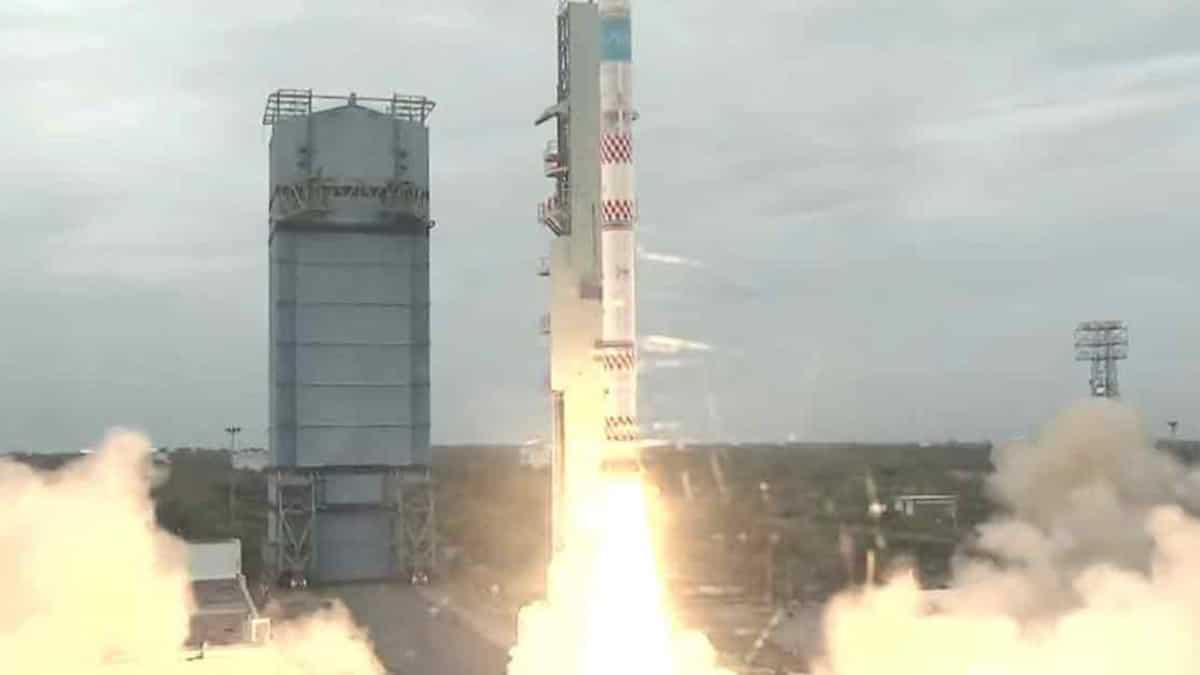
The inaugural small satellite launch vehicle (SSLV) of the Indian Space Research Organization (ISRO), carrying the earth observation satellite EOS-02 and a co-passenger student spacecraft AzaadiSAT, did not launch as planned on Sunday.
The mission failed because the SSLV-D1 placed the satellites in an elliptical orbit rather than a circular one, leaving them "unusable," as ISRO later said in a statement.
According to ISRO, "SSLV-D1 put the satellites into a 356 km x 76 km elliptical orbit rather than a 356 km circular orbit." Satellites are no longer functional. The problem has been correctly detected. The divergence was caused by the logic's failure to recognise a sensor failure and proceed with a salvage step.

ALSO READ |Earth's days mysteriously getting longer; scientists struggle to find reason
What went wrong during the satellite launch?
ISRO's first small satellite launch vehicle (SSLV) blasted out from Sriharikota at 9:18 a.m. on Sunday. The space agency's purpose was to get a bigger share of the small launch vehicle industry by placing satellites into Low Earth Orbit.
)
No connection between Jantar Mantar protesters and Pakistan-based ISI terror module, Punjab Police clarify
)
Born in the USA? Trump targets 'birth tourism' with new birthright citizenship executive order
)
Explained | Can India reach WTC final with a series win in Sri Lanka?
)
Major relief for TN CM Vijay as wife Sangeetha withdraws infidelity and divorce petition
)
Michael 2 plans revealed: Makers to start filming soon with THIS release window
&im=FitAndFill=(700,400))
Why the Su-30MKI doesn't need external fuel tanks to fly vast distances
)
Lightning bolt strikes football field in Thailand, killing a player during a match
)
Ukrainian astronomers see gargantuan objects dashing at 39,600 kmph on the Moon - 'They can reach Earth in 20 minutes'
)
'Devil Wears Prada 2' wardrobe joins Hollywood history
)
The genetic roots of Tamils: 75,000 DNA markers decoded in latest study of Sangam-era settlement
)
Zendaya and Tom Holland celebrate their marriage with private reception in England
)
Trump says Iranian school bombing photos could be AI-generated - 'I don’t think...'
)
NZ female politician joins meeting from bathroom with underwear hanging - 'You can see my washing, you can see me'
)
'Dhoni Made Fleming Great': Panesar says ECB made the wrong choice for England Test coach
)
‘Certain munitions are unlimited, others...’: Did Trump admit some US weapons supplies were limited?
)
Thailand teen killed grandparents before shooting teachers at school – What we know about suspect
)
At least 4 killed 15 injured in shooting at school near Bangkok
)
Primetime trailer: Robert Pattinson channels Chris Hansen in A24's dark crime thriller
)
France offers deal for 114 Rafale fighter jets, with 94 to be made in India
)
OpenAI reportedly building donut-shaped ChatGPT smart speaker for homes
)
Squadron Leader Bhawana Kanth scripts history as Indian Air Force gets its first woman ‘Top Gun’ pilot
)
Will ordinary Indian users have to pay for UPI? Nirmala Sitharaman breaks silence on Congress' MDR fee claim
)
The Royals enter the Doctor Who universe: King Charles and Queen Camilla beam into Commonwealth Games in TARDIS
)
US may force more visa applicants to make social media accounts public under Trump's new plan
)
‘We are ready to talk’: Jharkhand CM Hemant Soren reaches out to protesting students
)
India avoids higher US tariff, secures lower 10% rate. Here's how
)
Vishal Bhardwaj to develop film on Tarun Tejpal case after latest court verdict: Report
)
Drug-resistant fungus that hides in hair and enters bloodstream reported in 23 US states
)
Squid Game: Netflix shelves David Fincher's long-awaited American spin-off; Here's why
)
The Paradise teaser: Nani's intense avatar and stunning visuals impress fans; new release date announced
&im=FitAndFill=(700,400))
New Friday OTT releases (August 7, 2026): Operation Safed Sagar, Vadhandhi, Main Vaapis Aaunga- 6 movies and TV shows on Netflix, Prime Video and more
)
Bluefly: Priyanka Chopra joins Russell Crowe for new sci-fi action thriller
)
'Massive attack coming... wait, never mind': Iran mocks US 'theatre diplomacy,' rejects Trump's claim of Hormuz progress
&im=FitAndFill=(700,400))
Can an S-400 operate in the desert?
According to a source in The Wire, the issue looked to be the SSLV's terminal stage, known as the velocity trimming module (VTM). The VTM was meant to burn for 20 seconds at 653 seconds the following launch, according to the launch profile. However, it barely burned for 0.1 seconds, depriving the rocket of the necessary height boost.
After the VTM burn, the two satellites on board the rocket, the primary EOS-2 Earth-observing satellite, and the secondary AzaadiSAT student satellite, separated from the vehicle. This implies they are also likely to have deviated from their original orbital routes and entered an elliptical orbit instead.
ALSO READ |Chinese scientists looking to use lunar satellites to understand initial days of earth
While providing updates on the launch on Sunday, the space agency tweeted at about 11.43 a.m. that "all the stages worked normally." Both satellites were launched. However, the orbit achieved was smaller than predicted, making it unstable.
At 2.48 pm, ISRO claimed it has identified the mission to be a failure as well as the reason for failure.
ISRO chairperson S Somanath later said in a video statement, "The vehicle took off majestically with the burning of the first stage, and the subsequent S2 and S3 performed very well." The mission performed admirably, and when it reached a height of 356 kilometers, the satellites were separated. However, we later discovered an abnormality in the satellites' orbital positioning."
The chairperson went on to explain that when a satellite is deployed in such an orbit, it cannot keep course for long and falls off. "The satellites have already descended from that orbit and are no longer usable," Somanath explained. According to the ISRO, it was "logic inability to identify a sensor"
Not the first failure
This isn't the first time ISRO has had a problem with a mission launch. The Polar Satellite Vehicle Launch (PSLV), today regarded as ISRO's reliable workhorse, failed on its first flight on September 20, 1993. The country's maiden experimental flight of SLV-3, carrying the Rohini Technology Payload, failed to deliver the satellite into its target orbit on August 10, 1979.
On September 7, 2019, ISRO suffered one of its most significant failures when the Chandrayaan 2 orbiter crashed on the lunar surface instead of softly landing and was destroyed along with the rover. Prime Minister Narendra Modi, who was present at the space agency to watch the historic flight, afterward cheered on the ISRO employees, saying what they had accomplished was no minor task.
In August 2021, the launch of GISAT-1, an earth observation satellite atop the GSLV Mk 2 rocket, failed just 350 seconds after liftoff from India's spaceport. It was caused by "a technical malfunction in the cryogenic stage," according to ISRO's preliminary study on launch day.
WATCH WION LIVE HERE
You can now write for wionews.com and be a part of the community. Share your stories and opinions with us here.