Human bodies shaped by ancient viruses millions of years ago: Study

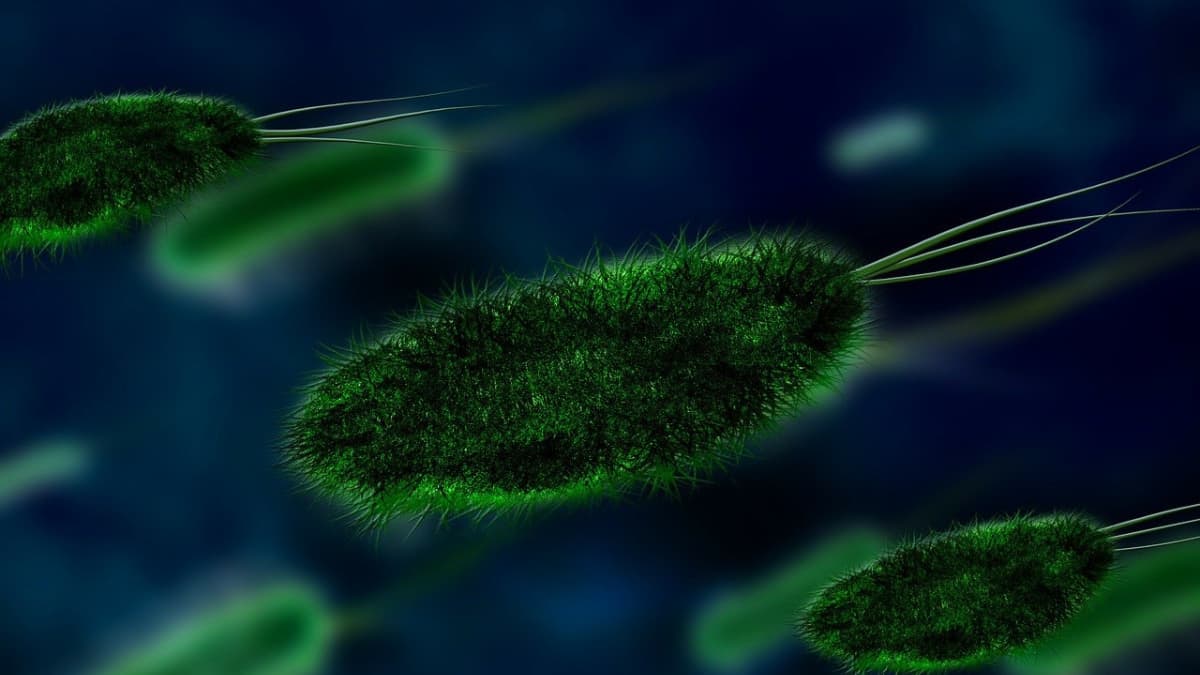
Representational image of virus.
Millions of years ago, vertebrates were infected by an ancient virus which then played an important role in the evolution of human beings' advanced brains and large bodies, according to a new study.
The research, which was published in the journal Cell, studied the origins of myelin which is an insulating layer of fatty tissue that gets formed around nerves and permits electrical impulses to travel at a faster speed.
As per the authors, a gene sequence which was taken from retroviruses, that invades the DNA of their host, is important for myelin production, and that code has now been discovered in modern mammals, amphibians and fish.
"The thing I find the most remarkable is that all of the diversity of modern vertebrates that we know of, and the size they've achieved: elephants, giraffes, anacondas, bullfrogs, condors wouldn't have happened," said senior author and neuroscientist Robin Franklin of Altos Labs-Cambridge Institute of Science while speaking to AFP.
Also Read:What is Alaskapox? The newly-found viral disease that has already claimed one life
A team, headed by computational biologist and geneticist in Franklin's lab Tanay Ghosh, went through genome databases in an attempt to find genetics that were most probably associated with the cells which produce myelin.
However, he was interested in exploring mysterious "noncoding regions" regarding the genome which have no obvious function and were earlier dismissed as junk, however, they are now seen as having evolutionary importance.
The research by Ghosh helped him reach a particular sequence which was derived from an endogenous retrovirus, called "RetroMyelin". This has been lurking in our genes for a long duration.

Faster reactions led to bigger bodies
The researchers then searched for RetroMyelin-like sequences which are present in the genomes of other species and discovered similar codes in jawed vertebrates like mammals, birds, fish, reptiles and amphibians. However, they were missing in invertebrates or jawless vertebrates.
The researchers further concluded that the sequence appeared in the tree of life at the same time as jaws, which came into existence around 360 million years ago in the Devonian period, which is also known as the Age of Fishes.
Watch:Gravitas | Alaskapox: The new killer virus claims its first victim
&im=FitAndFill=(700,400))
National Film Awards 2026: Kartik Aaryan, Mammootty, Yami Gautam, Randeep Hooda and other key winners
)
The Verdict | Moral policing isn’t culture or discipline, it’s crime
)
‘Shame on you’: Netanyahu vows to ‘tell the truth’ about Mamdani at UN ahead of New York visit
)
ICC plans T20I expansion and fewer ODIs in 2027–2031 FTP cycle: Report
)
Erdogan again raises Kashmir issue at UNGA, calls for dialogue under UN Charter
)
Trump revives India-Middle East-Europe economic corridor as India emerges central to West Asia’s future: What is it?
)
World leaders repeatedly call Gaza crisis ‘genocide’ as Israel’s war dominates opening sessions of UNGA
)
IIT Bombay professor Suryanarayana Doolla sent on leave amid Sahil Wakode death probe
)
American manufacturing is reshoring faster than its factory floors can absorb
)
'Mumma’s boy from Gwalior who dared to dream': Kartik Aaryan pens long note after first National Award win
)
'Our team opened the gate of gold medals': Harmanpreet Kaur on India’s Asian Games final win
)
US and China vie for AI dominance as calls grow for regulation | Gravitas
&im=FitAndFill=(700,400))
New OTT releases this week (September 21-27, 2026): Shaque: Trust No One, Hunkkaar, Don’t Be Shy- 5 new titles coming to Netflix, Prime Video and more
)
Four decades after leaving Kolkata, the Birlas may be coming back for more
)
WION Iconic Tourism Summit and Iconic Awards 2026: India's travel economy leaders gather in Delhi
)
IND vs JPN, one-off T20I: Japan captain Kendel on pushing India to the brink - ‘It was special’
)
Over 4,200 books withdrawn from circulation in J&K colleges, 94% from Kashmir
)
Raaka creates history! Allu Arjun’s film secures Guinness World Record ahead of release
)
Oil slips to $98 as Saudi Arabia restarts East-West oil pipeline
)
Who is Clavicular? The 20-year-old controversial 'Looksmaxxing' influencer charged with rape allegations
)
Trump calls on nations to quit ‘rogue’ and ‘out-of-control’ International Criminal Court, rips UN
)
Yemen clashes kill 154 people in two days as cornered Saudi battles Houthi offensive | Gravitas
)
WION Iconic Tourism Summit and Awards 2026: Key voices to discuss India’s tourism future
)
Bomb scare in New York amid UNGA: Suspicious suitcase found near UN headquarters
)
'This is normally what toddlers do': Why a psychiatrist is raising fresh questions about Trump’s recent behaviour
)
Gravitas | Boosting NHS productivity could save 20,600 lives in UK annually: Report
)
Trump signs Greenland security deal with Denmark, paving way for two new US military bases
)
Saudi Arabia exits China-led mBridge digital currency platform amid Saudi-Houthi conflict
72nd National Film Awards: Kartik Aaryan receives Best Actor honour for Chandu Champion in Gujarat
)
Glitch in the matrix caught on camera: Woman vanishes after talking to reporter
)
Explainer: Why rare-earth export licences and Board of Trade are US priorities ahead of Trump-Xi summit
)
Trump-Xi summit: From trade to Taiwan, what will the US and Chinese presidents discuss in Washington?
)
Key accused in Bihar's Jamui molestation case, arrested after police shoot him in leg
)
Justice eludes Air India 1985 bombing victims as Canada probe goes 'inactive' | Gravitas
)
‘Strike a deal or drive Iran into hell’: Trump issues fresh warning to Tehran at UNGA
)
Major League Soccer referee sacked for sexist comment about female match referee
)
Cyclone Arnab: Landfall expected before midnight tomorrow as IMD issues orange alerts across six states
"There's always been an evolutionary pressure to make nerve fibres conduct electrical impulses quicker. If they do that quicker, then you can act quicker," said Franklin, adding that is useful for both prey trying to flee and predators trying to catch things.
Myelin also allows rapid impulse conduction without increasing the diameter of nerve cells, because of which they are packed closer together. It also extends structural support which means nerves are free to grow longer, eventually leading to longer limbs.
(With inputs from agencies)