
&imwidth=800&imheight=600&format=webp&quality=medium "Griffin-1 lander will carry time capsule and messages from Japanese children to the Moon")
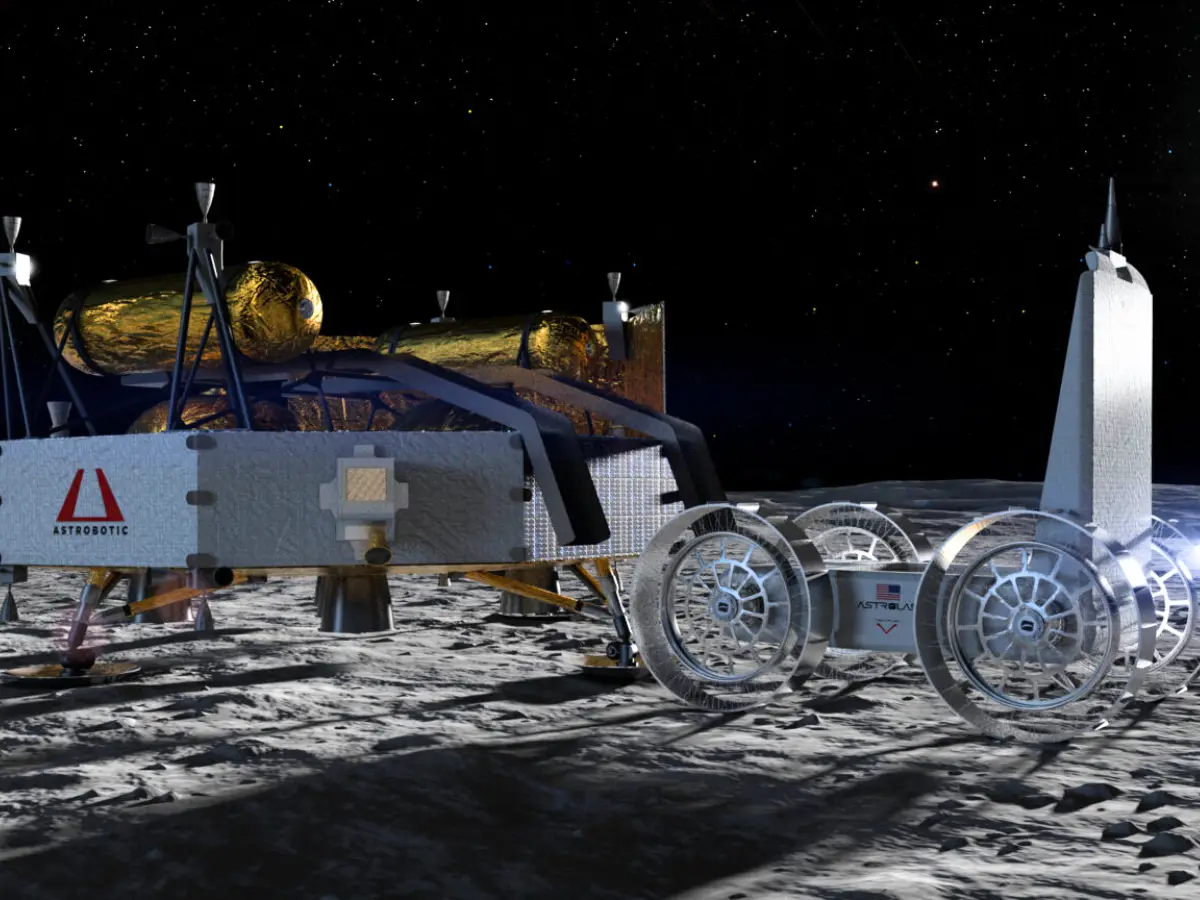
Pittsburgh-based company Astrobotic has unveiled its Griffin-1 lunar lander, a part of NASA's Moon Base II mission. It is the initial phase of establishing a permanent human outpost on the Moon. The lander is currently scheduled to lift off towards the end of 2026 aboard a SpaceX Falcon Heavy rocket. "This is the first infrastructure-class lander going to the surface of the moon," Astrobotic CEO John Thornton said. Griffin will carry several payloads and research and technology demonstrations to the Moon as part of NASA's Commercial Lunar Payload Services (CLPS) program, including the FLIP (Flex Lunar Innovation Platform) rover. Thornton said the lander will be "part of the cornerstone of building the moon base".
Astrobotic is currently finishing integrating the payloads with the lander, and work is expected to finish by June 20. Astrobotic's own BEACON CubeRover, which it has developed in coordination with Mission Control Space Services, is part of the mission. The European Space Agency's LandCam-X, will also be carried to the Moon by Griffin and has been designed to help improve lunar landing precision and reliability.
Gryphon-1 will be transported to NASA's Jet Propulsion Laboratory in California next week, where environmental tests will be carried out. Later, it will be delivered to Florida, where the FLIP rover will be integrated into the lander prior to launch.

Astrobotic's second moon mission after the failed Peregrine
This is the second lunar mission by Astrobotic. The smaller Peregrine lunar lander was launched in January 2024, but a propellant leak cut short its time in space, and it failed to reach its destination. Peregrine Mission One was the first-ever NASA CLPS flight. Griffin is 6 feet tall and twice as wide as Peregrine. NASA has joined hands with commercial companies for lunar landers, which will deliver technology demonstrations and other payloads to the surface of the moon. It is part of the larger Artemis program, which aims to land humans on the moon, build a base and eventually establish a permanent habitation.
Trending Stories
What is Griffin carrying to the Moon?
According to Astrobotic, Griffin's payload capacity to the lunar surface stands at 625 kilograms, costing $1.2 million per kilogram. It will carry 10 payloads from six separate nations in total, with four additional NASA payloads aboard FLIP. Some other items are also being shipped to the Moon. This includes messages from children in Japan on a plaque from the Nippon Travel Agency; a payload from the Galactic Library to Preserve Humanity from Nanofiche carrying a super miniaturised collection of literature and art; and a MoonBox capsule filled with items from around the world sent to the Tokyo-based company Astrobotic on micro SD cards.

