Explained: Why ISRO launched LVM3 at 12:07am & why only 36 satellites on biggest rocket?

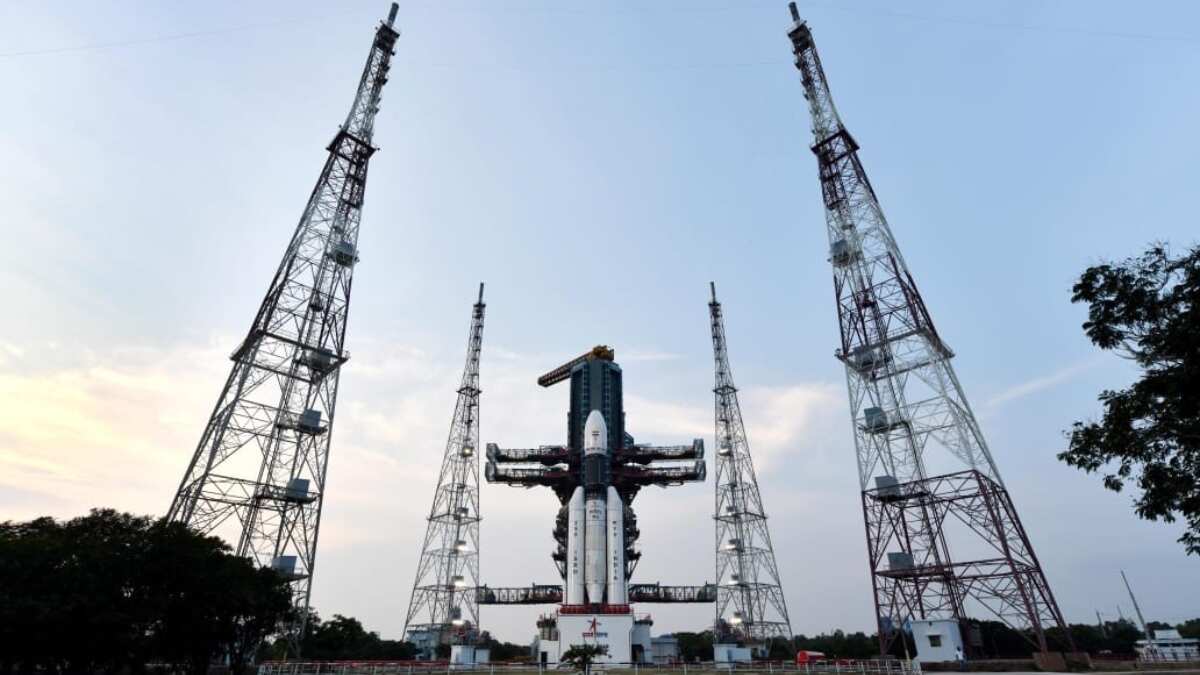
'LVM3 M2 OneWeb India-1' mission
For those who observe very closely, no two rocket launches (months apart or years apart) take place at the exact same time. Each lift-off has its own specific, unique timing, down to the minute. Some happen at dusk, some at dawn, some during the midnight hour etc. For example, the recent launch of the LVM3, India's largest rocket carrying 36 satellites from UK-based company OneWeb, took place at 00:07hrs IST on October 23.
There is an entire branch of space science known as 'Orbital Mechanics' that is used to determine what is known as a 'Launch window', a period of time within which a certain launch must happen.

Launch windows depend on a plethora of factors - place of launch, type of orbit intended, final destination, whether it is headed for another planet, number of satellites being carried, the time of the year, the position of the relevant heavenly bodies and also minimal risk of space debris.
In the case of OneWeb Launch, 14 which was carried out from India's Satish Dhawan Space Centre, Sriharikota, the launch was originally scheduled for Friday,22nd October night. However, due to some factors, the launch was carried out on Sunday 00:07am IST. OneWeb Officials told WION that they had determined the time of launch, in close coordination with ISRO, as the former were the paying customers for the launch. Interestingly, launch day 23rd October also happened to be the birthday of the Chairman of OneWeb, but that was just an extremely rare coincidence, with no relevance to the launch.
)
Gaza under attack: Health chief's son killed in IDF strikes
)
Cochin shipyard starts building Indian Navy's next-gen missile vessels
)
Russia holds first parliamentary elections since the beginning of the Ukraine war
)
China may have gained access to US's classified F-35 jets; parts meant for repairs diverted to Hong Kong, sparking Pentagon inquiry
)
Mark Carney mimics Trump in hilarious moment over C$70 billion clean-energy investment; room erupts in laughter
)
9 women found dead near Johannesburg: South Africans rally, demand 'enough' to femicide
)
Pentagon revives mandatory testosterone testing for male troops aged 30 and above
)
Russia extends ban on Western food imports for two more years in extended sanctions countermeasure
)
Iran sets 7 conditions to end war with US: What are Tehran’s demands?
)
Flying cars in UAE: Ras Al Khaimah signs deal with Chinese company to test new transport
)
Africa is splitting, and a lot sooner than estimated, giving way to a new ocean
&im=FitAndFill=(700,400))
‘Not the US or China’: These are the countries leading the world in arable land
)
The Verdict | When precision fails: US commits war crime in Minab school strike, UN finds
)
FACT CHECK: Why did PM Modi ask Xi ‘is it okay’ at BRICS Summit? New video reveals...
)
‘Will go to any extent’: Pakistan vows to defend Saudi Arabia amid Houthi attacks
)
Trump defends AI amid growing alarm, announces new 'AI force' and promises an 'AI czar'
)
Reacher star Alan Ritchson opens up about alleged blackmail, suicide attempt during difficult period
)
Trump 2.0: Dark days ahead for America’s ‘imperial presidency’
)
Nigeria: Protesters take to the streets, police fire shots
)
Tirupati Laddu ghee adulterated with chemicals, says ED, supplier arrested
)
Arvind Kejriwal, family members, Delhi CM Rekha Gupta get SIR notices
)
Ed Sheeran addresses Macklemore's removal, Gaza conflict during Philadelphia concert: 'I cannot hide how I feel'
)
Brigitte Bardot’s private collection set for Paris auction; key items and prices revealed
)
Harry Brook targets long reign at top of T20I rankings after Sri Lanka sweep
&im=FitAndFill=(700,400))
How many F-35s does Britain, Japan and Israel have?
)
US-Iran war: Tehran draws red lines — seven demands before any peace talks
)
Trump wants to rename ‘Artificial Intelligence’, gives 3 options: Which one would you pick?
)
Trump announces ‘AI Force’ as debate grows over AI risks and regulation
66 years of the Indus Waters Treaty: How India and Pakistan settled a bitter river dispute
)
Raphinha hat-trick powers Barcelona to 3-1 win over Sevilla in La Liga
)
Trump bans CNN, MS NOW and Politico from White House over ‘FAKE NEWS’
&im=FitAndFill=(700,400))
Ananya Panday to Sharvari: 5 actresses serving major princess vibes
&im=FitAndFill=(700,400))
Meet top 5 Indian batters with fastest T20I centuries
)
How did an Australian river with 500 crocodiles pass the Olympic test? Here's how
)
Pak: A series of counter terrorism operations in Khyber Pakhtunkhwa
)
It must be noted that the Indian LVM3 rocket can carry anywhere between eightto 10 tons of payload to Low Earth orbit. However, OneWeb only put 36 satellites (weighing 6tons in total) on board the rocket. Queried about why the company did not make full use of the payload capacity and derive maximum value out of the launch, Massimiliano Ladovaz, CTO, OneWeb told WION that it was a limitation posed by the satellite dispenser that they used.
Ladovaz explained to WION that the satellite dispenser was originally meant for only 36 satellites and was supposed to fly on a Soyuz rocket. Owing to circumstances, when OneWeb decided to launch their satellites on ISRO's LVM3, they knew that they had to go with 36 satellites on the existing dispenser or spend precious time for getting a new dispenser. "We would have liked to and could have done more(launched more satellites on this LVM3 rocket), however getting a new dispenser to accommodate more satellites would have taken more time" he elaborated.
With Low Earth orbit getting increasingly populated with constellations of communication satellites from various firms, astronomers have raised concerns. The issues are primarily to do with light getting reflected from the satellites' solar panels, satellite trails appearing in astronomical images and adversely affected the field of view of astronomers.
When queried about what OneWeb was doing to mitigate this issue, Ladovaz told WION that the company was working with astronomers to measure the exact impact and prepare to reduce it. He also said that the OneWeb satellites were placed in an orbit that was too high to be visible. However, he did acknowledge that they could be seen in some conditions by astronomers. He added that the company was working on reducing this adverse impact by darkening some reflective surfaces of their Next-gen constellation of satellites.
WATCH WION LIVE HERE
You can now write for wionews.com and be a part of the community. Share your stories and opinions with us here.
