Explained | Humans are on the Moon and it might be the beginning of the end for our satellite

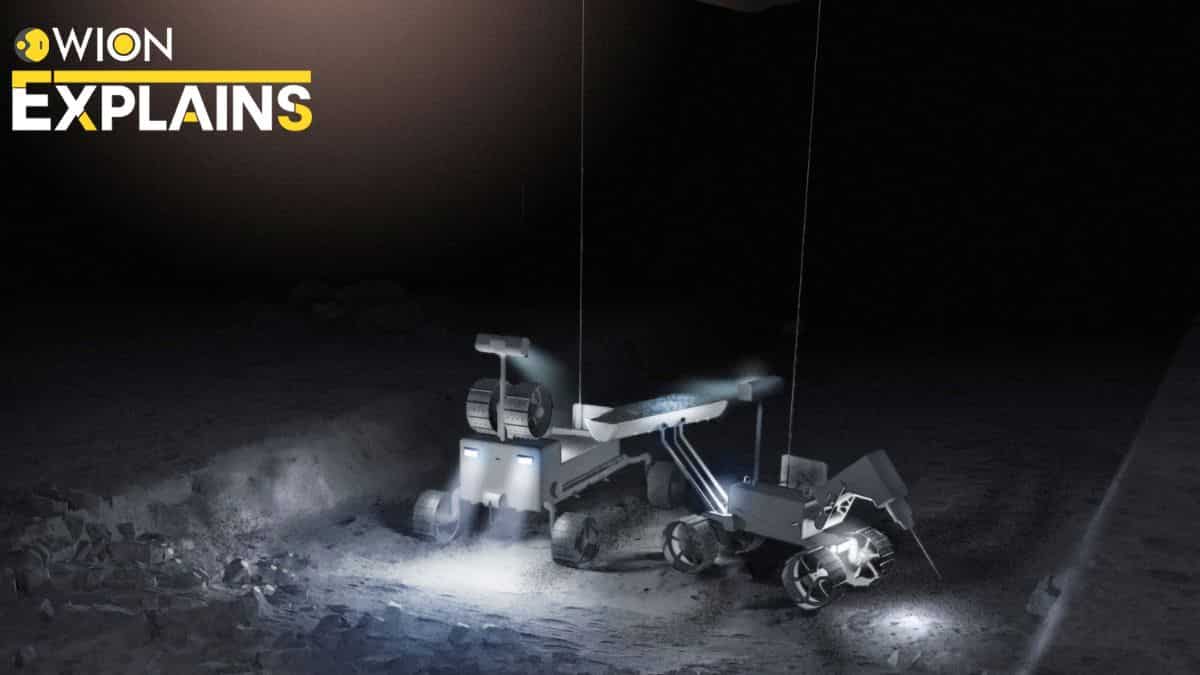
Human influence has pushed moon into Lunar Anthropocene, say scientists
The human influence has pushed the moon into a new geological epoch called the Lunar Anthropocene, a group of researchers suggest.
A new study by the University of Kansas says that this new phase of existence for the moon has been triggered by human disturbance which dates back to 1959 when for the very first time the USSR’s Luna 2 mission made contact with the lunar surface.
Since then, more than a hundred other spacecraft have made their way to the moon's surface with or without the crews significantly impacting its surface.

The scientists argue that in the coming years, the missions and projects that have been planned to study the moon can have a severe impact on the Earth's only natural satellite.
What is the Anthropocene?
The Anthropocene is an unofficial unit of geologic time, that is used to describe the most recent period in the history of the planet when human activity begins showing traces of its significant impact on the climate and ecosystems.
)
IND vs JPN one-off T20I: India survive scare from Japan to win five-over a side match by 2 runs
)
Putin's United Russia party wins 355 seats in Duma election; 4 other parties cross threshold to enter parliament
)
AI models chose to harm humans to stop ‘pain,’ alarming study raises fresh safety questions
)
‘0% chance’: Nvidia CEO Jensen Huang dismisses AI extinction fears by 2030
)
Samay Raina-Mukesh Chhabra controversy explained: What happened over girlfriend joke on India's Got Latent?
)
Trump's helipad event overshadowed by audio failure as major TV networks suspend pool coverage
)
'Needs time away from the international scene': England white-ball captain Brook on pacer Brydon Carse's future
)
New Zealand farms shift to carbon forests: Carbon credits fuel a land rush reshaping rural life
)
Anti-AI activists storm summit, say 'incompetent' leaders are leading us into a disaster - 'We need a vote'
)
Samsung raises Galaxy S26 prices by Rs 20,000: Here’s what each model now costs
)
J&K Assembly Session begins amid chaos: BJP, ruling alliance clash as statehood demand dominates
)
Asian Games 2026: India women's cricket team beats Sri Lanka by 147 runs for first gold
)
Key accused in Bihar's Jamui molestation case, arrested after police shoot him in leg
)
Randeep Hooda arrives in Gujarat for his first National Film Award: ‘Very grateful’
)
US and China vie for AI dominance as calls grow for regulation | Gravitas
&im=FitAndFill=(700,400))
Anant Nag to recieve Dadasaheb Phalke Award: From Ankur to Nishant- Revisit his best films and iconic performances on OTT
)
FIFA chief Infantino wants to reform governing body with consultation from federations
)
The Verdict | The Mecca Agreement is under scrutiny as Houthis attack Saudis
)
India at UNGA81: Jaishankar warns global order under 'growing stress', pushes for ‘reformed multilateralism’
)
Raaka creates history! Allu Arjun’s film secures Guinness World Record ahead of release
)
Saudi Arabia exits China-led mBridge digital currency platform amid Saudi-Houthi conflict
)
'Lot of things to learn from experienced players': Jayasuriya backs Rohit, Virat for 2027 ODI World Cup
)
$110 billion Warner Bros merger: Paramount reaches settlement with 12 US states
&im=FitAndFill=(700,400))
New OTT releases this week (September 21-27, 2026): Shaque: Trust No One, Hunkkaar, Don’t Be Shy- 5 new titles coming to Netflix, Prime Video and more
)
From ‘communist’ to ‘great mayor’: Trump praises Mamdani after New York meeting, discusses immigration and housing
)
Report: Zelensky meets CIA chief Ratcliffe at Shannon airport, weeks after his secret Moscow trip
)
How Zaheer Khan came to be CSK's head coach of IPL 2027
)
Pilot recreates Mona Lisa in sky over Oklahoma and Arkansas in four-hour flight: VIDEO
)
UK PM Burnham agrees to 'defensive' military support for Saudi Arabia against Houthis
)
Jailer 2: Vidya Balan joins Rajinikanth's upcoming film as Kantha | Watch
)
Microsoft executive called AI training the ‘largest theft of labour in human history’
)
40-foot waves crash into cruise ship in dangerous stretch near Antarctica. Watch
)
US-Iran war, peace deals and more: What to expect from Trump's UNGA 2026 speech
)
Explainer: Why rare-earth export licences and Board of Trade are US priorities ahead of Trump-Xi summit
)
BTS fans mock iHeartRadio’s day 2 turnout after short set controversy
)
Two infants die after fire breaks out at RIMS newborn care unit in Telangana's Adilabad
For the longest time being used in the context of Earth, researchers suggest that the planet entered into the period of Anthropocene in the 1950s.
Now in the case of the moon, the scientists at the University of Kansas say that the missions designated for the exploration of the Earth's satellite have ignited a new era of human interference on the lunar surface.
The anthropologists and geologists at the university say it is high time now that we acknowledge how humans have become the prevalent force in altering the moon’s environment by declaring a new geological epoch for the moon: the Lunar Anthropocene.
“The idea is much the same as the discussion of the Anthropocene on Earth — the exploration of how much humans have impacted our planet,” said lead author Justin Holcomb, a postdoctoral researcher with the Kansas Geological Survey at KU.
“The consensus is on Earth the Anthropocene began at some point in the past, whether hundreds of thousands of years ago or in the 1950s. Similarly, on the moon, we argue the Lunar Anthropocene already has commenced, but we want to prevent massive damage or a delay of its recognition until we can measure a significant lunar halo caused by human activities, which would be too late." Holcomb said.
He also laid stress on how the lunar landscape was no longer a static or untouched entity.
Busting the myth that the moon is an unchanging environment, barely impacted by humanity, Holcomb underlined how cultural processes were overtaking the natural background of geological processes on the moon.
"Cultural processes are starting to outstrip the natural background of geological processes on the moon," Holcomb said.
“These processes involve moving sediments, which we refer to as ‘regolith,’ on the moon. Typically, these processes include meteoroid impacts and mass movement events, among others. However, when we consider the impact of rovers, landers and human movement, they significantly disturb the regolith. In the context of the new space race, the lunar landscape will be entirely different in 50 years. Multiple countries will be present, leading to numerous challenges. Our goal is to dispel the lunar-static myth and emphasize the importance of our impact, not only in the past but ongoing and in the future. We aim to initiate discussions about our impact on the lunar surface before it's too late,” he added.
How are moon missions affecting the lunar surface?
The scientists say that in all these years with several landings on the moon, humans have overlooked the “Leave No Trace” principles and have left a number of things on the lunar surface including “discarded and abandoned spacecraft components, bags of human excreta, scientific equipment, and other objects (e.g., flags, golf balls, photographs, religious texts).”
“We know that while the Moon does not have an atmosphere or magnetosphere, it does have a delicate exosphere composed of dust and gas, as well as ice inside permanently shadowed areas, and both are susceptible to exhaust gas propagation,” the study authors say. “Future missions must consider mitigating deleterious effects on lunar environments.”
The human activity, the researchers say, is more complex than it may be perceived as once the changes are made to the lunar surface, they last for a very long time considering there can possibly be no erosion of the alterations as the moon sees no wind or rain. This means any effects humans have on the moon's surface are most likely permanent.
Holcomb said that he and his colleagues, through the Lunar Anthropocene want to lay stress on the potential the human influence holds on negatively impacting the environment of the moon.
“The concept of a Lunar Anthropocene aims to raise awareness and contemplation regarding our impact on the lunar surface, as well as our influence on the preservation of historical artefacts,” Holcomb said.
The researcher at the University of Kansas said that they aim to preserve or catalogue items such as rovers, flags, golf balls and footprints on the moon’s surface.
“As archaeologists, we perceive footprints on the moon as an extension of humanity's journey out of Africa, a pivotal milestone in our species' existence,” Holcomb said. “These imprints are intertwined with the overarching narrative of evolution. It’s within this framework we seek to capture the interest of not only planetary scientists but also archaeologists and anthropologists who may not typically engage in discussions about planetary science.”
(With inputs from agencies)