Sunita Williams set to pilot Starliner spacecraft for her first trip to ISS in 12 years

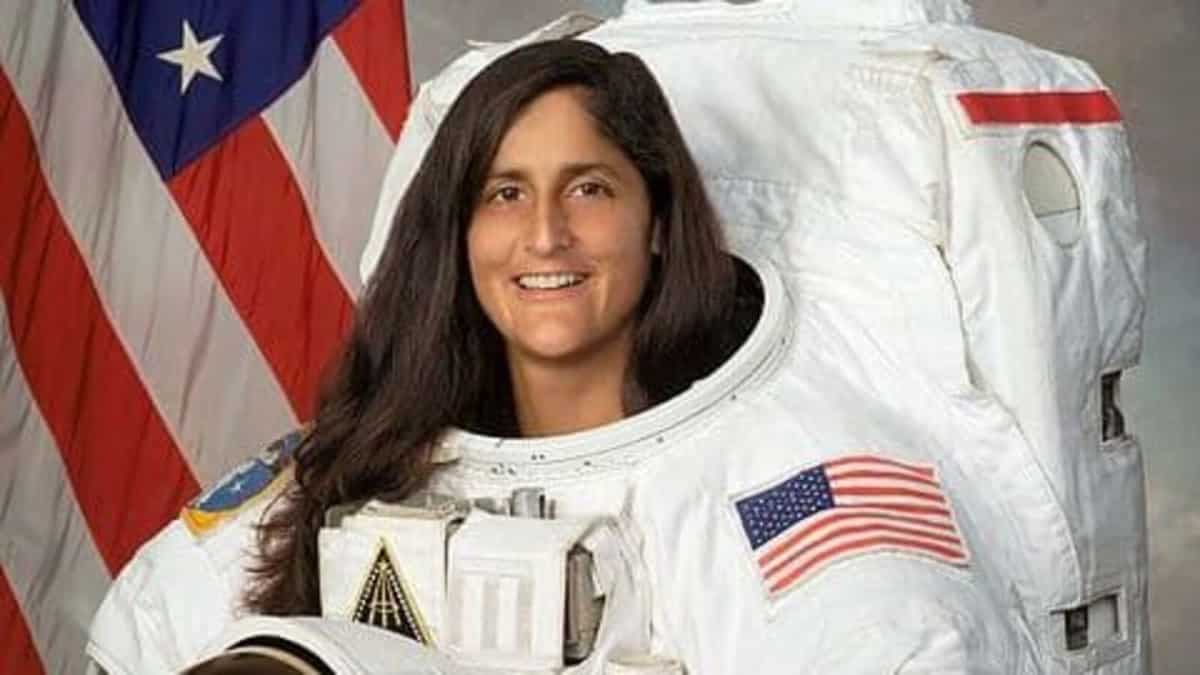
Sunita Williams
Following years of delays and numerous setbacks during test flights, Boeing's Starliner spacecraft is finally set to make its inaugural crew launch.
NASA astronauts Sunita Williams and Butch Wilmore, two of NASA's most seasoned astronauts, will be the pilots of the Crew Flight Test mission aboard Boeing’s Starliner spacecraft.
The two veteran astronauts will travel to and from the International Space Station, marking what could be a historic and long-awaited victory for the beleaguered Starliner programme.

“We love the Kennedy Space Center because this is where you launch humans into space," Butch Wilmore told reporters and added, "In less than two weeks, the next flight we take we'll be laying on our backs and (launching) into the heavens."
"This is where the rubber meets the road, where we are going to leave this planet, and that is pretty darn cool,” said Sunita Williams.
&imwidth=180&imheight=135&format=webp&quality=medium)
Viral video shows cross falling on Colombia priest, no official confirmation | WATCH
&imwidth=180&imheight=135&format=webp&quality=medium)
Rafale Marine fighter begins flight trials in Goa ahead of Indian Navy induction
&imwidth=180&imheight=135&format=webp&quality=medium)
Ranbir Kapoor apologises for Dussehra speech slip, clarifies remark at Ramayana event
&imwidth=180&imheight=135&format=webp&quality=medium)
Meta slapped with $25 billion fine in New Mexico over Facebook data practices, company plans appeal
&imwidth=180&imheight=135&format=webp&quality=medium)
WATCH: Woman IPS officer fires several rounds of AK-47, ignites debate online
&imwidth=180&imheight=135&format=webp&quality=medium)
WATCH | Mysterious haze grips Ohio city as toxic chemical leak forces mass evacuation – What is happening?
&imwidth=180&imheight=135&format=webp&quality=medium)
EU probes Booking.com under Digital Services Act
&imwidth=180&imheight=135&format=webp&quality=medium)
Pakistan signs another defence pact even as Makkah Alliance shows no teeth. This time, it's with Qatar, Indonesia, Turkey
&imwidth=180&imheight=135&format=webp&quality=medium)
Ilhan Omar breaks silence over alleged marriage to her brother; Trump thinks it's 'really good answer'
&imwidth=180&imheight=135&format=webp&quality=medium)
US-Iran war: Bibi, Trump gamble on new Iran war to save themselves in polls
&imwidth=180&imheight=135&format=webp&quality=medium)
From Agni-V to Project Kusha: How are India’s indigenous missile systems and defence shield reshaping modern warfare
&imwidth=180&imheight=135&format=webp&quality=medium)
Will Rohit and Kohli play ODI World Cup 2027? BCCI president Manhas says board 'not in a position to comment'
&imwidth=180&imheight=135&format=webp&quality=medium)
Why websites around the world are suddenly going offline? What you need to know about PHP
&imwidth=180&imheight=135&format=webp&quality=medium)
US midterms 2026: What polls and prediction markets indicate about Congress
&imwidth=180&imheight=135&format=webp&quality=medium)
'You are a dummy, you are a stupid person': Trump loses temper with CNN, ABC reporters after questions about Russia sanctions
&imwidth=180&imheight=135&format=webp&quality=medium)
China's dancing robot turns violent bodyguard, lifts cars and fights intruders - Watch
&imwidth=180&imheight=135&format=webp&quality=medium)
16-foot doomsday fish in Chile triggers fears that the next earthquake is coming
&imwidth=180&imheight=135&format=webp&quality=medium)
Are the US and Israel preparing for another major attack on Iran? Here's what report claims
&imwidth=180&imheight=135&format=webp&quality=medium)
Priyanka Chopra celebrates Dussehra 2026 with Nick Jonas and daughter Malti Marie | See pics
&im=FitAndFill=(700,400)&imwidth=180&imheight=135&format=webp&quality=medium)
New OTT releases this week (October 19-25, 2026): Gajab Raat to Chaar Yaar-8 titles to watch during Dussehra week on Netflix, Prime Video and more
&imwidth=180&imheight=135&format=webp&quality=medium)
‘I caution the president...’: Trump’s ex-press secretary warns after Zacharia’s exit
&imwidth=180&imheight=135&format=webp&quality=medium)
'Father of all bombs' vs 'mother of all bombs': Iran threatens US with new weapon as Trump hints at MOAB strike
&imwidth=180&imheight=135&format=webp&quality=medium)
Diljit Dosanjh's Oct 30 Delhi show hits roadblock, Delhi Police denies permission
&imwidth=180&imheight=135&format=webp&quality=medium)
Australia police arrest former national 100m champ Jake Doran for alleged child abuse
&imwidth=180&imheight=135&format=webp&quality=medium)
'Gyanu must go': CJP's Saurav Das, Ashutosh Ranka after release, despite Jantar Mantar protest undertaking
&imwidth=180&imheight=135&format=webp&quality=medium)
Kolkata airport: CISF detects ₹1.13 crore in US dollars hidden in bags of 2 Bangkok-bound passengers
&imwidth=180&imheight=135&format=webp&quality=medium)
Feds obtain DNA evidence that could prove Ilhan Omar married her brother: Report
&imwidth=180&imheight=135&format=webp&quality=medium)
US midterms 2026: Trump's approval rating hits record low as Democrats gain ground
Notably, Sunita Williams is going to the International Space Station after 12 years. Williams boasts a seasoned career with two previous space missions under her belt — Expeditions 14/15 and 32/33.
On Thursday (Apr 25), NASA and Boeing gave the go-ahead for a launch attempt within the next two weeks. But officials are stressing flexibility.
“May 6th is the target, but liftoff will only happen when everything is ready,” said Ken Bowersox, associate administrator for NASA’s Space Operations Mission Directorate.
This successful mission would mark a major milestone. Boeing's Starliner would join SpaceX's Crew Dragon in carrying astronauts to and from the International Space Station, ensuring a reliable flow of crew for the orbiting lab.
“This is history in the making,” NASA Administrator Bill Nelson said of the upcoming Starliner mission during a news conference, “We’re now in the golden era of space exploration.”
Watch:Indian-origin astronaut Sunita Williams set for third space mission
Astronauts Wilmore and Williams, both ex-Navy test pilots aim to dock at the space station on May 8th. If their mission goes well, they'll return to Earth around May 15th.
A successful mission paves the way for regular Starliner crew rotations starting in 2025, with launches alternating between Boeing's Starliner and SpaceX's Crew Dragon. This would provide NASA with a robust two-company system for ferrying astronauts to the station.
SpaceX and Boeing developed their individual vehicles under NASA’s Commercial Crew Program, a partnership with private industry contractors.
Since the beginning, NASA's plan was to have both SpaceX and Boeing operational. This means their Crew Dragon and Starliner capsules would act as backups for each other. In case of technical problems or delays with one spacecraft, astronauts could still launch on the other. This two-capsule system provides redundancy and ensures a more reliable path to space for NASA's crews.
NASA at first did not envision that SpaceX’s Crew Dragon would function on its own for nearly four years before Boeing’s Starliner reached its first crewed test flight.
Earlier in 2014, when NASA awarded contracts to SpaceX and Boeing, the space agency initially leaned towards Boeing as it hasbeen a trusted partner since the mid-20th century. However, SpaceX on the other hand, was a young and ambitious company, seen by some at NASA as a bit of a gamble.
(With inputs from agencies)