Beethoven likely suffered effects of lead poisoning, but it wasn't enough to cause his death

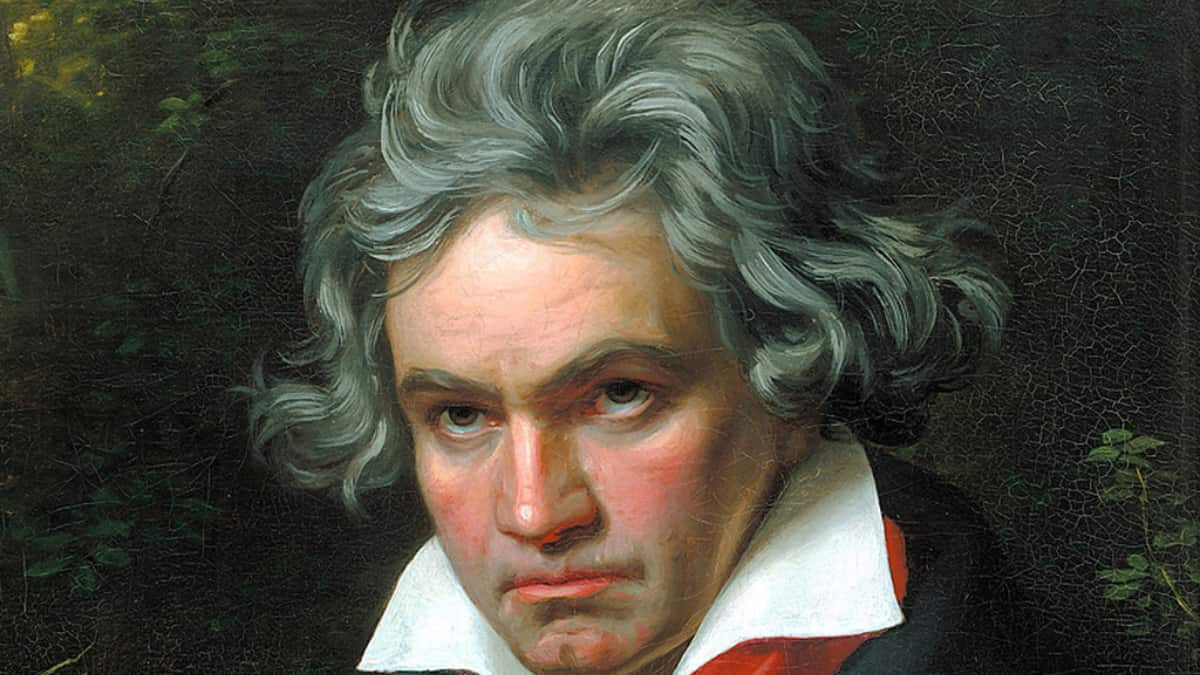
Ludwig van Beethoven
New research offers new clues on Ludwig van Beethoven's death and health problems. The German composer is one of the most influential figures in the history of Western music in the transitional period between the Classical and Romantic eras. He is known for his exemplary work.
Beethoven died after a prolonged illness in the Schwarzspanierhaus, Vienna, on March 26, 1827, at the age of 56. However, there have been several theories about his illness and still nobody knows for certain what caused the liver and kidney disease that led to his demise.
In 2023, an international group of researchers published a paper in the journal Current Biology, which found that Beethoven did not have lead poisoning, a theory which had been widely believed. In fact, the hair sample used for DNA sequencing was not Beethoven's. It belonged to an Ashkenazi Jewish woman. The lead poisoning theory was cancelled out.

But in a new research paper, published in the journal Clinical Chemistry, researchers analysed two locks of hair previously authenticated as Beethoven's. The findings revealed music composers could have suffered the effects of lead poisoning. However, it wasn't enough to kill him.
After his death, mourners continued to visit him to offer tribute even after a brutal craniotomy was performed by doctors to examine the folds in Beethoven's brain. They had removed his ear bones to determine why he lost his hearing. But they failed during the procedure.

Prasidh Krishna ruled out of New Zealand ODIs as BCCI pick replacement

All votes counted, Netanyahu’s Likud emerges as biggest party with 27 seats; majority eludes both blocs

2.8 million eels gather near an Australian mountain every year. Here's why

Turkish ambassador Ali Murat Ersoy says India and Turkey ‘cannot remain strangers’

'No parking, take metro, reach by 6:30 PM': Diljit Dosanjh's instructions to fans before DELHI concert

India's Bihar museum among top 10 in the world, beats Paris's Louvre

Helicopter carrying 5 Badrinath pilgrims crashes near Joshimath

Unclassified report reveals clearest photo of China's secret spaceplane Shenlong

Israel election results: Final vote tally published; new Knesset to be sworn in on Nov 10. Who won, Netanyahu's Likud or Eisenkot’s Yashar?

Hindu population in Pakistan declines from 14.6% to less than 2%: Report

Retirement planning made simple: How Kwala Intel AI helps you build a financial roadmap

WATCH: Bride nearly swept into the sea as giant balloons turn Istanbul wedding photoshoot into viral spectacle | Video

Rakul Preet Singh on playing Surpanakha in Ramayana: 'She is a character with a significant place'

Police called after 3-year-old scores 10 goals in 12 minutes at Florida youth soccer game

IND vs PAK, Hong Kong Sixes: When and where to watch live streaming in India?

'Make s**t houses great again': Norway hits back at Trump's insult with genius level toilet humour

‘People will celebrate’: Piyush Goyal says India will have ‘strong comparative advantage’ after US trade deal

Arijit Singh and Karan Aujla to perform at ‘HOME’ in Goa: Read details here

Anil Agarwal returns to Bengal: Vedanta plans ₹60,000 crore power unit, 10,000 jobs, as industrial policy drops Nov 5

Viral video shows Delhi’s new footpath design. Spoiler alert: Internet isn’t impressed!

'Was that on air?': Israeli actress Chelli Goldenberg says she's 'no longer proud to be Israeli', realises interview is live | Watch video

Physicist predicted Friday the 13th 'doomsday' in 1960. It is 13 days away

Saiyami Kher is set to make her international debut with an Indo-Russian drama

Benjamin Netanyahu's party accuses Arab Parties of 'stealing' Israeli election, alleges widespread fraud

India's 1,000-km strike drone could soon be made in Oman

Doomsday warning? Why governments are warning people to stockpile emergency supplies for 72 hours

Beijing’s naval expansion: New images hint at 2027 launch for China’s fourth aircraft carrier

'You are disgusting. Put yourself in shape. You look like hell!': Trump explodes at reporter after question about cancelling Kansas rally

From Shilpa Shetty to Priyanka Chopra: How B-Town stars celebrated Karva Chauth 2026

SA vs AUS, 3rd Test: Protea opener Ackerman questions continuing play as SA lose advantage

WATCH | Barack Obama’s slow-motion mic toss sends internet into a frenzy: ‘That man’s got swagger’

Dallas man's iPhone Duo gets stuck and breaks minutes after unboxing

Binance under cyberattack? Crypto giants freeze more than $2.5 billion as Bitcoin drops over 3%. What's happening?

Iran says US ‘carrot-and-stick’ approach will not work as Tehran receives Vance’s letter amid push for talks
Several reports have mentioned that strands of hair were plucked from his head after his death, and not a single one was left. Those hair samples have now become a tool for researchers to understand what exactly led to his illness and possibly know other family secrets.
Two hair bundles, identified as the Bermann and the Halm-Thayer locks, were used in the latest research. The locks had been authenticated in the 2023 genetic analysis, now analysed by Nader Rifai, who is a pathologist at Harvard Medical School, and his colleagues.
They measured the amount of lead, arsenic and mercury in the two hairlocks using clinically validated mass spectrometry methods. The sample had been first washed with detergent, dried, and weighed in order to reduce the risk of contamination through handling and storage.
The researcher found that lead concentration was 64 times higher than the upper limit in the Bermann lock. The lead concentration in the Halm-Thayer lock was 95 times greater than that reference range. They also found high levels of arsenic and mercury.
The researchers estimated that Beethoven's blood lead concentration would have been 69 to 71 µg/dL. In their letter to the editor of Clinical Chemistry, Rifai and colleagues wrote: "Such lead levels are commonly associated with gastrointestinal and renal ailments and decreased hearing but are not considered high enough to be the sole cause of death."
His exposure to lead can be understood by the culture of drinking from lead vessels and lead-based medical treatments, which were common during that time. The latest research supports the argument that lead poisoning likely harmed his health.
"We believe this is an important piece of a complex puzzle and will enable historians, physicians, and scientists to better understand the medical history of the great composer," the researchers noted. They suggested that further research is needed to understand more about Beethoven's life and death.