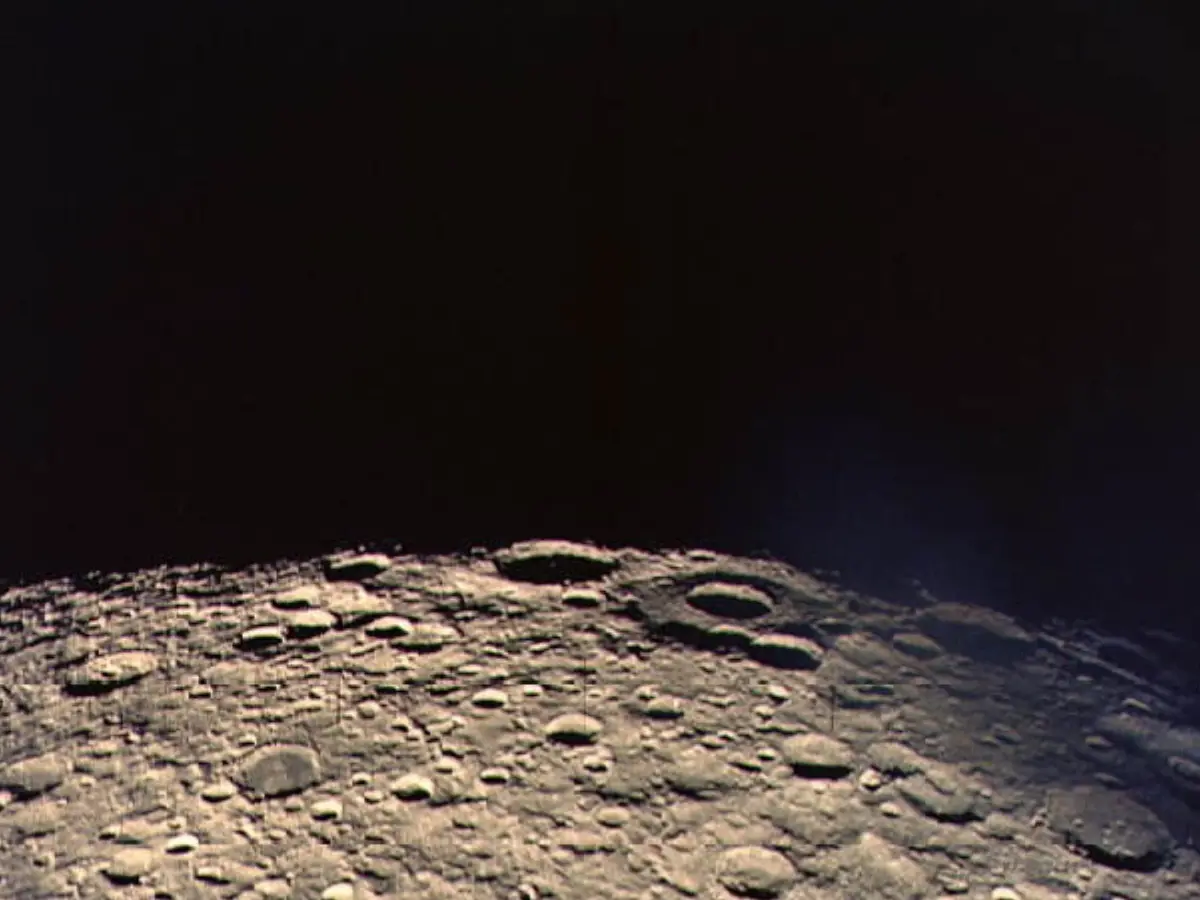
4.25bn years ago, an impact gave a dramatic makeover to the far side of Moon

&imwidth=600&imheight=450&format=webp&quality=medium "4.25bn years ago, an impact gave a dramatic makeover to the far side of Moon")
Moon's far side was shaped by a major impact event. Photograph: (NASA)
The Moon's far side and near side are different from each other. China's Chang'e-6 mission has revealed how an ancient impact changed the far side of the Moon, and how its composition varies from the near side.
China's Chang'e-6 mission brought back lunar samples from the Moon for the first time in 2024, and this regolith has now revealed something. Around 1,935.3 grams of lunar soil reached Earth in June of the year. Chinese scientists say that an analysis has shed light on the Moon's composition and geological history, and reveals the clear difference between the far and near sides. The researchers say that they finally know how a massive impact in the South Pole-Aitken Basin 4.25 billion years ago shaped the Moon's deep interior and reshaped the surface. NASA, ESA and China are exploring using this region as a potential building site since it has permanently shadowed regions (PSRs) that contain vast amounts of water ice. The latest findings can help provide crucial data in the quest to do so. Chinese scientists from the Institute of Geology and Geophysics (IGG) of the Chinese Academy of Sciences (CAS) studied the basalt samples returned by the Chang'e-6 lander.
They say that the impact not only created the basin, but also caused materials seated deep inside the moon to lose certain volatile elements. High-precision isotope analysis helped them detect minute variations in isotope ratios and showed what was left behind after the impact. On the Moon, impacts are what shape the surface over several years, contrary to the tectonic movements on Earth. They say that the impact altered the potassium isotope composition in the deep lunar mantle.
How loss of elements stopped volcanoes on Moon
The high-temperature environment had an impact on moderately volatile elements like potassium, zinc, and gallium. The extreme heat generated by the event created extreme conditions that led to the loss of the lighter potassium-39 isotope and the enrichment of the heavier potassium-41 isotope. Besides, this loss also suppressed volcanic activity on the Moon's far side.
They also noted that the samples obtained by the Chang'e-6 mission were different from those brought back by Apollo astronauts from the near-side of the Moon. The basalt sample on the far side had a higher proportion of the heavier potassium-41 isotope, which they say could have been caused by factors like cosmic rays, volcanic activity, and impactor deposition. Scientists now know that the two sides of the Moon had a different evolutionary histories.
Trending Stories
)
)
&im=FitAndFill=(700,400))
)
)
)
)
)
)
)
)
&im=FitAndFill=(700,400))
)
)
)
&im=FitAndFill=(700,400))
)
)
)
)
&im=FitAndFill=(700,400))
)
)
)
)
)
)
)
&im=FitAndFill=(700,400))
)
)
)

