

&imwidth=800&imheight=600&format=webp&quality=medium "The 'other Atlas' comet that should have died near the Sun turns GOLDEN")
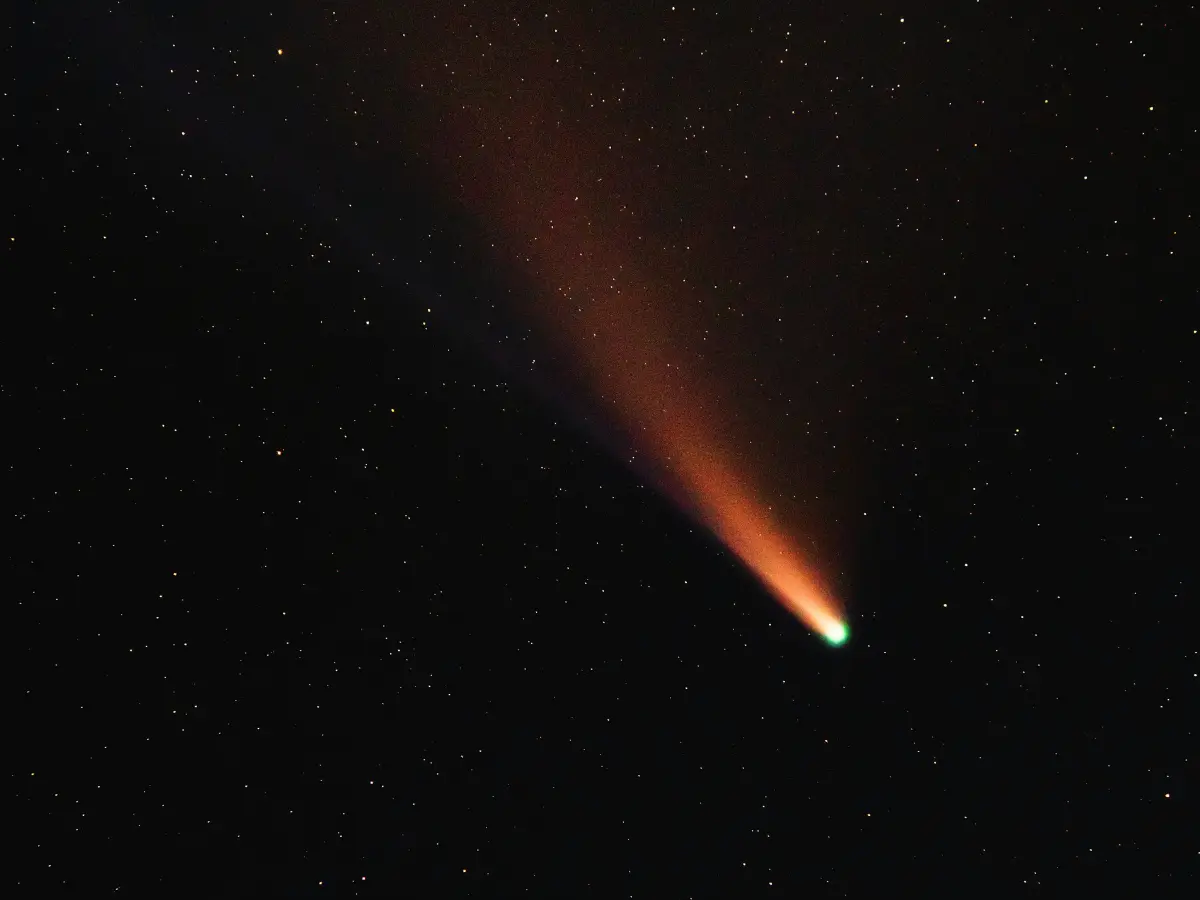
The Asteroid Terrestrial-impact Last Alert System (ATLAS) discovered a comet in May, which shouldn't have survived its trip to the Sun, but it is still around. C/2025 K1 (ATLAS) has turned into a spectacular golden ribbon following its encounter with the Sun. Dubbed the "other ATLAS", this comet has mainly been sidelined lately ever since 3I/ATLAS became the hottest commodity in space. While we were all busy wondering whether it was an "alien mothership", C/2025 K1 quietly made the trip to the Sun and only lost some of its portion. It made an extremely close encounter with our star, coming within 50 million kilometres on October 8. The gravitational pull of the Sun was expected to tear it to shreds, but that didn't happen. Meanwhile, on October 29, when 3I/ATLAS reached perihelion, astrophotographer Dan Bartlett took a photo of C/2025 K1 from June Lake in California, showing a distinct golden glow and a long tail. The solar winds seem to have boosted the tail to appear more flared.
Bartlett talked to Spaceweather.com about his observation. "This comet was not supposed to survive its October 8th perihelion, but it did," he said. It is now displaying "a red/brown/golden colour rarely seen in comets." Two other photographers in California and in Arizona also made similar observations about the comet, Live Science reported. Comets can change colour due to the presence of various chemicals. Typically, they are white since the sunlight reflected by them contains all wavelengths of visible light.
The green comets
The infamous "Devil comet" 12P/Pons-Brooks and C/2022 E3, also known as the "green comet", turned green because of either dicarbon or cyanide in their comas. 3I/ATLAS turned blue, which could be because of carbon monoxide or ammonia. But comets don't typically turn golden, which is the case with C/2025 K1 (ATLAS).
Trending Stories
&imwidth=180&imheight=135&format=webp&quality=medium)
Viral video shows cross falling on Colombia priest, no official confirmation | WATCH
&imwidth=180&imheight=135&format=webp&quality=medium)
Rafale Marine fighter begins flight trials in Goa ahead of Indian Navy induction
&imwidth=180&imheight=135&format=webp&quality=medium)
Ranbir Kapoor apologises for Dussehra speech slip, clarifies remark at Ramayana event
&imwidth=180&imheight=135&format=webp&quality=medium)
Meta slapped with $25 billion fine in New Mexico over Facebook data practices, company plans appeal
&imwidth=180&imheight=135&format=webp&quality=medium)
WATCH: Woman IPS officer fires several rounds of AK-47, ignites debate online
&imwidth=180&imheight=135&format=webp&quality=medium)
EU probes Booking.com under Digital Services Act
&imwidth=180&imheight=135&format=webp&quality=medium)
Pakistan signs another defence pact even as Makkah Alliance shows no teeth. This time, it's with Qatar, Indonesia, Turkey
&imwidth=180&imheight=135&format=webp&quality=medium)
Ilhan Omar breaks silence over alleged marriage to her brother; Trump thinks it's 'really good answer'
&imwidth=180&imheight=135&format=webp&quality=medium)
US-Iran war: Bibi, Trump gamble on new Iran war to save themselves in polls
&imwidth=180&imheight=135&format=webp&quality=medium)
From Agni-V to Project Kusha: How are India’s indigenous missile systems and defence shield reshaping modern warfare
&imwidth=180&imheight=135&format=webp&quality=medium)
Will Rohit and Kohli play ODI World Cup 2027? BCCI president Manhas says board 'not in a position to comment'
&imwidth=180&imheight=135&format=webp&quality=medium)
Why websites around the world are suddenly going offline? What you need to know about PHP
&imwidth=180&imheight=135&format=webp&quality=medium)
US midterms 2026: What polls and prediction markets indicate about Congress
&imwidth=180&imheight=135&format=webp&quality=medium)
'You are a dummy, you are a stupid person': Trump loses temper with CNN, ABC reporters after questions about Russia sanctions
&imwidth=180&imheight=135&format=webp&quality=medium)
China's dancing robot turns violent bodyguard, lifts cars and fights intruders - Watch
&imwidth=180&imheight=135&format=webp&quality=medium)
16-foot doomsday fish in Chile triggers fears that the next earthquake is coming
&imwidth=180&imheight=135&format=webp&quality=medium)
Are the US and Israel preparing for another major attack on Iran? Here's what report claims
&imwidth=180&imheight=135&format=webp&quality=medium)
Priyanka Chopra celebrates Dussehra 2026 with Nick Jonas and daughter Malti Marie | See pics
&im=FitAndFill=(700,400)&imwidth=180&imheight=135&format=webp&quality=medium)
New OTT releases this week (October 19-25, 2026): Gajab Raat to Chaar Yaar-8 titles to watch during Dussehra week on Netflix, Prime Video and more
&imwidth=180&imheight=135&format=webp&quality=medium)
‘I caution the president...’: Trump’s ex-press secretary warns after Zacharia’s exit
&imwidth=180&imheight=135&format=webp&quality=medium)
'Father of all bombs' vs 'mother of all bombs': Iran threatens US with new weapon as Trump hints at MOAB strike
&imwidth=180&imheight=135&format=webp&quality=medium)
Diljit Dosanjh's Oct 30 Delhi show hits roadblock, Delhi Police denies permission
&imwidth=180&imheight=135&format=webp&quality=medium)
Australia police arrest former national 100m champ Jake Doran for alleged child abuse
&imwidth=180&imheight=135&format=webp&quality=medium)
'Gyanu must go': CJP's Saurav Das, Ashutosh Ranka after release, despite Jantar Mantar protest undertaking
&imwidth=180&imheight=135&format=webp&quality=medium)
Kolkata airport: CISF detects ₹1.13 crore in US dollars hidden in bags of 2 Bangkok-bound passengers
&imwidth=180&imheight=135&format=webp&quality=medium)
Feds obtain DNA evidence that could prove Ilhan Omar married her brother: Report
&imwidth=180&imheight=135&format=webp&quality=medium)
US midterms 2026: Trump's approval rating hits record low as Democrats gain ground
Why did C/2025 K1 become golden?
Astronomer David Schleicher says that the comet lacks "carbon-bearing molecules, such as dicarbon, carbon monoxide and cyanide." Only two other comets are known to exhibit similar features, he says. He told Spaceweather.com that this absence has likely made it golden, although "we don't know exactly why" since it could have also been caused by the solar flyby or its relatively low ratio of gas to dust.
Also Read: Comet fragment travelling at 81,000 km/hr explodes over Portugal, a second one recorded nearby
C/2025 K1 has brightened to a magnitude of 9, but can't be seen with the naked eye. You will need a good pair of binoculars or a telescope to view the comet. Look towards the constellations Virgo and Leo in the eastern sky, and you can locate it somewhere in the middle. It will reach its closest point to Earth on November 25. Right now, it can be best viewed shortly before sunrise, according to Spaceweather.com.

