

&imwidth=800&imheight=600&format=webp&quality=medium "Race To Power | Trump’s Hormuz gambit: Can America make the world’s most important oil route obsolete?")
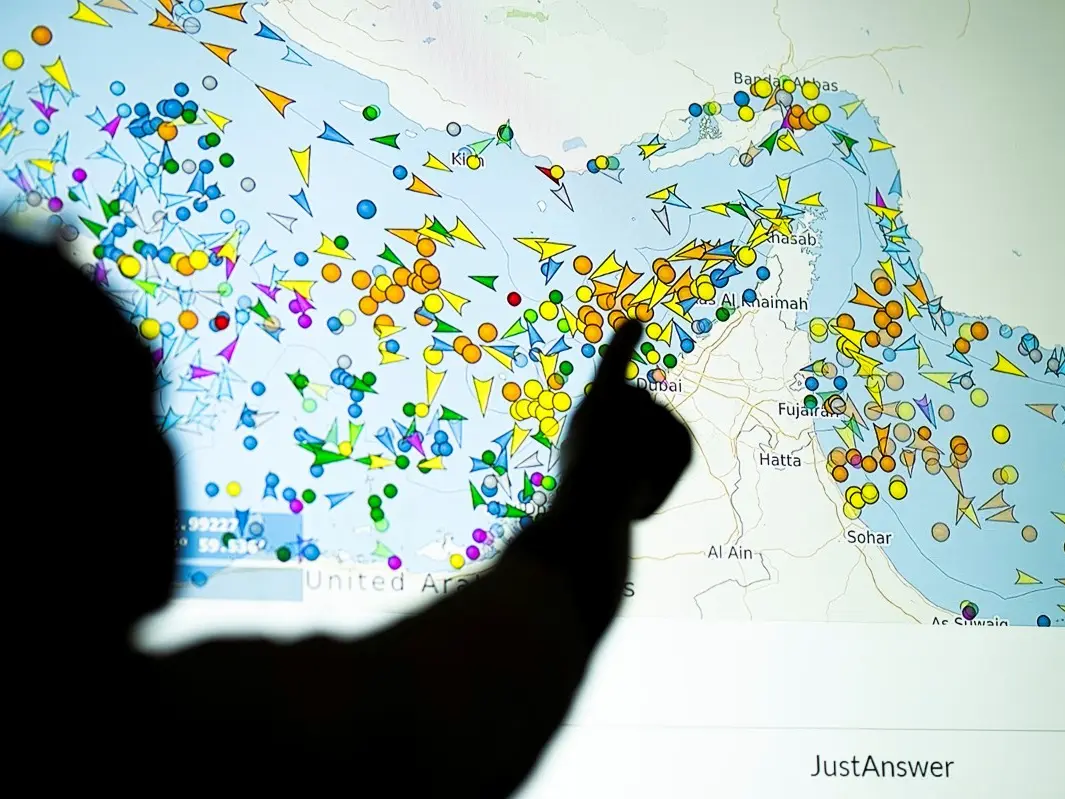
For decades, the Strait of Hormuz has been geography’s trump card in the global energy market. Now, the Trump administration is betting that pipelines, ports and political realignment can dramatically weaken that advantage.
The idea is audacious: instead of repeatedly fighting to keep Hormuz open, build enough alternative routes that closing it no longer holds the world economy hostage.
US Treasury Secretary Scott Bessent has put an extraordinary timeline on that ambition. He says that within two years, the Strait could become “irrelevant”, predicting that 50 to 70 percent of energy currently moving through it could eventually travel through underground pipelines instead. Secretary of State Marco Rubio has similarly argued that Iran’s use of Hormuz as a strategic chokepoint has strengthened the case for permanently restructuring regional energy routes.
And pieces of that alternative map already exist.
Saudi Arabia’s East-West Pipeline, or Petroline, carries crude from Abqaiq across the kingdom to Yanbu on the Red Sea. Its capacity has risen to as much as seven million barrels per day, and Riyadh is considering adding another one to two million barrels of capacity. The UAE, meanwhile, has its own route carrying crude from Abu Dhabi to Fujairah, outside Hormuz, and is working to expand that capacity.
But perhaps the most geopolitically significant piece of the puzzle runs through Iraq and Syria.
Trending Stories
&imwidth=180&imheight=135&format=webp&quality=medium)
4 killed, 19 critically injured in grass fire at Canada's largest military base
&imwidth=180&imheight=135&format=webp&quality=medium)
Flying car race: Alef Aeronautics welcomes Tesla Roadster '11 years' later, but are the two models the same?
&imwidth=180&imheight=135&format=webp&quality=medium)
Cattle feed found in biscuits of Indian company, FSSAI sends legal notice
&imwidth=180&imheight=135&format=webp&quality=medium)
Pujara says 'Samson and Vaibhav cannot be in Playing XI' for India on NZ tour
&imwidth=180&imheight=135&format=webp&quality=medium)
Tiger Shroff shows injuries after Juhu firing incident; Eknath Shinde says Mumbai won’t tolerate gang wars
&imwidth=180&imheight=135&format=webp&quality=medium)
Nobel laureate Machado, who dedicated prize to Trump, confirmed as Venezuela opposition leader
&imwidth=180&imheight=135&format=webp&quality=medium)
WATCH | iPhones, luxury perfumes floating in Hormuz? Iranian fishermen make bizarre discovery
&imwidth=180&imheight=135&format=webp&quality=medium)
'We feel like Mr India': Gujarat’s undercover SHE team guard garba nights at Navratri
&imwidth=180&imheight=135&format=webp&quality=medium)
US to review Russia sanctions waiver within 60 days as Rubio cites India’s ‘substantial’ Russian energy imports
&imwidth=180&imheight=135&format=webp&quality=medium)
Kylie Jenner makes Victoria’s Secret debut in $50 million diamond-encrusted design as Timothée Chalamet cheers
&im=FitAndFill=(700,400)&imwidth=180&imheight=135&format=webp&quality=medium)
5 technologies that could make the Tesla Roadster one of the most unusual cars ever built
&imwidth=180&imheight=135&format=webp&quality=medium)
Elon Musk features on Lucknow's 'anti-India' Ravan poster alongside Rahul Gandhi, Akhilesh
&im=FitAndFill=(700,400)&imwidth=180&imheight=135&format=webp&quality=medium)
New OTT releases this week (October 19-25, 2026): Gajab Raat to Chaar Yaar-8 titles to watch during Dussehra week on Netflix, Prime Video and more
&imwidth=180&imheight=135&format=webp&quality=medium)
Priest dies after crucifix falls on his head during livestreamed Mass in Ecuador | VIDEO
&imwidth=180&imheight=135&format=webp&quality=medium)
China responds to Trump's Press Secretary Katie Zacharia after toilet remark: 'Visit China more often'
&imwidth=180&imheight=135&format=webp&quality=medium)
No Ravindra Jadeja, Yashasvi Jaiswal in India’s 2027 ODI World Cup plans: Report
&imwidth=180&imheight=135&format=webp&quality=medium)
Lizard people? Ex-US Army sniper claims soldier killed by 'reptilian beings' in battle near Area 51
&im=FitAndFill=(700,400)&imwidth=180&imheight=135&format=webp&quality=medium)
Tesla Roadster engineering: The hidden hardware behind its flying demonstration
&imwidth=180&imheight=135&format=webp&quality=medium)
'Those who have destroyed must pay': Macron says France feels 'anger and shame' over protest violence
&imwidth=180&imheight=135&format=webp&quality=medium)
Anthropic’s public benefit plan: What its 5% share commitment means for AI’s future
&imwidth=180&imheight=135&format=webp&quality=medium)
Brendan Taylor overtakes Andy Flower to become Zimbabwe’s leading ODI run-scorer
&imwidth=180&imheight=135&format=webp&quality=medium)
Anirudh Ravichander-Kavya Maran wedding: Telangana CM reveals Chennai reception date
&imwidth=180&imheight=135&format=webp&quality=medium)
Researchers name newly discovered Andean plant after Argentina legend Lionel Messi
&imwidth=180&imheight=135&format=webp&quality=medium)
'It's a joy to see the makers bring it on such a grand scale': SS Rajamouli on Ramayana
&imwidth=180&imheight=135&format=webp&quality=medium)
Tiger Shroff attacked by three gunmen in Mumbai, actor safe, two injured
&imwidth=180&imheight=135&format=webp&quality=medium)
No Kings' Instagram suspended during early-voting campaign
&imwidth=180&imheight=135&format=webp&quality=medium)
Cattle-feed bran in biscuits, detergent in milk: FSSAI acts against 3 companies
&imwidth=180&imheight=135&format=webp&quality=medium)
MI5 is opening an AI threat centre, and OpenAI just told MPs the worst isn't over
&imwidth=180&imheight=135&format=webp&quality=medium)
Why France looks the most fragile in the G7 amid protests and budget deadlock
&imwidth=180&imheight=135&format=webp&quality=medium)
After Kennedy Center and reflecting pool disputes, Trump turns to Washington golf course plan amid legal battle
&imwidth=180&imheight=135&format=webp&quality=medium)
Lawrence Bishnoi gang claims responsibility for firing at Tiger Shroff over ties to Salman Khan
&imwidth=180&imheight=135&format=webp&quality=medium)
Saudi Arabia asks skyscraper employees to work from home amid Houthi threats
&imwidth=180&imheight=135&format=webp&quality=medium)
Putin wants joint meeting with Trump-Xi summit on Ukraine war, proposes talks alongside APEC: Report
&imwidth=180&imheight=135&format=webp&quality=medium)
India moves to buy 10,000 more AI chips for a national compute pool open to startups
&imwidth=180&imheight=135&format=webp&quality=medium)
NFl 2026/27 - Saints vs Steelers to go ahead in Paris next week despite protest
Washington is backing plans for new or revived pipeline infrastructure capable of carrying Iraqi crude westwards towards Syria’s Mediterranean coast. A proposed Basra-to-Baniyas corridor could eventually transport around two million barrels per day, giving Iraqi oil a route to global markets without entering Hormuz. Syria, once economically isolated, is consequently pitching itself as a new bridge between Gulf energy producers and the Mediterranean.
The strategy would amount to a dramatic rewiring of the Middle East’s energy architecture.
Before the Iran war, roughly 15 million barrels of Persian Gulf oil passed through Hormuz every day. Projects now being developed or discussed could provide another 7.3 million barrels per day of bypass capacity by the end of 2028. Analysts estimate that could eventually allow around 60 percent of the Gulf's pre-war oil exports to avoid Hormuz when necessary.
Yet making Hormuz less important is very different from making it obsolete.
Pipelines cost billions, cross multiple borders and require years of construction. They also create fixed targets vulnerable to missiles, drones and sabotage. Saudi Arabia's Petroline itself was attacked by Houthi drones in 2019. And moving Saudi crude to Yanbu merely introduces another potential chokepoint for Asian-bound cargoes: Bab el-Mandeb, where Houthi attacks have already demonstrated the vulnerability of Red Sea shipping.
Then there is LNG.
Pipelines carrying crude cannot simply solve Qatar's dependence on maritime LNG exports. Before the war, roughly one-fifth of global LNG trade passed through Hormuz, making natural gas one of the biggest obstacles to any claim that the strait can truly become irrelevant.
And therein lies the contradiction in Washington's messaging.
President Donald Trump only this week floated renaming the waterway the “Trump Strait”, while declaring it under American control. Yet his own administration is simultaneously championing a future in which the same strait matters dramatically less.
One message celebrates controlling Hormuz. The other seeks to escape it.
The more realistic objective, therefore, may not be to kill the Strait of Hormuz but to kill its monopoly.
Saudi Petroline, Fujairah, Baniyas and potentially new corridors through Turkey and Jordan could give Gulf producers something they have historically lacked: options. That would dilute Tehran's ability to turn geography into economic leverage and fundamentally alter the strategic balance of the Gulf.
But there is no risk-free route out of the Middle East.
Bypassing Hormuz could simply move the danger — from Iranian waters to vulnerable pipelines, from the Persian Gulf to the Red Sea, and from one geopolitical chokepoint to another.
Washington may be trying to redraw the world's energy map.
Geography, however, has not surrendered yet.