

&imwidth=800&imheight=600&format=webp&quality=medium "The Verdict | India’s inflation shock: A growing economy, but who pays the price?")
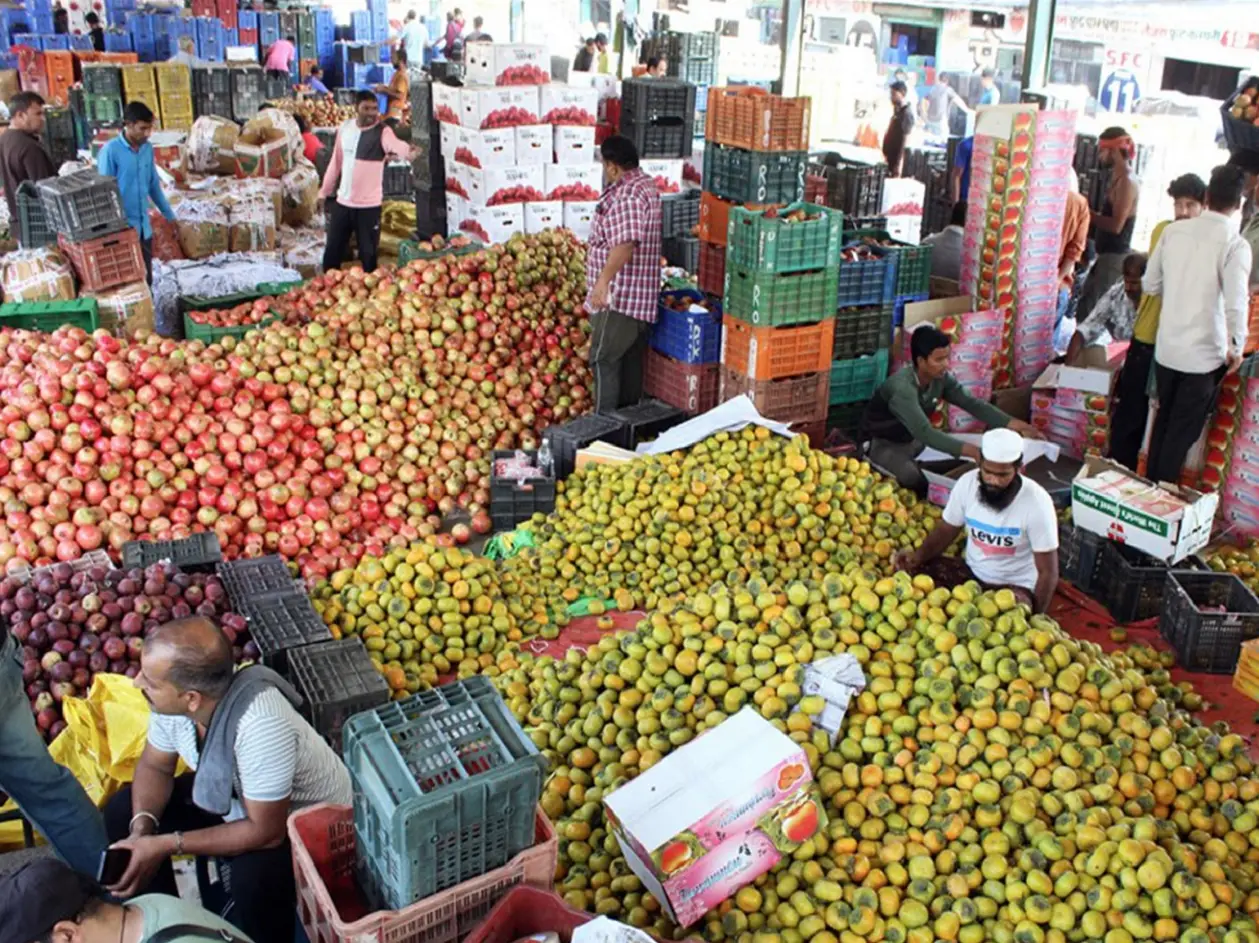
India's wholesale inflation has surged to 11.39 percent, exposing the country's vulnerability to rising energy prices, international conflict and mounting production costs. The larger question is whether India's economic resilience can protect households from a global crisis they did not create.
India's economy continues to demonstrate considerable growth. But beneath the headline indicators, a different economic challenge is emerging.
Wholesale inflation accelerated to 11.39 percent in September 2026, up from 9.92 percent in August, according to government data released on Wednesday.
The increase exceeded economists' expectations and marked the highest reading under the country's new wholesale inflation series.
The figures reveal mounting pressure across energy, food and manufacturing, raising concerns about how much of the increase businesses can absorb before passing additional costs to consumers.
The energy shock behind the numbers
Trending Stories
&imwidth=180&imheight=135&format=webp&quality=medium)
China's counter-surveillance industry booms amid heightened espionage fears | Gravitas
&im=FitAndFill=(700,400)&imwidth=180&imheight=135&format=webp&quality=medium)
Navratri 2026: 9 days, 9 forms of Goddess Durga and 9 colours- Check the complete list
&imwidth=180&imheight=135&format=webp&quality=medium)
Trump accuses Houthis of driving up oil prices before US midterms, warns of consequences
&imwidth=180&imheight=135&format=webp&quality=medium)
Russian woman and Bihar boy's love story goes viral after she reaches India to marry him
&imwidth=180&imheight=135&format=webp&quality=medium)
US Midterms 2026: In Alaska, cost-of-living anxiety meets strangest ballot in high-stakes Senate race
&imwidth=180&imheight=135&format=webp&quality=medium)
Arijit Singh 9-city India stadium tour to start from January: Check venue and ticket prices
&imwidth=180&imheight=135&format=webp&quality=medium)
F1 set to return to Africa for first time since 1993
&imwidth=180&imheight=135&format=webp&quality=medium)
'Don't ever mess with nature!': Trump’s tiger attack post triggers social media backlash as victim's family issues heartbreaking tribute
&imwidth=180&imheight=135&format=webp&quality=medium)
CMs Vijay-Naidu meet in Vijayawada, discuss water sharing, river-linking
&imwidth=180&imheight=135&format=webp&quality=medium)
Air India Flight from Frankfurt diverted to Jaipur after hijack alert, probe on
&imwidth=180&imheight=135&format=webp&quality=medium)
1,500 drones illuminate Mumbai sky as Cordelia Cruises unveils second ship, Cordelia Sky
&imwidth=180&imheight=135&format=webp&quality=medium)
Delhi Police arrest Cockroach Janta Party's Saurav Das, Ashutosh Ranka, Ajinkya Shinde in Jantar Mantar case, to be produced before court
&imwidth=180&imheight=135&format=webp&quality=medium)
Pakistan to chair UN-backed global Borrowers’ Platform as its own debt burden mounts, triggers sarcastic reactions on social media
&imwidth=180&imheight=135&format=webp&quality=medium)
Nobel Peace Prize winner Navi Pillay calls on US to 'get back to' being defender of human rights
&imwidth=180&imheight=135&format=webp&quality=medium)
France accuses Musk of ‘online harassment’ of European leaders, warns of poll interference
&imwidth=180&imheight=135&format=webp&quality=medium)
'Turn approver, resign, we'll forgive you': Rahul Gandhi claims receiving messages from CEC Gyanesh Kumar
&imwidth=180&imheight=135&format=webp&quality=medium)
MI5 chief warns Russia is UK’s ‘aggressor number one’ as Iran and AI threats grow
&imwidth=180&imheight=135&format=webp&quality=medium)
At least 80 newborns die at Madhya Pradesh Hospital over six months, BJP MLA demands probe
&imwidth=180&imheight=135&format=webp&quality=medium)
Trump reconsidering calling off Nidal Hasan's execution livestream. Here's why
&imwidth=180&imheight=135&format=webp&quality=medium)
‘My president, I mean my husband’: Trump's new press secretary Katie Zacharia's first briefing goes off the rails in 14 minutes
&imwidth=180&imheight=135&format=webp&quality=medium)
‘How many people did she illegally bring from Somalia?’ Trump targets Ilhan Omar, questions her net worth
&imwidth=180&imheight=135&format=webp&quality=medium)
Marco Rubio to visit India next week, focus on energy cooperation and strategic ties
&imwidth=180&imheight=135&format=webp&quality=medium)
US politicians mistakenly use Indian, Russian warship images for Navy's birthday posts
&imwidth=180&imheight=135&format=webp&quality=medium)
'Ouch!!! That must hurt': Kangana Ranaut hails Kamal Haasan's sharp reply to Elon Musk over Starlink row
&imwidth=180&imheight=135&format=webp&quality=medium)
Girl 'dead' for 8 hours wakes up at her own funeral, dad insists she wasn't breathing
&imwidth=180&imheight=135&format=webp&quality=medium)
Sidhu Moose Wala’s younger brother wins hearts by recreating late singer’s signature move at Toronto Hologram Show
&imwidth=180&imheight=135&format=webp&quality=medium)
UK school ditches technology, shifts from screen to pen and paper for learning
&imwidth=180&imheight=135&format=webp&quality=medium)
Durga Puja 2026: Kolkata roads get a splash of colours
&im=FitAndFill=(700,400)&imwidth=180&imheight=135&format=webp&quality=medium)
New OTT releases this week (October 12-18, 2026): Sacrifice, Koffee with Karan S9, Roadies Rebirth- 6 titles coming on Netflix, JioHotstar and more
&imwidth=180&imheight=135&format=webp&quality=medium)
Inside Aneet Padda's 24th birthday bash with rumoured boyfriend Ahaan Panday and Alia Bhatt
&imwidth=180&imheight=135&format=webp&quality=medium)
New Cold War: Why is China buying more gold? Explained
&imwidth=180&imheight=135&format=webp&quality=medium)
Netanyahu wants to join Saudi's war on Houthis, but Crown Prince denies: Report
&imwidth=180&imheight=135&format=webp&quality=medium)
Anupam Kher joins Ranbir Kapoor's Ramayana as Jatayu, new poster unveiled
&imwidth=180&imheight=135&format=webp&quality=medium)
Measles kills again: 6 dead in Pennsylvania as America faces its worst outbreak in decades | Gravitas
&imwidth=180&imheight=135&format=webp&quality=medium)
Cornell University suspends fraternity parties over 2024 gang rape allegations
Perhaps the most striking figure is the 57.32 percent annual increase in wholesale crude petroleum and natural gas prices.
Inflation in the broader fuel and power category reached 25.85 percent, reflecting the consequences of persistent disruption in global energy markets.
The conflict involving Iran has contributed to uncertainty over energy supplies, while elevated international crude prices have increased costs for oil-importing economies.
India is particularly exposed because of its dependence on imported crude.
A rise in international oil prices does not remain confined to the energy sector.
It can increase the cost of transporting goods, manufacturing products, operating agricultural machinery and distributing food.
In an interconnected economy, expensive energy can gradually become expensive everything.
When wholesale pressure reaches households
Wholesale inflation and retail inflation measure different stages of the economy.
The Wholesale Price Index tracks price changes at the wholesale level, while the Consumer Price Index measures prices paid by households.
That distinction matters.
An 11.39 percent increase in wholesale prices does not mean every Indian household is paying 11.39 percent more for its purchases.
Nevertheless, persistent wholesale price increases can create pressure on businesses to raise retail prices.
India's retail inflation has already accelerated to 5.54 percent in September, approaching the Reserve Bank of India's upper tolerance threshold of 6 percent.
Wholesale food inflation has also risen to 8.66 percent.
For families, food and energy costs are particularly significant because they account for essential spending that cannot easily be postponed.
Higher prices can reduce disposable income and force households to reconsider other expenses.
The burden can be especially difficult for lower-income consumers, whose budgets have less room to absorb unexpected increases.
The government's difficult balancing act
India's policymakers face competing priorities.
Protecting consumers from the full impact of global energy prices may help limit immediate inflation.
But such measures can impose financial costs on fuel retailers or the government, depending on how they are structured.
Allowing prices to adjust more freely could reduce those pressures, but risks transferring more of the burden to consumers.
Monetary policy presents another dilemma.
The Reserve Bank of India has raised its benchmark policy rate to 5.50 percent as inflationary pressures broaden.
Higher interest rates can help restrain inflation by moderating demand and inflation expectations.
However, borrowing can also become more expensive for businesses and households.
That creates difficult choices for companies planning investments and consumers considering major purchases.
India's growth story faces a new test
India's economic growth remains an important source of strength.
Domestic demand, investment, infrastructure development and a large consumer market provide resilience against international uncertainty.
But strong growth does not eliminate vulnerability to imported inflation.
Manufactured products recorded wholesale inflation of 9.76 percent in September, suggesting that higher costs are spreading beyond volatile food and energy categories.
Basic metals, chemicals, textiles and electrical equipment are among the sectors experiencing increased price pressures.
These are important inputs across manufacturing and construction.
If higher production costs persist, businesses may face narrower profit margins, higher selling prices or difficult decisions about investment and employment.
The economic consequences therefore extend beyond the immediate inflation figures.
Can India shield itself from global instability?
India's energy security has long required a careful balance between affordability, supply reliability and international relationships.
The latest inflation figures reinforce the importance of that challenge.
Diversifying energy sources, strengthening domestic infrastructure and improving efficiency can reduce exposure to future shocks.
But those measures take time.
In the immediate term, policymakers must respond to an international environment in which energy supplies, geopolitical tensions and financial conditions remain unpredictable.
There are limits to what domestic policy alone can accomplish when the original shock comes from outside national borders.
That makes effective crisis management essential.
The Verdict
India's latest wholesale inflation figures are not evidence that its growth story has ended.
They are a warning that economic growth and economic security are not the same thing.
A country can expand rapidly while households face increasing pressure from essential expenses.
The challenge for the government and the Reserve Bank is to prevent temporary international disruptions from developing into persistent domestic inflation.
The challenge for businesses is to manage higher costs without undermining investment and employment.
And for households, the concern is simpler: how much further will everyday expenses rise?
India's economic strength will be measured not only by its growth rate, but by its ability to withstand external shocks without leaving ordinary people to absorb an unsustainable burden.
Because a growing economy is important. But making that growth count for its people is what matters most.