

&imwidth=800&imheight=600&format=webp&quality=medium "The Trump Show: A $5,000 promise, a war without an end and a trillion-dollar question | The Verdict")
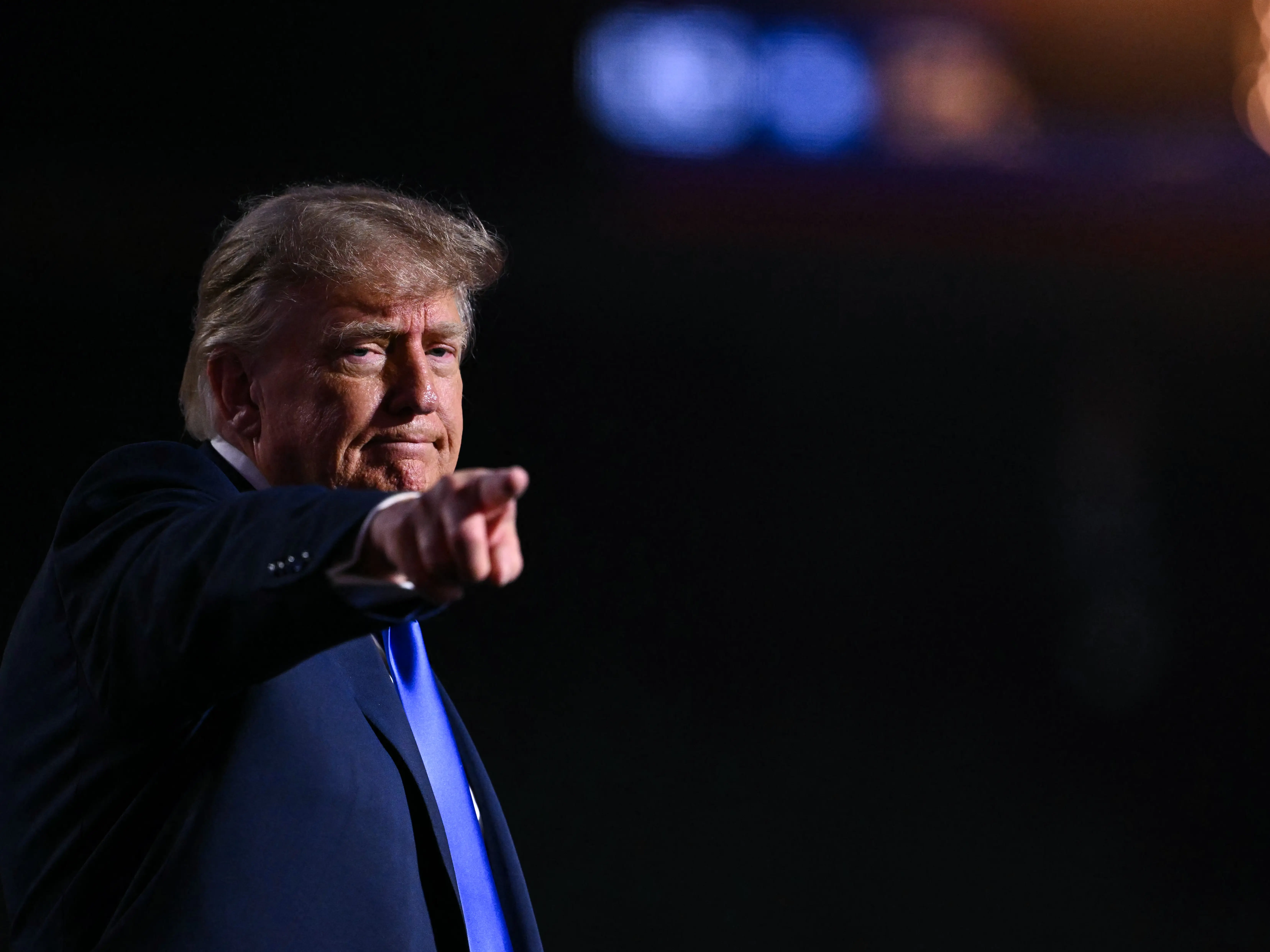
Donald Trump wants Americans to believe several things at once.
The Iran war — or “military conflict,” as he has also called it — will end immediately after the November midterms. Iran cannot hold out much longer. Republicans must retain Congress. And if they do, every American adult could receive a $5,000 “Trump dividend.”
There is only one problem.
The arithmetic, the battlefield and even some of Trump's own advisers appear to be telling a different story.
A war with two deadlines
Trump says Iran will not be able to sustain its resistance beyond the midterm elections.
Trending Stories
&imwidth=180&imheight=135&format=webp&quality=medium)
IND-W vs ZIM-W, 2nd ODI: Harmanpreet Kaur, Vaishnavi Sharma star in India's 121-run win
&im=FitAndFill=(700,400)&imwidth=180&imheight=135&format=webp&quality=medium)
What is the real meaning behind Pete Hegseth's tattoos?
&imwidth=180&imheight=135&format=webp&quality=medium)
Telangana unveils AI avatar of IT minister D Sridhar Babu at Hyderabad DevFest 2026
&imwidth=180&imheight=135&format=webp&quality=medium)
'This is humiliation': Vijay Deverakonda under fire over controversial marriage proposal remark on Koffee With Karan 9
&im=FitAndFill=(700,400)&imwidth=180&imheight=135&format=webp&quality=medium)
Armoured vehicles vs main battle tanks: What is the real difference?
&imwidth=180&imheight=135&format=webp&quality=medium)
Pahalgam, Gulmarg record season’s first sub-zero temperatures as winter chill intensifies in Kashmir
&imwidth=180&imheight=135&format=webp&quality=medium)
Govinda breaks silence on divorce rumours with Sunita Ahuja, calls her his first love
&imwidth=180&imheight=135&format=webp&quality=medium)
Indian embassy warns nationals in Saudi Arabia against filming missile strikes
&imwidth=180&imheight=135&format=webp&quality=medium)
FIR filed against opposition MPs for ‘trespassing’ amid Jamia Millia students’ protest
&imwidth=180&imheight=135&format=webp&quality=medium)
Can Putin cheat death? All about his daughter’s billion-dollar quest for immortality
&im=FitAndFill=(700,400)&imwidth=180&imheight=135&format=webp&quality=medium)
How do army night-vision systems see in almost complete darkness?
&imwidth=180&imheight=135&format=webp&quality=medium)
Saudi says debris fell in Mecca, Medina after missile interceptions; Houthis deny targeting holy cities
&imwidth=180&imheight=135&format=webp&quality=medium)
Netanyahu warns Israelis of ‘existential threat’ from Iran, posts AI image of nuclear strike
&imwidth=180&imheight=135&format=webp&quality=medium)
Trump revives ‘shithouse countries’ slur, targets Abdul El-Sayed and Ilhan Omar at Georgia rally
&imwidth=180&imheight=135&format=webp&quality=medium)
Pakistan airline PIA unveils new crew uniforms, faces online criticism
&imwidth=180&imheight=135&format=webp&quality=medium)
'Already tired of his 9-to-5': Baby born with a moustache becomes internet sensation, video goes viral | Watch
&imwidth=180&imheight=135&format=webp&quality=medium)
Bigg Boss 20: Rohit Shetty indirectly reacts to firing at his Mumbai home
&imwidth=180&imheight=135&format=webp&quality=medium)
Tiger Shroff’s team calls report on actor’s reaction to Mumbai attack ‘completely untrue’
&imwidth=180&imheight=135&format=webp&quality=medium)
Russia-Ukraine drone attacks kill 6, injure 31 across both countries
&imwidth=180&imheight=135&format=webp&quality=medium)
'I promised Gautam & Kotak Sir that...': Tilak Varma opens up on match-winning mindset against NZ
&imwidth=180&imheight=135&format=webp&quality=medium)
‘Saddam Hussein opened a cheesecake factory’: Obama mocks Trump’s White House renovations; defends Abdul El-Sayed
&imwidth=180&imheight=135&format=webp&quality=medium)
Anthropic's leaked AI bill would act only at 50 deaths or $1bn in harm
&imwidth=180&imheight=135&format=webp&quality=medium)
China's dancing robot turns violent bodyguard, lifts cars and fights intruders - Watch
&im=FitAndFill=(700,400)&imwidth=180&imheight=135&format=webp&quality=medium)
Why do some fighter jets have two engines while others use one?
&imwidth=180&imheight=135&format=webp&quality=medium)
Byeon Woo Seok makes first public appearance as Sung Jin Woo for Solo Leveling at Netflix Korea’s 10th anniversary event
&im=FitAndFill=(700,400)&imwidth=180&imheight=135&format=webp&quality=medium)
New Friday OTT releases (October 23, 2026): Gajab Raat, Dorothy, Chaar Yaar- Watch these 6 new movies and TV shows on Netflix, Prime Video and more
&imwidth=180&imheight=135&format=webp&quality=medium)
'Clear overkill': Putin rejects claims Russia is behind mass protests in Europe
&imwidth=180&imheight=135&format=webp&quality=medium)
'If it was up to me, it wouldn't have ended like this': James Anderson opens up on Lancashire exit
&imwidth=180&imheight=135&format=webp&quality=medium)
‘Do I make a deal or finish them off’: What Trump said on resuming Iran strikes
&imwidth=180&imheight=135&format=webp&quality=medium)
Javed Akhtar backs Rashmika Mandanna after Koffee With Karan 9 accent trolling, calls out ‘linguistic superiority’
&imwidth=180&imheight=135&format=webp&quality=medium)
WATCH | Langur walks into Odisha repair shop, hugs shopkeeper; internet reacts to heartwarming video
&imwidth=180&imheight=135&format=webp&quality=medium)
Nagpur man fails to pay rent, allegedly prints fake Rs 500 notes worth Rs 37 lakh
&imwidth=180&imheight=135&format=webp&quality=medium)
Venezuelan opposition leader María Machado returns home after over 10 months in exile
&imwidth=180&imheight=135&format=webp&quality=medium)
‘Modi ka baap bhi jayega,’ Kharge loses cool at party event in Patna; BJP slams him
&imwidth=180&imheight=135&format=webp&quality=medium)
Why Europe’s protests are about more than austerity and rising costs
&imwidth=180&imheight=135&format=webp&quality=medium)
Kim Kardashian, Kris Jenner turn heads with Bold looks at All’s Fair season 2 premiere in Rome
Yet the Wall Street Journal reports that senior advisers including Vice President JD Vance and Secretary of State Marco Rubio have privately discussed with Trump the possibility that Tehran could withstand American pressure through the remainder of his presidency — potentially beyond January 2029.
That is not a minor difference.
It is the difference between weeks and years.
It also exposes the strange ambiguity surrounding America's confrontation with Iran. Trump himself has played down the terminology, describing it as a “military conflict” and “small potatoes” for the United States.
But terminology cannot alter consequences.
Americans are dead. Military assets are deployed. Oil markets have been disrupted. Fuel prices have become a political liability. And Washington is threatening further strikes against Iran.
Call it a war or call it a military conflict. Americans ultimately experience its consequences through lives, prices and public money.
Welcome to the Trump show
Then came Dallas.
Republicans staged their first-ever midterm convention, an unusual spectacle designed to energise a party facing a difficult November election.
Trump made clear who the central character was.
“I’m asking you to pretend that I’m on the ballot,” he told supporters.
The convention became so centred on the president that Republican National Committee Chairman Joe Gruters informally called it “Trumpapalooza.”
But the spectacle also exposed the risk of building an entire congressional election around one man.
Several Republicans facing difficult races stayed away. Trump described the arena as packed, although reporters observed largely empty sections in the upper levels. Online viewership was modest.
The show was enormous.
Whether the enthusiasm matched it is another question.
$5,000 for a Republican victory
Then came Trump's biggest promise.
If Republicans retain the House and Senate, Trump says he will issue a $5,000 dividend to every American adult.
It is an extraordinary proposition.
With roughly 270 million American adults, distributing $5,000 to each would cost approximately $1.35 trillion.
And that follows Trump's earlier proposal for a $2,000 tariff dividend — another cash promise that never materialised.
Critics immediately asked the obvious question: is promising voters money if your party wins effectively buying political support?
Legally, the answer is more complicated than the accusation. The proposed payment is not directly conditioned on an individual casting a Republican vote, and any actual distribution would require congressional approval.
Politically, however, the optics are extraordinary.
Vote Republican, Trump says, and there could be $5,000 waiting on the other side.
But where does $1.35 trillion come from?
That is the question the spectacle could not answer.
The United States is already running enormous annual deficits and carrying a colossal national debt.
American households remain concerned about affordability. The Iran conflict has put additional pressure on energy prices. Tariffs have created their own costs.
Trump's answer to economic anxiety is now another enormous cheque.
But governments cannot create $1.35 trillion without consequences.
Either the money must come from additional revenue, spending cuts, borrowing — or some combination of all three.
A dividend without a credible funding mechanism is not an economic programme.
It is a promise.
The Democrat at the Republican convention
There was another extraordinary moment in Dallas.
Democratic Senator John Fetterman appeared by video to introduce Republican Senator Dave McCormick, describing him as a friend and promising cooperation with Trump to protect Pennsylvania's steel industry.
For Democrats, the optics were uncomfortable.
But suggestions that Fetterman had somehow been “bought” go beyond the available evidence. He subsequently reaffirmed that he remains a Democrat.
What his appearance demonstrated instead was something more politically interesting: the ideological fractures inside America's parties are becoming increasingly difficult to conceal.
And then there is Venezuela
Behind the spectacle and the cheques sits another extraordinary economic gamble.
Washington has taken a 35% position, structured through warrants, in a Venezuelan oil venture as the Trump administration attempts to turn access to Venezuela's enormous petroleum reserves into an American strategic asset.
Trump has promoted the Venezuelan arrangement as a route toward greater energy security and lower fuel prices.
The attraction is obvious.
A prolonged confrontation with Iran threatens energy flows through the Gulf. Venezuela possesses the world's largest proven oil reserves. Washington therefore has powerful incentives to diversify where its energy security comes from.
But this too raises questions.
The Venezuelan arrangement has already attracted scrutiny over its structure, legality and the extraordinary involvement of the Pentagon in a commercial oil venture.
America is therefore fighting — or conducting a “military conflict” — against one major oil power while simultaneously deepening its economic leverage over another.
That may prove strategic foresight.
It may also demonstrate just how complicated and expensive America's new geopolitical order is becoming.
Reality versus spectacle
This was ultimately the contradiction running through Dallas.
Trump spoke about American greatness while voters worry about affordability.
He promised $5,000 cheques while the government is already deeply in deficit.
He predicted an imminent end to the Iran conflict while his own advisers reportedly contemplate a struggle lasting years.
He asked Americans to pretend that his name is on the ballot.
Perhaps that was the most revealing statement of the convention.
Because November increasingly appears to be about Donald Trump — his war, his economy, his promises and his political survival.
But Americans cannot pay grocery bills with political theatre.
They cannot fill their tanks with applause.
And before Washington writes a $1.35 trillion cheque, voters are entitled to ask the simplest question of all:
Who is going to pay for it?