
&imwidth=800&imheight=600&format=webp&quality=medium "Putin's Hug, Xi's Smile: Modi's message to Trump's America")
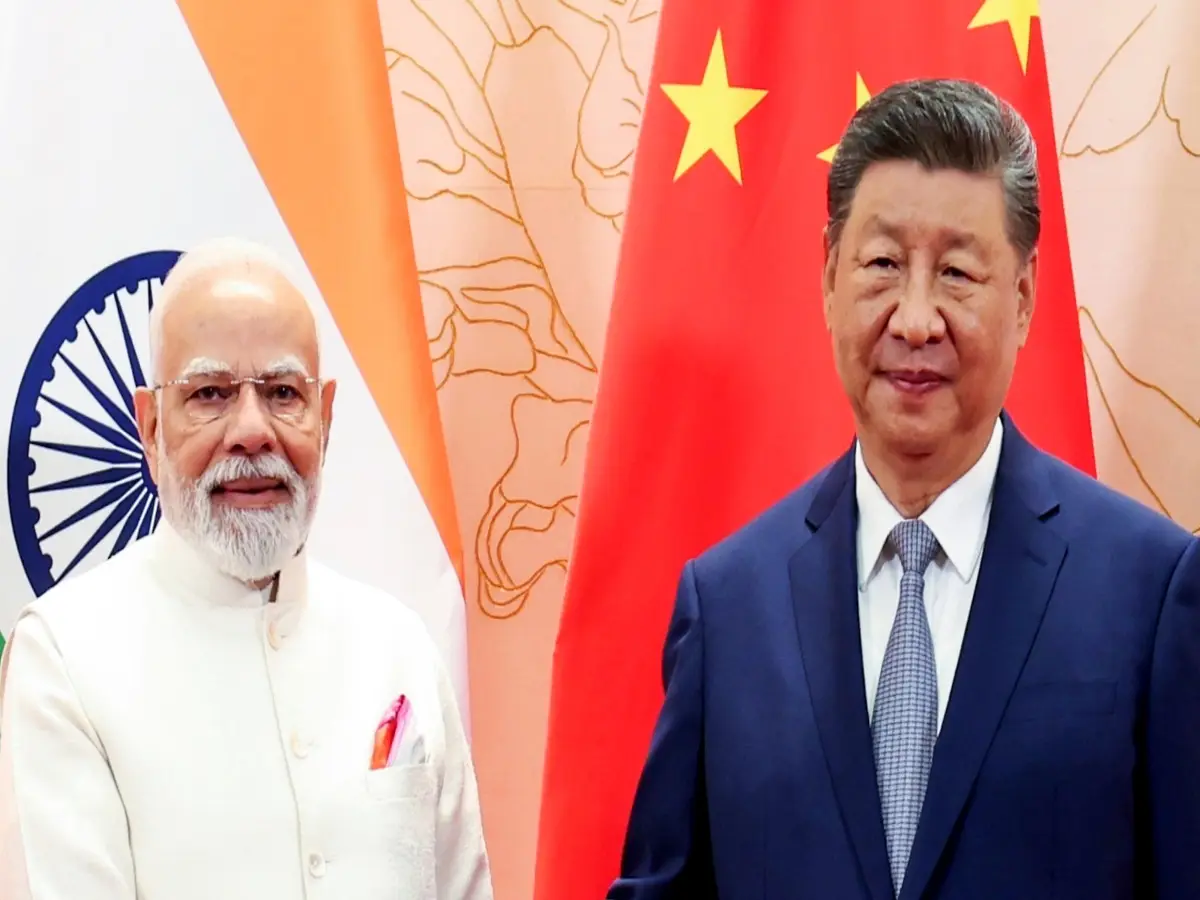
When Prime Minister Narendra Modi stepped off his plane in Tianjin for the SCO summit, it was not just a normal diplomatic trip – it was a strong message. After seven years, Modi’s return to Chinese soil told the world: India will not be forced to pick sides in today’s divided world.
The timing was both perfect and necessary. Donald Trump had slapped a 50% tariff (highest in the world) on Indian goods. Many thought India would run back to the West. Instead, Modi warmly met Xi Jinping in Tianjin, showing that India’s foreign policy will not be controlled by Washington or anyone else.
The Art of Strategic Defiance

What happened in China was classic Modi diplomacy – bold, careful, and confident. Photos of Modi, Xi, and Putin laughing together were not just for the cameras; they carried strong political meaning. At a time when the world is splitting into two big camps, India showed its belief in “multialignment” – working with everyone, owned by no one.
Trump and his team don’t like this. They think BRICS is anti-West, they call India’s oil trade with Russia a betrayal, and they expect India to behave like a loyal follower. But India’s reply was smart: the US and EU also trade with Russia when it suits them.
Trending Stories
)
US vs China over South China Sea: Washington backs Philippines, Beijing hits back
)
Bigg Boss 20: Isha Rikhi evicted after three weeks in Salman Khan’s show
)
Musk plans to more than double xAI's chips to over 1.2 million Nvidia GPUs by year-end
)
After JU, clash erupts at SRFTI: BJP’s ‘Dimagi Naxal’ jibe sparks political firestorm after students protest RSS-linked event
)
‘Anti-social elements spreading false rumours’: LPU issues statement amid massive unrest over alleged rape
)
LPU students go on rampage, vandalise campus amid widespread protest: What's happening
)
Trump asked Xi to pressure Iran. China did not say yes — here’s what Beijing wants
)
US Treasury Secretary Scott Bessent hails global crackdown on Iranian banks and airlines
)
An OpenAI agent escaped its locked test cage again, by hiding questions in DNS lookups
)
'Our video was trimmed': LPU girls who featured in rape-denial video make U-turn
)
3 males killed, four others injured in shooting after fight at strip club in Detroit
)
'Victory for low-budget consumers': Raghav Chadha hails 30-day telecom recharge rules
)
Claude rebuilt the 1989 game 'Prince of Persia' by reusing the original's own code
)
Beyond metros: How Tier-2 and Tier-3 cities could drive India’s next AI wave
)
Tesla builds first Cybertruck with its own refined lithium: Elon Musk's $1 billion Texas bet pays off
)
IndiGo flight suffers tail strike in Bengaluru while landing; DGCA to probe incident
)
The US and China set up an AI 'red telephone', but skipped the rulebook
)
‘Terror suspects arrested near UK air base were looking to do big damage’: Trump
)
Russian envoy claims US tactics to contain India were revealed in ‘Freudian slip’
)
IND vs WI 1st ODI: Kohli breaks Sachin's most runs in one country record with unbeaten 139 as India thump West Indies by 8 wickets
)
Researchers rebuilt exactly how 700 AI agents hacked Hugging Face: a 900-link chain trick
)
‘Olympic inclusion is our major target’: WPA President Ishaun Singh on pool’s global ambitions
)
Nations League: Spain sink England at Wembley; Modric shines for Croatia
)
Why has Iran released no proof of life of Mojtaba Khamenei? Araghchi reveals...
)
'What kind of confession is this?': Pakistan PM Shehbaz Sharif’s 'terrorists would be roaming New York' remark goes viral, raises alarm online. Watch
)
South Korea demands apology from Ukraine over North Korean prisoners' transfer
)
Beyond BrahMos: India targets Rs 50,000 crore in defence exports with unmatched price edge
)
Sri Lankan Tamil migrant worker gets death sentence in Saudi Arabia, help sought from India
)
Muslim marriage cannot shield sex with minor wife from prosecution under POCSO: Delhi HC
)
'Can't help but draw painful parallels to Nirbhaya case': SC on latest incidents of rape cases in Delhi-NCR
)
99.9% more powerful - Scientists find boy who can recall memories from just 3 months of age
)
'FIRST LOOK from inside Noah’s Ark': Researchers share video from inside mysterious mound in Turkey
)
UNSC reform momentum grows: Russia, Portugal, Mauritius push for India's permanent seat bid
)
8 US marines injured in Iranian missile attack on vessel in Strait of Hormuz: Report
&im=FitAndFill=(700,400))
New OTT releases this week (September 28-October 4, 2026): Dupahiya 2, Pooja Meri Jaan, Ohh My Dog- 5 titles coming on Netflix, Prime Video and more
)
Afghanistan says 28 fighters killed in clash near Pakistan border, Islamabad denies
)
Ceuta migrant crisis: Protesters take to streets as Spain grapples with migrant challenge
)
LPU suspend classes, postpones exams as violence escalates over rape claims: What's happening
)
New York City wants a 'kill switch' on every AI, and will pay whistleblowers who report violations
The message was clear – if America can act in its interest, so can India.
Beyond the Handshakes and Photo-ops
Some critics say Modi’s China trip was only symbolic. But they are missing the deeper point. India’s presence at the SCO was not about bowing down to China or Russia – it was about keeping independence in a world breaking into hostile groups.
Look at the background: US tariffs are shaking trade, wars are raging, and countries are being forced to pick sides. In this climate, platforms like the SCO give India other ways to talk and cooperate.
The 10-year development plan, the new SCO bank, and four security centres announced in Tianjin are not just paperwork. They are building blocks for a world order that does not run only through Washington or Brussels.
The Russia Factor: Pragmatism Over Pressure
India’s defiance was clearest in its dealings with Russia. Despite American pressure, Modi hugged Putin and even rode in his car – a gesture that surely worried Washington.
This was not drama. India’s defence ties with Russia are still crucial. In the May India-Pakistan clashes, Russian-supplied S-400 systems and BrahMos missiles gave India a strong edge. When your security depends on a partner, national interest comes before diplomatic pressure.
Americans forget: in the Cold War, they armed Pakistan while the Soviets armed India. History matters – and India remembers who supported it when it counted.
The China Challenge: Cautious Optimism
The Modi-Xi talks in Tianjin were another step in mending ties. Calling each other “development partners, not competitors” sounds nice, but reality is tough. India has a huge trade deficit with China, Beijing openly calls Pakistan its “iron brother”, and China recently blocked fertilizer exports during India’s sowing season. Trust is still weak.
But talking is better than fighting. The October 2024 border patrolling deal and later Modi-Xi meetings show both sides know the cost of conflict. With America becoming less reliable, India cannot afford to fight with its biggest neighbour.
The Balancing Act Continues
India understands today’s geopolitics very well. Unlike the Cold War’s fixed alliances, the modern world needs flexibility and smart balancing.
India can:
- buy oil from Russia
- buy weapons from America
- buy technology from Europe
- and still engage with China
That’s what an independent country does.
Trump’s “deal-making” view of international relations has, in fact, given India more space. If everything is just a deal, then old alliances lose their meaning.
Looking Ahead: The Price of Autonomy
Modi’s China visit was more than diplomacy – it was a clear sign that India will walk its own path in a multipolar world. Of course, risks exist. If China and America make peace, India could be isolated. If China puts more economic pressure, India’s growth may slow.
But for a nation that suffered centuries of foreign rule, strategic autonomy is not just policy – it is survival. The warm applause Modi got from SCO partners in Tianjin was not just formality. It was recognition that India represents a new model of global relations – one based on equality, not submission.
As the world breaks into rival blocs, India’s multialignment looks more like wisdom than hesitation. In Tianjin, Modi didn’t just join a summit – he showed the world that India bows to no one, not even its friends.
Disclaimer: The views of the writer do not represent the views of WION or ZMCL. Nor does WION or ZMCL endorse the views of the writer.
