

&imwidth=800&imheight=600&format=webp&quality=medium "Students step up, education minister Dharmendra Pradhan steps down")
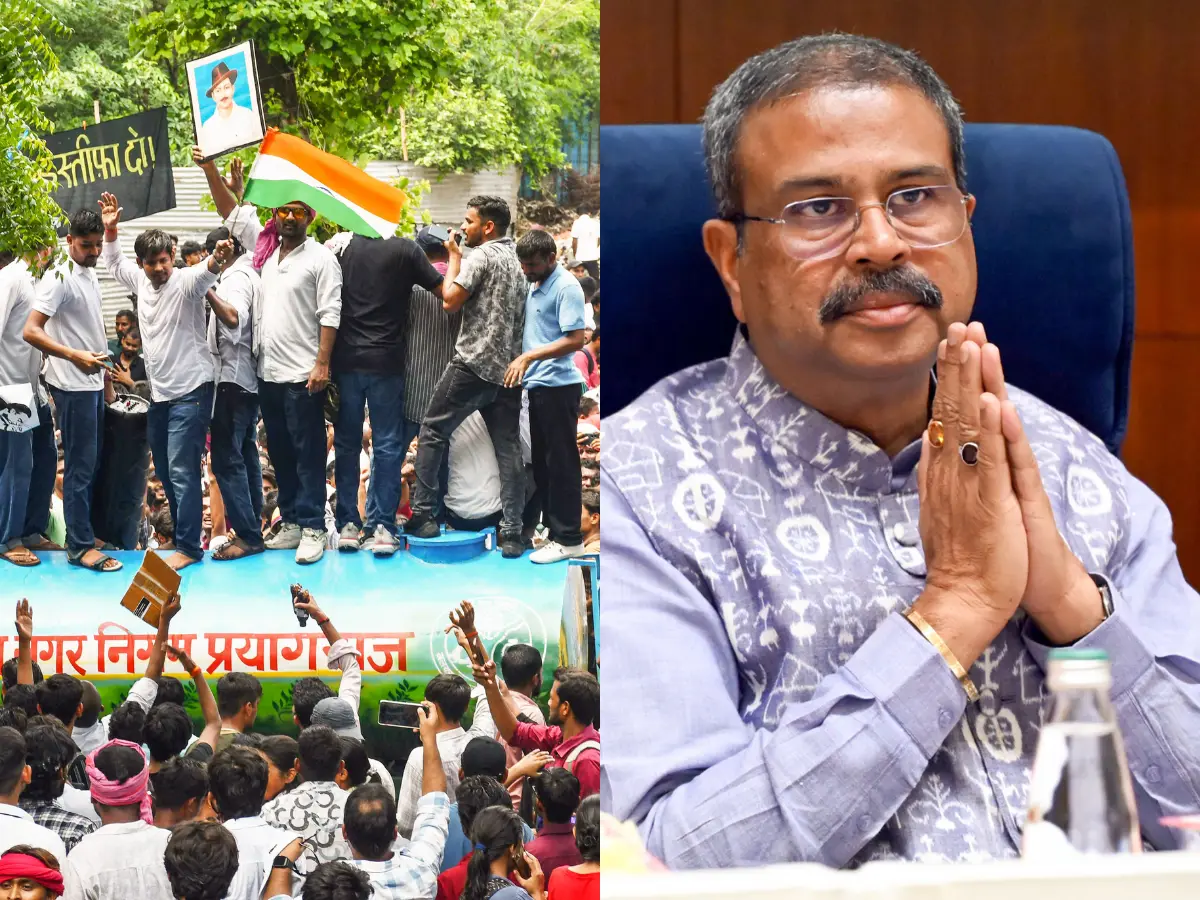
The resignation of India's Union Education Minister Dharmendra Pradhan is not merely the fall of a cabinet minister. It is the culmination of one of the most significant student-led movements India has witnessed in recent years, a reminder that when young voices unite around a common cause, even the most powerful governments are compelled to listen. For decades, India's students have carried the weight of a fiercely competitive education system. Every year, millions prepare for examinations that often determine the course of their lives. They accept sleepless nights, financial sacrifices and immense psychological pressure because they believe the system, though imperfect, rewards merit.
That belief was shaken when allegations of irregularities surrounding the NEET examination surfaced. For nearly two million medical aspirants, the controversy was never just about a paper leak. It was about trust. Students questioned whether years of hard work could be undone by corruption, negligence or administrative failure. It was this loss of faith, not just the examination itself, that ignited protests across the country.
The government responded with investigations, a fresh examination and promises of reforms. Yet, for thousands of students, those steps did not answer the fundamental question: who would be held accountable? The answer, they believed, could not simply be another committee. It had to begin at the top. That sentiment found an unlikely face in Abhijeet Dipke and the Cockroach Janta Party (CJP), a movement that started as internet satire before transforming into one of India's most influential youth campaigns.
The name itself sounded absurd. It was supposed to. Instead of rejecting the label of 'cockroach', a symbol many protesters felt represented how unemployed youth and students were being treated, the movement embraced it. What began as memes and viral videos soon evolved into organised demonstrations, attracting students, job aspirants and young professionals who saw the NEET controversy as part of a much larger crisis.
The movement reached its defining moment at Delhi's Jantar Mantar. Unlike many protests driven by political parties, this one was largely fuelled by young Indians themselves. Medical aspirants stood alongside engineering graduates, UPSC candidates and unemployed youth. Their demands extended beyond cancelling examinations or punishing paper leak rackets. They demanded accountability. They demanded transparency. Most importantly, they demanded that someone in authority accept responsibility. That persistence ultimately changed the political conversation.
For weeks, the government maintained that corrective measures were already underway. But the protests refused to lose momentum. Social media amplified every speech, every march and every gathering, turning what initially appeared to be an online campaign into a nationwide movement. In an era where many dismiss online activism as mere 'hashtag politics', the students demonstrated that digital mobilisation can become real political pressure when combined with organisation and sustained public participation.
Trending Stories
&imwidth=180&imheight=135&format=webp&quality=medium)
'My name has always been Ilhan Omar': Congresswoman hits back at Trump, calls him a 'creep'
&imwidth=180&imheight=135&format=webp&quality=medium)
Gravitas | US attack could trigger WW III: Russian planes in Tehran, Israeli jets, US warships in action
&imwidth=180&imheight=135&format=webp&quality=medium)
Viral video shows cross falling on Colombia priest, no official confirmation | WATCH
&imwidth=180&imheight=135&format=webp&quality=medium)
'This is humiliation': Vijay Deverakonda under fire over controversial marriage proposal remark on Koffee With Karan 9
&imwidth=180&imheight=135&format=webp&quality=medium)
US Navy, Marine Corps boards defy Trump's transgender military ban, vote to retain troops
&imwidth=180&imheight=135&format=webp&quality=medium)
Will the US attack Iran this weekend? Trump's envoy says, 'absolutely'
&im=FitAndFill=(700,400)&imwidth=180&imheight=135&format=webp&quality=medium)
Why do army tanks have different types of armour?
&imwidth=180&imheight=135&format=webp&quality=medium)
India-China face-off continues near Arunachal’s Taksing, reveals ITBP chief in first official confirmation of tensions
&imwidth=180&imheight=135&format=webp&quality=medium)
Nairobi building collapse: Several feared trapped after 16-storey structure crumbles; rescue operation underway
&imwidth=180&imheight=135&format=webp&quality=medium)
Pakistan airline PIA unveils new crew uniforms, faces online criticism
&imwidth=180&imheight=135&format=webp&quality=medium)
Did Neha Bora call for Bangladesh-like GenZ protest, 'anarchy' in India? WION Fact-checks viral claim
&imwidth=180&imheight=135&format=webp&quality=medium)
'Completely insane, never happened': Trump's son-in-law denies allegations of secret dealings with Saudi, UAE
&imwidth=180&imheight=135&format=webp&quality=medium)
India’s 2022 CWG silver medallist Sabbhineni Meghana announces international retirement
&imwidth=180&imheight=135&format=webp&quality=medium)
Horrific video shows the moment 18-year-old fell to her death from Mexico amusement park ride
&imwidth=180&imheight=135&format=webp&quality=medium)
IND-W vs ZIM-W, 1st ODI: Rawal, Charani star in India’s nine-wicket win over Zimbabwe
&imwidth=180&imheight=135&format=webp&quality=medium)
Microsoft AI diagnoses complex medical cases more than twice as accurately as doctors, study finds
&imwidth=180&imheight=135&format=webp&quality=medium)
Google Fitbit Air’s new health guardian feature tracks trends: How it works
&imwidth=180&imheight=135&format=webp&quality=medium)
US midterms 2026: Trump revises Canada tariffs as Susan Collins faces tight re-election race in Maine
&imwidth=180&imheight=135&format=webp&quality=medium)
US midterms 2026: Viral video claims Lindsey Graham paid underage men for sex; clip released weeks before his sister's Senate race
&imwidth=180&imheight=135&format=webp&quality=medium)
AI deepfakes are spreading online: Why is removing them so difficult?
&imwidth=180&imheight=135&format=webp&quality=medium)
China's dancing robot turns violent bodyguard, lifts cars and fights intruders - Watch
&imwidth=180&imheight=135&format=webp&quality=medium)
Global cybersecurity alert: PHP flaws trigger website shutdowns as hack attempts surge into millions
&imwidth=180&imheight=135&format=webp&quality=medium)
'You’re a horrible little reporter, aren’t you?': Trump snaps at NBC reporter questioning his support for Ramaswamy's campaign ad
&imwidth=180&imheight=135&format=webp&quality=medium)
Apple’s first touchscreen MacBook Pro may cost Rs 4 lakh in India: What to expect on October 28
&imwidth=180&imheight=135&format=webp&quality=medium)
US charges two former FBI officials with lying to Congress about Hunter Biden probes. 'Politically motivated' Trump grievance or something else?
&im=FitAndFill=(700,400)&imwidth=180&imheight=135&format=webp&quality=medium)
New Friday OTT releases (October 23, 2026): Gajab Raat, Dorothy, Chaar Yaar- Watch these 6 new movies and TV shows on Netflix, Prime Video and more
&imwidth=180&imheight=135&format=webp&quality=medium)
Anthropic security chief issues grim cyberattack warning: ‘It’s going to get a lot worse’
&imwidth=180&imheight=135&format=webp&quality=medium)
Tu Hai Meri Kiran film review: Sonakshi Sinha and Zaheer Iqbal's thriller gets tangled in its own twists
&imwidth=180&imheight=135&format=webp&quality=medium)
First Lady Melania Trump secures ceasefire between Russia, Ukraine in Oleshky: White House
&imwidth=180&imheight=135&format=webp&quality=medium)
One man, 8 months of work, and a river dirty again: Why Bittu Tabahi may quit
&imwidth=180&imheight=135&format=webp&quality=medium)
Jenna Ortega plans TV break after Wednesday: ‘I want to leave time for new things’
&imwidth=180&imheight=135&format=webp&quality=medium)
Five killed, several injured after explosion in Bihar's Siwan as firecrackers catch fire
&imwidth=180&imheight=135&format=webp&quality=medium)
Iran targeting US diplomats? Intelligence warns of 'advanced' assassination plots: Report
&imwidth=180&imheight=135&format=webp&quality=medium)
Emmanuel Macron calls Paris suburb shooting a 'racist terrorist attack' after one killed, several injured
Eventually, Dharmendra Pradhan resigned. Whether one believes the resignation was politically inevitable or morally necessary is open to debate. What is beyond debate is the precedent it establishes. Education is no longer a peripheral political issue.
The resignation signals that failures affecting students can carry real political consequences. It reminds governments that educational institutions are not merely administrative departments but the foundation of public trust.
The larger lesson, however, belongs not to politicians but to students. For years, young Indians have often been described as politically disengaged, more interested in reels than rallies, influencers than institutions. The events surrounding NEET challenge that stereotype completely. This generation organised without traditional political machinery. They built communities online, mobilised offline and sustained a movement despite criticism, fatigue and uncertainty. They proved that democracy does not begin or end at the ballot box. It also lives in peaceful protest, collective action and the courage to question authority.
None of this means India's education crisis has been solved. Paper leaks remain a recurring challenge. Coaching culture continues to dominate competitive examinations. Mental health concerns among students are growing, while opportunities remain limited despite rising aspirations. Changing one minister cannot fix structural problems that have developed over decades. But every meaningful reform begins with accountability.
If the NEET protests have achieved anything beyond a resignation, it is restoring the belief that citizens, particularly young citizens, can influence public policy when they refuse to be ignored. That may ultimately become the movement's greatest legacy.
History will remember the slogans, the crowds at Jantar Mantar and the memes that fuelled a nationwide campaign. But more importantly, it will remember that thousands of students stood together and reminded India's democracy of one simple truth: Power ultimately belongs to the people. This time, the students proved it.
Disclaimer: The views of the writer do not represent the views of WION or ZMCL. Nor does WION or ZMCL endorse the views of the writer.

