JeM’s evolution since the Parliament Attack: Why India cannot lower its guard

&imwidth=600&imheight=450&format=webp&quality=medium "JeM’s evolution since the Parliament Attack: Why India cannot lower its guard")
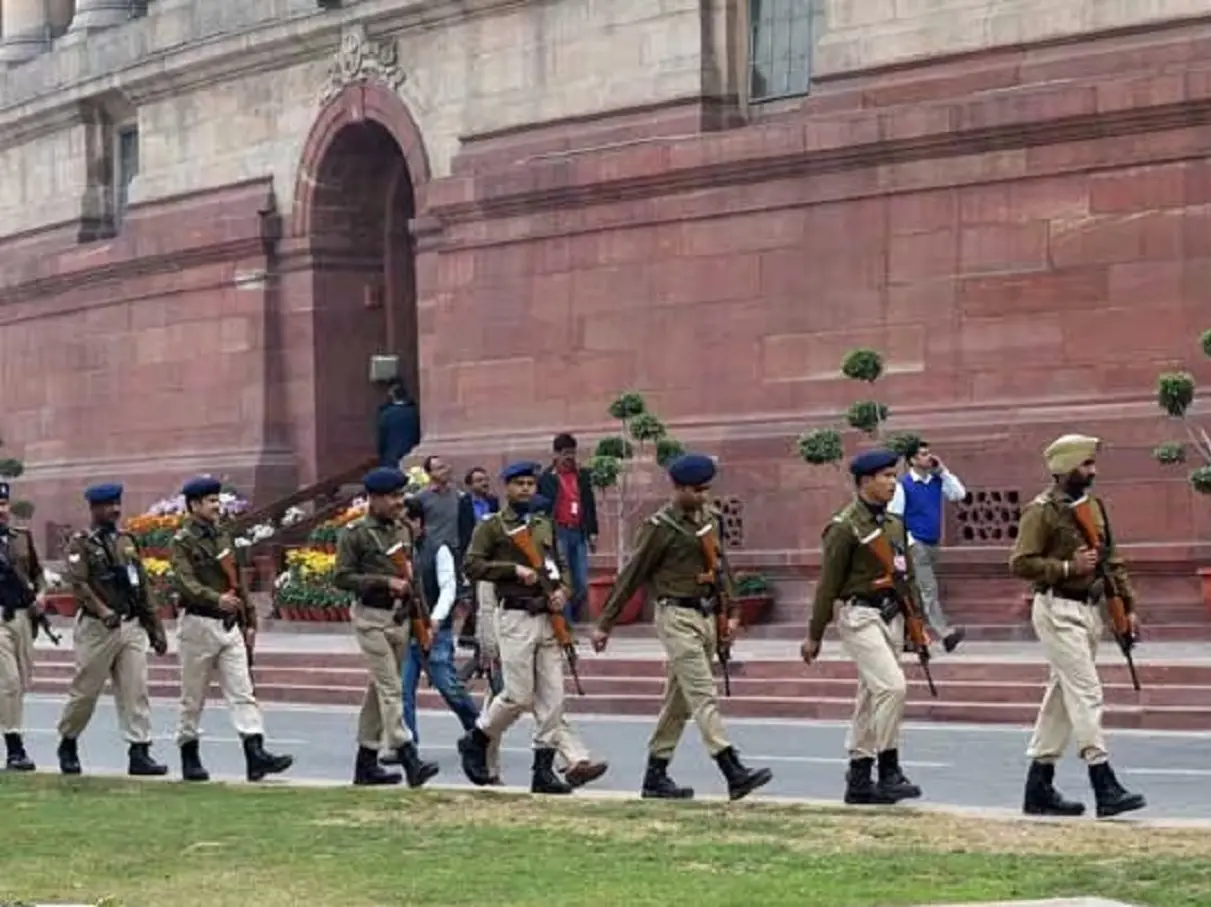
File photo of security personnel at Parliament in New Delhi Photograph: (PTI)
In the years since the Parliament attack, India has invested in institutional capability. The NIA, created after the Mumbai attacks, has demonstrated the value of a specialised national-level investigative body. States have, at varying paces, upgraded their own counter-terror capacities.
On 13 December 2001, five armed men attempted to storm the Indian Parliament. Their effort was thwarted, but the incident upended assumptions about the nature of the threat India faced. The attack was not only an assault on elected representatives; it was a demonstration of the reach, ambition and external support enjoyed by Jaish-e-Mohammed (JeM), a Pakistan-based group already under international sanctions.
Two decades later, JeM has not disappeared. It has adapted. In some respects, it has become more elusive and more capable. The organisation’s trajectory since 2001—and the broader environment in which it operates—should persuade us that complacency remains the enemy of preparedness.
The organisation learnt, adapted and expanded
JeM’s early years were marked by spectacular, attention-seeking violence. The Parliament attack was part of that phase. Over time, however, the group has shifted towards a quieter, layered structure. It no longer relies solely on large groups of fighters moving across the Line of Control. Instead, it works through dispersed modules that can be activated for logistics, reconnaissance or execution, depending on the requirement.
Investigations in several cases, including those relating to a recent blast near Delhi’s Red Fort, demonstrate this transition. Operatives are often educated, familiar with urban terrain, and capable of navigating encrypted communication platforms. What this signifies is an organisation that invests in long-term survivability rather than short-term spectacle. This is a more difficult adversary to track.
Another feature of JeM’s evolution is the emergence of Jamaat-e-Mominaat, its women’s wing. The group conducts online instruction aimed at ideological reinforcement and logistical support. The fact that this initiative is being led by individuals closely related to JeM’s founder shows the seriousness of the project. It also reflects a broader trend across extremist movements globally: the use of digital spaces to widen recruitment beyond traditional circles.
Trending Stories
)
)
)
)
)
)
)
)
)
)
)
)
)
)
)
)
)
)
)
)
)
)
)
)
)
)
)
)
)
)
)
)
)
)
&im=FitAndFill=(700,400))
)
)
)
)
Pakistan’s internal dynamics continue to shape the threat
JeM’s transformation cannot be understood in isolation. It operates within Pakistan’s complex civil–military equation, where certain groups have historically been treated as tools of influence rather than security liabilities. Despite international pressure and periods of intense scrutiny—particularly during Pakistan’s years on the FATF grey list—JeM’s infrastructure has never been fully dismantled. Its Bahawalpur base remains a recurring reference point in global reporting.
Pakistan today faces political volatility, economic fragility and sporadic internal violence. In such periods, the temptation for the state to fall back on familiar instruments of leverage—especially those offering deniability—cannot be dismissed. For India, this means that the underlying risk profile has not materially changed.
India’s counter-terror institutions have strengthened—but the threat has also become more complex
In the years since the Parliament attack, India has invested in institutional capability. The Multi-Agency Centre has grown into an important hub for real-time intelligence sharing. The National Investigation Agency, created after the Mumbai attacks, has demonstrated the value of a specialised national-level investigative body. States have, at varying paces, upgraded their own counter-terror capacities.
These reforms have undoubtedly improved India’s preparedness. But the threat environment has expanded in ways that challenge traditional tools. Terrorist organisations now operate across physical, financial and digital domains. Their support networks include online indoctrination, cryptocurrency channels, courier chains and diaspora-based sympathisers. Modules do not resemble the tightly knit fidayeen squads of the early 2000s; they are smaller, more flexible, and more influenced by global extremist ecosystems.
Why vigilance matters now more than ever
India’s national security architecture must remain alive to two parallel realities. The first is that JeM continues to function out of Pakistan with ideological cohesion and access to manpower. The second is that the group has adjusted to India’s strengthened defences by diversifying its methods. When an adversary evolves, defences must evolve faster.
The Parliament attack was a wake-up call. It revealed the costs of underestimating an organisation’s ambition and the dangers of assuming that international designations would meaningfully restrict its operations. JeM’s endurance since then demonstrates that the threat is not static. It adapts to pressure and exploits gaps—especially in the digital domain.
India has the institutional foundations it lacked in 2001. But the nature of the challenge requires constant recalibration. Strengthening cyber forensics, improving financial intelligence, expanding inter-agency cooperation and maintaining pressure on Pakistan through diplomatic channels will all be essential.
A strategic memory worth holding on to
Anniversaries often invite ceremony, but in the case of 13 December, reflection serves a practical purpose. Remembering the attack is not merely about honouring those who fell defending Parliament. It is about recognising that the threat that manifested that morning has not vanished. It has changed form and adopted new tools, but its intent remains the same.
For India, and for those who follow the security landscape of South Asia, the lesson is clear: the danger lies not in what JeM was in 2001, but in what it has become since—and in what it is still capable of becoming if left unchallenged.
(Maj Gen. RPS Bhadauria (Retd) is the Additional Director General of the Centre for Land Warfare Studies (CLAWS), New Delhi, and was formerly the Director of the Centre for Strategic Studies & Simulation (CS3) at USI of India, having served in the Indian Army for 36 years.)