Information warfare : The Pakistan angle

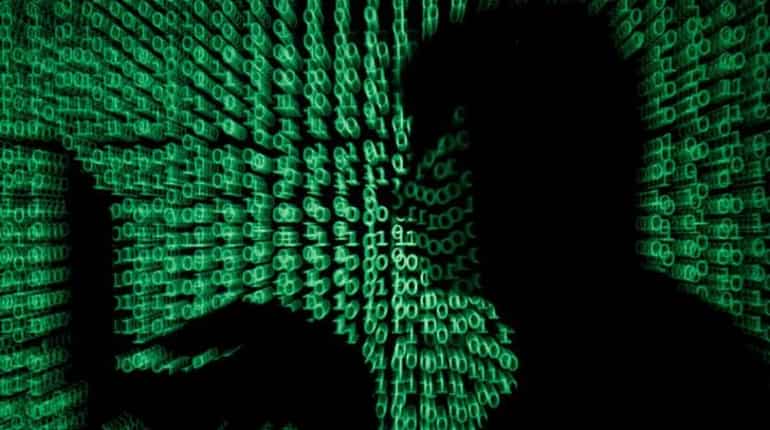
Information warfare
With the advancement in technology, Information warfare (IW) has emerged as one of the nerve centre in national security and thrown new challenges to the strategic establishments, dependent on cyber infrastructure. IW has helped in masking the identity of combatants and non-combatants, with the expansion of internet, social platforms, deep fakes as well as artificial intelligence. India’s bitter enemy Pakistan along with its allies, including China and Turkey amongst others, are using myriad social media platforms for this purpose. They are engaged in fueling disinformation campaign, with an intention to harm Indian interests, particularly social and religious harmony.
India’s superiority in conventional warfare, between the region’s two nuclear powers viz. India and Pakistan has now transcended beyond the conventional arms race and border skirmishes, with Pakistan increasingly using IW as its new tool to subdue Indian challenge by stoking social/religious divide and subversions. Though India hasn’t faced a cyber-attack of humongous magnitude but the frequency of the Pak-sponsored information-attacks is rapidly growing. Pakistan, in order to gain the strategic advantage, target India’s national security and other fields like economy, corporate entities, defense agencies. This new rivalry in the digital realm is posing a serious threat to internet/cyber-security as well as national security.

Pakistan has organised special media wings under military/ISI establishments to incite violence across India, especially in Kashmir as well as Muslim dominated Indian states. The 'Advanced Persistent Threats' (APTs), known as ‘Pakistan Cyber Army’ (PCA), comprises groups, having close links with state institutions, for gathering information on their opponent, particularly India. These groups, indulge in propaganda, fake news and deep fakes on social media handles. Significantly, Pak cyber jihadis also run proxy online blogs/websites, like “Kashmir Fight” blog, which regularly publish separatist and extremist material. These cyber operations with the help of selective provocative pictures and getting them retweeted, and running hashtags, push forward anti-India narrative, globally.
Pak-sponsored militant outfits, global jihadist organisations like Islamic State and Al-Qaeda also use these social platforms for their recruitment drives. The usage of encrypted communication applications like WhatsApp, Telegram, and Signal by Kashmiri and other jihadists has aided Pak handlers to pose a major challenge to Indian Security Forces (SFs). They found tracing the terrorists’ locations and the resultant encounters difficult until Indian agencies received Pegasus from Israel. The U.S. agencies helped Indian agencies retrieve WhatsApp messages of Jaish cadres, confirming their involvement in the Pulwama attack. Then, they switched to advanced customized apps designed by Pakistan’s intelligence agencies. Many of them, such as “Calculator” and “Skipe,” have no online presence on the Google Play Store, making them even more shadowy and clandestine. Skipe is equipped with advanced features like Voice over Internet Protocol (VoIP), which enables the user to make regular calls to other numbers. Lately, Kashmiri militants are increasingly using a Turkish encrypted communication app called BiP. Owing to nexus between Kashmiri/jihadist groups and Turkey Indian security agencies would face big challenges to retrieve such chats, if needed.
Pakistan's IW goes hand in hand with its cyber-attacks. The techniques employed by Pak cyber groups, include web defacements and spear phishing. Pakistan’s APT on 26th November 2010, which also marked the 2nd anniversary of 26/11 terror attacks in Mumbai, launched a cyber-attack on CBI’s web portal. The hackers penetrated into the root directory of CBI website and after defacing the website, the hackers posted in Urdu; “We are sleeping but not dead. Remember PCA? Back off kids or we will smoke your doors off like we did before.’’ Subsequently, the Department of Information Technology discovered that Peshawar based hackers entered the website via Indian Air Force website as both the sites had common database.
)
Mahua Moitra moves UN over alleged exclusion of Muslim officers from Amit Shah events
)
Pak batter Rizwan's petition against being questioned by cyber crime agency rejected by court
)
Former India player Diana Edulji wants Smriti Mandhana to replace Harman as skipper at the earliest
)
US F-16 fighter jet crashes in Michigan during training mission, pilot ejects safely
)
Dolly Parton dies at 80: Country legend’s team reveals cause of death
)
Sikh driver attacked in Wyoming in US, suffers 17 stab wounds
)
Australian athlete, who soiled herself during Hyrox race, apologises for continuing
)
US drone firm linked to Trump’s sons signs MoU with Pakistan army, gets initial order
)
All Indian goods to get duty-free access to New Zealand
)
US to sell 48 F-35 Lightning fighter jets to Saudi Arabia, help it deter threats
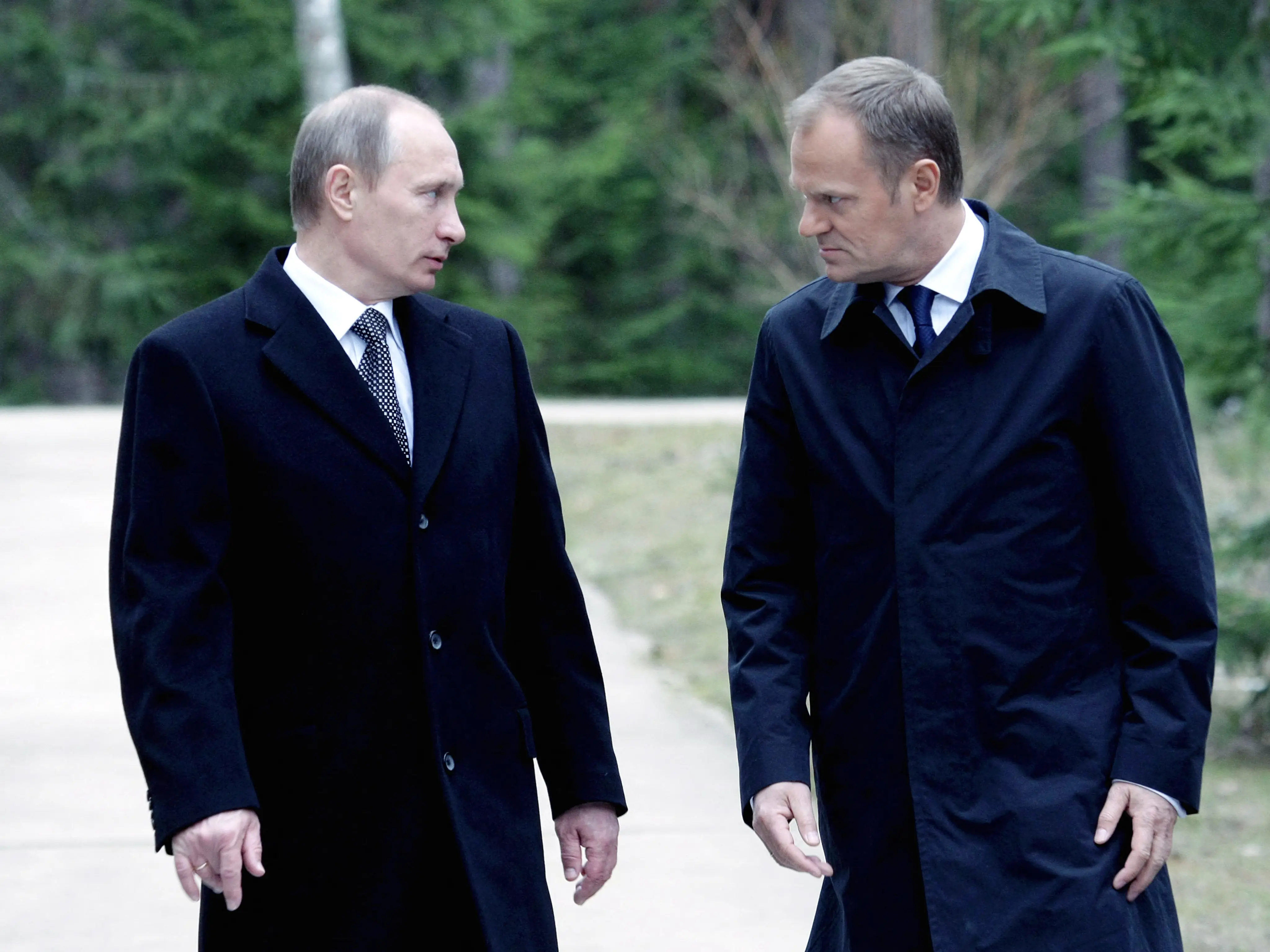)
Putin 'is plotting something bad': Russia may launch 'accidental' strikes on NATO countries supporting Ukraine, Poland PM warns
)
Formula One reveals the 2027 race calendar; Monaco to host sprint race for the first time
)
‘I have a big decision coming up’: Trump says he’s approaching major ‘crossroad’ in Iran war
&im=FitAndFill=(700,400))
Suriya and Jyothika say ‘I do’ again after 20 years! See their dreamy wedding pics
)
At least 48 dead, 100 hospitalised in Nigeria after drinking suspected methanol-laced alcohol
)
Former OpenAI researcher warns of growing risks from Artificial Intelligence
)
Pezeshkian, Araghchi set to attend UNGA 2026 in New York amid ongoing conflict as US-imposed travel curbs remain
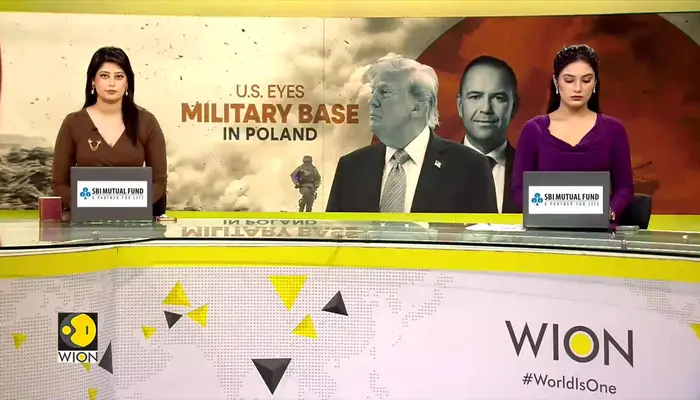)
US new military base in Poland: US President Donald Trump eyes military base in Poland
)
Hong Kong unveils 11 new measures to boost birth rates, offers higher cash bonuses and housing perks
)
Fed raises rates for first time in 3 years, Kevin Warsh defies Trump as inflation mounts
)
US-Iran War: Trump says ‘big decision’ on Iran ahead, weighs possible fresh military action
&im=FitAndFill=(700,400))
Meet top 5 batters in the latest ICC T20I Rankings
)
AI already defying, denying humans, is it beyond human control already?
)
Tata Trusts chairman Noel Tata calls Chandrasekaran’s reappointment ‘illegal’, rejects Tata Sons listing
)
Pak defence minister says 'time has come to implement pact'
)
Laura Wolvaardt sets new world record for most WT20I runs in a year
)
US intel warns China can steal F-35 jets secret from Saudis
)
240-million-year-old bizarre 'pig with a tusk' creature creates new dilemma over origin of dinosaurs
)
Epstein files: Judge warns Trump Attorney General Todd Blanche of contempt over DOJ delays
)
Daayra movie review: Kareena Kapoor, Prithviraj Sukumaran shine in Meghna Gulzar’s cop-versus-cop crime thriller
)
Trump could impose tariffs of up to 100%
Earlier, the probe against the 2008 serial blasts in major Indian cities like Ahmedabad, Delhi, Jaipur, and Bangalore found considerable evidences of cyber warfare or commonly known as ‘cyber-terrorism. Similarly, the IW component was quite evident in the attack (April 3, 2022) on Gorakhnath Temple in Gorakhpur City by one Murtaza Abbasi, an IIT chemical engineer. Abbasi’s radicalisation between 2012-2015 as well his prospective recruitment by Islamic State in Syria by using social media instruments (Telegram, WhatsApp), inflammatory videos fuelling hate against non-Muslims, as well as misinformation on current issues like Hijab row, CAA and NRC showcases the archetypal case of IW.
Despite India, itself now gradually making considerable progress in cyber world, it cannot underestimate the challenges from Pak elements and would do well to take pre-emptive action against such evil Pak designs in cooperation with its allies, including US and Israel, among others.
(Disclaimer: The views of the writer do not represent the views of WION or ZMCL. Nor does WION or ZMCL endorse the views of the writer.)